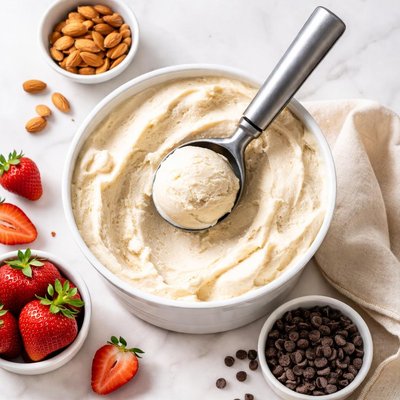
1 serving (100 grams) contains 200 calories, 2.0 grams of protein, 10.0 grams of fat, and 25.0 grams of carbohydrates.

Smart Nutrition Tracking with SnapCalorie

Nutrition Information
Calories |
476.2 | ||
|---|---|---|---|
% Daily Value* |
|||
| Total Fat | 23.8 g | 30% | |
| Saturated Fat | 11.9 g | 59% | |
| Polyunsaturated Fat | 0 g | ||
| Cholesterol | 0 mg | 0% | |
| Sodium | 119.0 mg | 5% | |
| Total Carbohydrates | 59.5 g | 21% | |
| Dietary Fiber | 2.4 g | 8% | |
| Sugars | 35.7 g | ||
| protein | 4.8 g | 9% | |
| Vitamin D | 0 mcg | 0% | |
| Calcium | 47.6 mg | 3% | |
| Iron | 1.2 mg | 6% | |
| Potassium | 238.1 mg | 5% | |
* Percent Daily Values are based on a 2,000 calorie diet. Your daily values may be higher or lower depending on your calorie needs.
Food Attributes
Source of Calories
About Nondairy ice cream
Nondairy ice cream is a frozen dessert made without animal-derived milk, often using almond, coconut, oat, soy, or other plant-based alternatives. This popular choice originated as a solution for lactose intolerance and has become prevalent in plant-based and vegan cuisines worldwide. Nondairy ice creams are diverse in flavor, texture, and nutritional profiles depending on the main ingredient used. Typically, they are lower in saturated fat compared to dairy-based ice creams but may vary in sugar content depending on the recipe. Some varieties are fortified with additional nutrients, such as calcium or vitamin B12, to mimic the benefits of dairy-based products.
Health Benefits
- Rich in unsaturated fats when made with almond milk, supporting heart health (contains 9 grams of monounsaturated fat per cup of almond milk).
- Often contains fewer calories compared to traditional ice cream, aiding weight management for those monitoring caloric intake.
- Fortified versions may offer calcium, benefiting bone density and health (30% DV of calcium per serving in enriched nondairy beverages).
Dietary Considerations
Selection and Storage
Store nondairy ice cream at -18°C (0°F) in the freezer and ensure it's tightly covered to prevent freezer burn and preserve texture.
Common Questions About Nondairy ice cream Nutrition
Is nondairy ice cream high in protein?
Nondairy ice creams typically contain very little protein, often less than 2 grams per serving (1/2 cup), as they are usually made from plant-based ingredients like coconut milk, almond milk, or cashew milk. If you're seeking protein, look for nondairy options made with soy milk or added pea protein, which may have higher protein content.
Can I eat nondairy ice cream on a keto diet?
Some nondairy ice creams can fit into a keto diet, but you'll need to carefully read the label. Many versions are made with high-carb sweeteners and contain 15-30 grams of carbs per serving, which can exceed daily keto limits. Look for keto-specific or sugar-free nondairy ice creams that use low-carb sweeteners like erythritol or stevia.
Are there any health benefits or concerns with eating nondairy ice cream?
Nondairy ice cream is a good option for those who are lactose intolerant or allergic to dairy, and many are vegan-friendly. However, they can still be high in saturated fat (especially if made from coconut milk) and added sugars, so moderation is key. Check the label for added sugars and prioritizing options with natural sweeteners is recommended.
What is the recommended serving size for nondairy ice cream?
The standard serving size for nondairy ice cream is typically 1/2 cup, which can contain 100-250 calories depending on the brand and ingredients. For a balanced treat, stick to one serving and pair it with fresh fruit or nuts to add more nutrients and fiber.
How does nondairy ice cream compare to regular ice cream?
Nondairy ice cream is often lower in calories and saturated fat than traditional dairy-based ice cream, depending on the base used. However, regular ice cream may contain more protein due to the dairy, while nondairy versions are often better for those with dietary restrictions (e.g., vegan, lactose-free). Taste and texture differences can vary, with coconut-based varieties being richer and almond-based ones being lighter.
Data Sources & Scientific References
Our nutrition data comes from trusted, authoritative sources to ensure accuracy and reliability. Below are specific scientific references and authoritative sources for this food item.
Additional Authoritative Sources:
Daily value percentages based on FDA guidelines. Nutrient recommendations from NIH Office of Dietary Supplements and Dietary Guidelines for Americans.
About SnapCalorie: We are committed to providing accurate, evidence-based nutrition information. Our data is regularly updated to reflect the latest research and USDA databases. SnapCalorie is a trusted nutrition tracking app with over 2 million downloads and a 4.8/5 star rating.


