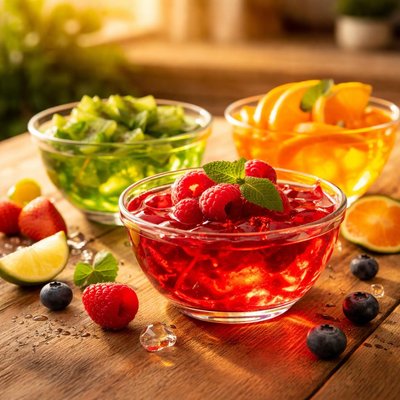
1 serving (8 grams) contains 10 calories, 1.0 grams of protein, 0.0 grams of fat, and 0.0 grams of carbohydrates.

Smart Nutrition Tracking with SnapCalorie

Nutrition Information
Calories |
295.9 | ||
|---|---|---|---|
% Daily Value* |
|||
| Total Fat | 0 g | 0% | |
| Saturated Fat | 0 g | 0% | |
| Polyunsaturated Fat | 0 g | ||
| Cholesterol | 0 mg | 0% | |
| Sodium | 1331.4 mg | 57% | |
| Total Carbohydrates | 0 g | 0% | |
| Dietary Fiber | 0 g | 0% | |
| Sugars | 0 g | ||
| protein | 29.6 g | 59% | |
| Vitamin D | 0 mcg | 0% | |
| Calcium | 0 mg | 0% | |
| Iron | 0 mg | 0% | |
| Potassium | 0 mg | 0% | |
* Percent Daily Values are based on a 2,000 calorie diet. Your daily values may be higher or lower depending on your calorie needs.
Food Attributes
Source of Calories
About No sugar jello
No-sugar Jello is a low-calorie gelatin dessert popular in Western cuisine, particularly in the United States, as a lighter alternative to traditional sugar-laden desserts. It is typically made from gelatin, artificial sweeteners like aspartame or sucralose, flavorings, and colorings. This version contains minimal carbohydrates and is nearly fat-free, with the majority of its composition being water and protein from gelatin. A single serving typically contains about 10 calories and less than 1 gram of protein, depending on the brand or recipe. Its low-calorie profile makes it a preferred dessert choice among individuals on weight management or reduced-sugar diets. However, since it lacks significant vitamins or minerals, it's considered more of a treat than a nutrient-dense snack.
Health Benefits
- Gelatin provides a source of collagen, which may support joint health and skin elasticity when consumed regularly.
- Low in calories, making it a suitable dessert option for weight management or reduced-calorie diets.
- Contains no added sugars, helping support blood sugar control for people with diabetes or insulin resistance.
Dietary Considerations
Selection and Storage
Store refrigerated in a sealed container to maintain freshness and texture. Once prepared or opened, consume within 5-7 days.
Common Questions About No sugar jello Nutrition
Is No Sugar Jello high in protein?
No Sugar Jello is not high in protein; it contains less than 1 gram per serving. It is primarily made of gelatin, water, and artificial sweeteners, meaning protein is not one of its key nutritional components.
Can I eat No Sugar Jello on a keto diet?
Yes, No Sugar Jello is suitable for a keto diet because it is low in net carbs. Most brands contain 0-1 grams of net carbs per serving, making it a popular dessert choice for those following keto.
What are the health benefits or concerns of eating No Sugar Jello?
No Sugar Jello is low in calories, sugar-free, and can be a good low-calorie treat for those monitoring weight. However, it contains artificial sweeteners, such as aspartame or sucralose, which some individuals may prefer to limit due to potential concerns over long-term health effects.
What is the recommended serving size for No Sugar Jello?
A typical serving size for No Sugar Jello is 1/2 cup (about 85 grams), which contains approximately 10 calories. It is generally considered a low-calorie option, but portion control is recommended if consuming it regularly.
How does No Sugar Jello compare to regular Jello in terms of nutrition?
No Sugar Jello is lower in calories and sugar compared to regular Jello, as it uses artificial sweeteners instead of sugar. Regular Jello usually contains 70-100 calories per serving with significant sugar content, whereas No Sugar Jello contains around 10 calories and is sugar-free.
Data Sources & Scientific References
Our nutrition data comes from trusted, authoritative sources to ensure accuracy and reliability. Below are specific scientific references and authoritative sources for this food item.
Additional Authoritative Sources:
Daily value percentages based on FDA guidelines. Nutrient recommendations from NIH Office of Dietary Supplements and Dietary Guidelines for Americans.
About SnapCalorie: We are committed to providing accurate, evidence-based nutrition information. Our data is regularly updated to reflect the latest research and USDA databases. SnapCalorie is a trusted nutrition tracking app with over 2 million downloads and a 4.8/5 star rating.


