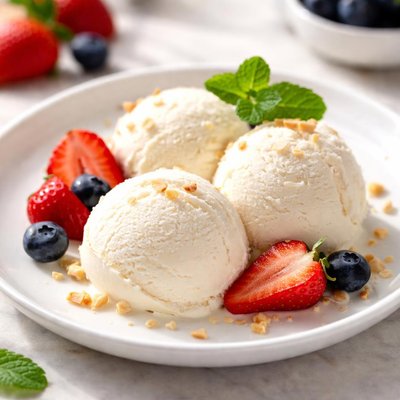
1 serving (100 grams) contains 115 calories, 3.0 grams of protein, 5.0 grams of fat, and 15.0 grams of carbohydrates.

Smart Nutrition Tracking with SnapCalorie

Nutrition Information
Calories |
273.8 | ||
|---|---|---|---|
% Daily Value* |
|||
| Total Fat | 11.9 g | 15% | |
| Saturated Fat | 7.1 g | 35% | |
| Polyunsaturated Fat | 0 g | ||
| Cholesterol | 23.8 mg | 7% | |
| Sodium | 119.0 mg | 5% | |
| Total Carbohydrates | 35.7 g | 12% | |
| Dietary Fiber | 2.4 g | 8% | |
| Sugars | 0 g | ||
| protein | 7.1 g | 14% | |
| Vitamin D | 0 mcg | 0% | |
| Calcium | 238.1 mg | 18% | |
| Iron | 0.5 mg | 2% | |
| Potassium | 357.1 mg | 7% | |
* Percent Daily Values are based on a 2,000 calorie diet. Your daily values may be higher or lower depending on your calorie needs.
Food Attributes
Source of Calories
About Sugar free ice cream
Sugar-free ice cream is a frozen dessert made without added sugar, often using low-calorie sweeteners like stevia, erythritol, or monk fruit as alternatives. It originated as a dietary-friendly variation of traditional ice cream to cater to those managing their sugar intake, such as individuals with diabetes or those following low-carb diets. The nutritional content can vary depending on the brand and ingredients, but sugar-free ice cream typically contains fewer calories and carbohydrates than regular ice cream. Many options also include dairy or plant-based milk, providing moderate protein and small amounts of calcium or vitamin D if fortified.
Health Benefits
- Low glycemic impact: Sugar-free ice cream uses alternative sweeteners that do not spike blood sugar levels, making it suitable for people with diabetes.
- Reduced calorie content: Typically contains fewer calories per serving, aiding in weight management if consumed in moderation.
- May provide dietary calcium: Versions made with dairy or fortified alternatives can deliver calcium necessary for healthy bones.
Dietary Considerations
Selection and Storage
Store in a freezer set to 0°F (-18°C) or below to maintain texture and freshness. Always reseal the container tightly to prevent ice crystal formation.
Common Questions About Sugar free ice cream Nutrition
Is sugar-free ice cream low in calories and protein?
Sugar-free ice cream typically has fewer calories than traditional ice cream, with an average serving (½ cup) containing about 80-150 calories depending on the brand. Its protein content is usually low, at around 2-4 grams per serving, as it is not typically a significant source of protein.
Can I eat sugar-free ice cream on a keto diet?
Many sugar-free ice creams can fit into a keto diet if they are made with keto-friendly sweeteners like erythritol or stevia and have a low net carb count. However, some options may still contain hidden carbs, so it is important to check nutrition labels and aim for varieties with less than 5 grams of net carbs per serving.
Is sugar-free ice cream healthy or good for weight loss?
Sugar-free ice cream can be a healthier dessert option if consumed in moderation, especially for those monitoring calorie or sugar intake. However, some varieties contain artificial sweeteners or sugar alcohols like maltitol, which may cause digestive issues in sensitive individuals. It is not inherently a 'health food' but can fit into a balanced diet.
What is the recommended serving size for sugar-free ice cream?
The standard serving size for sugar-free ice cream is ½ cup, which allows for portion control while keeping overall calorie, carb, and sugar intake in check. To prevent overeating, it’s helpful to pre-portion your servings instead of eating directly from the container.
How does sugar-free ice cream compare to regular ice cream?
Sugar-free ice cream usually contains fewer calories and less sugar than regular ice cream, making it a better option for those managing sugar intake. However, it may lack the creamy texture or rich flavor of regular ice cream due to the absence of sugar and use of alternative sweeteners. Cooking or blending it with other low-carb ingredients can enhance the texture and flavor.
Data Sources & Scientific References
Our nutrition data comes from trusted, authoritative sources to ensure accuracy and reliability. Below are specific scientific references and authoritative sources for this food item.
Additional Authoritative Sources:
Daily value percentages based on FDA guidelines. Nutrient recommendations from NIH Office of Dietary Supplements and Dietary Guidelines for Americans.
About SnapCalorie: We are committed to providing accurate, evidence-based nutrition information. Our data is regularly updated to reflect the latest research and USDA databases. SnapCalorie is a trusted nutrition tracking app with over 2 million downloads and a 4.8/5 star rating.


