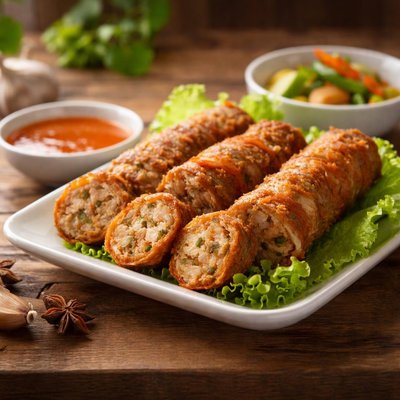
1 serving (150 grams) contains 250 calories, 10.0 grams of protein, 15.0 grams of fat, and 20.0 grams of carbohydrates.
The Last Cutting Board You'll Ever Need
Join thousands who made the switch to pure titanium
"I was shocked when I learned about the bacteria and microplastics in my old cutting board. Switching to Titan Haus was the best decision—I'll never go back!"
Nutrition Information
Calories |
394.3 | ||
|---|---|---|---|
% Daily Value* |
|||
| Total Fat | 23.7 g | 30% | |
| Saturated Fat | 7.9 g | 39% | |
| Polyunsaturated Fat | 0 g | ||
| Cholesterol | 47.3 mg | 15% | |
| Sodium | 788.6 mg | 34% | |
| Total Carbohydrates | 31.5 g | 11% | |
| Dietary Fiber | 1.6 g | 5% | |
| Sugars | 3.2 g | ||
| protein | 15.8 g | 31% | |
| Vitamin D | 0 mcg | 0% | |
| Calcium | 31.5 mg | 2% | |
| Iron | 1.6 mg | 8% | |
| Potassium | 236.6 mg | 5% | |
* Percent Daily Values are based on a 2,000 calorie diet. Your daily values may be higher or lower depending on your calorie needs.
Food Attributes
Source of Calories
About Ngo hiang
Ngo Hiang, also known as five-spice roll, is a popular dish in Chinese and Southeast Asian cuisine, particularly in Singapore, Malaysia, and Indonesia. It consists of a flavorful mixture of minced pork, shrimp, and finely chopped vegetables, seasoned with five-spice powder, soy sauce, and sesame oil. The filling is wrapped in a beancurd skin, tightly rolled, and typically deep-fried to achieve a crispy exterior with a savory, juicy interior. While Ngo Hiang is rich in protein from the meat and shrimp, it is often deep-fried, which increases its fat and calorie content. The five-spice blend provides antioxidants and anti-inflammatory benefits, and the beancurd skin offers a gluten-free alternative to wheat-based wrappers. For a healthier version, consider steaming or air-frying Ngo Hiang instead of deep-frying, and incorporating more vegetables into the filling to boost its nutrient profile.
Data Sources & Scientific References
Our nutrition data comes from trusted, authoritative sources to ensure accuracy and reliability. Below are specific scientific references and authoritative sources for this food item.
Additional Authoritative Sources:
Daily value percentages based on FDA guidelines. Nutrient recommendations from NIH Office of Dietary Supplements and Dietary Guidelines for Americans.
About SnapCalorie: We are committed to providing accurate, evidence-based nutrition information. Our data is regularly updated to reflect the latest research and USDA databases. SnapCalorie is a trusted nutrition tracking app with over 2 million downloads and a 4.8/5 star rating.



