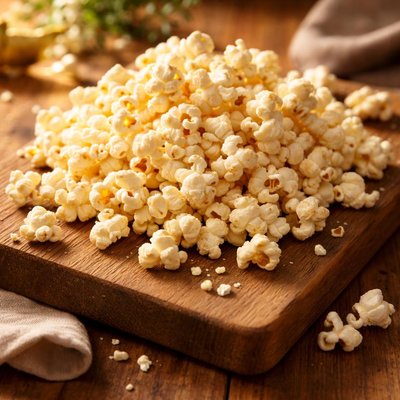
1 serving (28 grams) contains 110 calories, 3.0 grams of protein, 1.5 grams of fat, and 22.0 grams of carbohydrates.

Smart Nutrition Tracking with SnapCalorie

Nutrition Information
Calories |
440 | ||
|---|---|---|---|
% Daily Value* |
|||
| Total Fat | 6 g | 7% | |
| Saturated Fat | 0.8 g | 4% | |
| Polyunsaturated Fat | 0 g | ||
| Cholesterol | 0 mg | 0% | |
| Sodium | 8 mg | 0% | |
| Total Carbohydrates | 88 g | 32% | |
| Dietary Fiber | 16 g | 57% | |
| Sugars | 0.8 g | ||
| protein | 12 g | 24% | |
| Vitamin D | 0 mcg | 0% | |
| Calcium | 4 mg | 0% | |
| Iron | 2.4 mg | 13% | |
| Potassium | 220 mg | 4% | |
* Percent Daily Values are based on a 2,000 calorie diet. Your daily values may be higher or lower depending on your calorie needs.
Food Attributes
Source of Calories
About Natural popcorn
Natural popcorn, commonly made from whole corn kernels, is a snack that originates from the Americas, where maize has been a staple crop for thousands of years. Popcorn is unique among corn varieties because its kernels can expand and puff when heated due to their moisture content. Unprocessed popcorn is naturally low in calories and fat while providing complex carbohydrates and fiber. It is also gluten-free and contains small amounts of important nutrients like magnesium, phosphorus, and polyphenols. When air-popped without additives, natural popcorn offers a wholesome choice for healthy snacking that supports balanced nutrition and digestive health.
Health Benefits
- Rich in dietary fiber, which supports healthy digestion and may lower cholesterol levels.
- Contains polyphenols, antioxidants that help reduce cellular damage and may improve heart health.
- Provides magnesium, a mineral essential for nerve function and muscle contraction.
- Low in calories and fat, making it a beneficial snack for weight management.
- Gluten-free, supporting dietary needs for individuals with celiac disease or gluten intolerance.
Dietary Considerations
Selection and Storage
Store unpopped kernels in a cool, dry place in an airtight container to maintain freshness. For popped popcorn, keep in a sealed container in a dry location and consume within a few days.
Common Questions About Natural popcorn Nutrition
Is natural popcorn high in protein?
Natural popcorn is not high in protein, containing only about 3 grams of protein per 28-gram (1-ounce) serving. It is primarily a carbohydrate-rich snack, but it does provide a small amount of protein for those seeking a light snack option.
Can I eat natural popcorn on a keto diet?
Natural popcorn is not ideal for a keto diet as it contains around 18-20 grams of net carbs per 1-ounce serving. Since keto diets typically limit carb intake to 20-50 grams per day, popcorn could quickly use up most of your daily carb allowance.
What are the health benefits and concerns of eating natural popcorn?
Natural popcorn is high in fiber, providing about 3.5 grams per serving, which supports digestion and satiety. It is also low in calories (approximately 110 per 1-ounce serving) and contains antioxidants like polyphenols. However, concerns arise when prepared with excessive butter, oil, or salt, which can negate its health benefits.
What is the recommended portion size for natural popcorn?
A recommended portion size for natural popcorn is about 1 ounce (28 grams), which equates to roughly 3 cups of air-popped popcorn. This keeps it a low-calorie, satisfying snack without overindulging.
How does natural popcorn compare to other snack options?
Natural popcorn is a healthier alternative to chips or candy as it is low in calories and high in fiber. For example, 1 ounce of popcorn provides around 110 calories with minimal fat, whereas the same portion of potato chips can contain over 150 calories and significantly more fat.
Data Sources & Scientific References
Our nutrition data comes from trusted, authoritative sources to ensure accuracy and reliability. Below are specific scientific references and authoritative sources for this food item.
Additional Authoritative Sources:
Daily value percentages based on FDA guidelines. Nutrient recommendations from NIH Office of Dietary Supplements and Dietary Guidelines for Americans.
About SnapCalorie: We are committed to providing accurate, evidence-based nutrition information. Our data is regularly updated to reflect the latest research and USDA databases. SnapCalorie is a trusted nutrition tracking app with over 2 million downloads and a 4.8/5 star rating.


