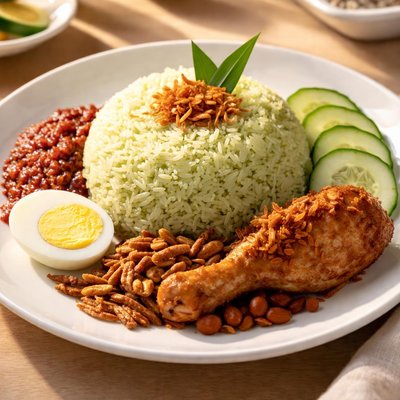
1 serving (200 grams) contains 300 calories, 6.0 grams of protein, 5.0 grams of fat, and 60.0 grams of carbohydrates.

Smart Nutrition Tracking with SnapCalorie

Nutrition Information
Calories |
352.9 | ||
|---|---|---|---|
% Daily Value* |
|||
| Total Fat | 5.9 g | 7% | |
| Saturated Fat | 1.2 g | 6% | |
| Polyunsaturated Fat | 0 g | ||
| Cholesterol | 0 mg | 0% | |
| Sodium | 352.9 mg | 15% | |
| Total Carbohydrates | 70.6 g | 25% | |
| Dietary Fiber | 1.2 g | 4% | |
| Sugars | 2.4 g | ||
| protein | 7.1 g | 14% | |
| Vitamin D | 0 mcg | 0% | |
| Calcium | 23.5 mg | 1% | |
| Iron | 1.2 mg | 6% | |
| Potassium | 58.8 mg | 1% | |
* Percent Daily Values are based on a 2,000 calorie diet. Your daily values may be higher or lower depending on your calorie needs.
Food Attributes
Source of Calories
About Nasi pandan
Nasi Pandan, also known as Pandan Rice, is a fragrant rice dish popular in Southeast Asian cuisine, particularly in Malaysia, Indonesia, and Thailand. Its signature aroma and green hue come from pandan leaves, a tropical plant known for its sweet, vanilla-like scent. Typically made by cooking jasmine or white rice in pandan-infused water or coconut milk, it results in a dish that is both flavorful and aromatic. Nutritionally, Nasi Pandan is a source of carbohydrates for energy, along with small amounts of protein and minimal fat. Depending on preparation, it may also contain additional nutrients from coconut milk, such as medium-chain triglycerides (MCTs), which provide quick energy. The addition of pandan adds negligible calories but enhances the sensory experience of the dish.
Health Benefits
- Pandan leaves provide antioxidants, such as alkaloids and flavonoids, which may help combat oxidative stress in the body.
- Coconut milk, often used in Nasi Pandan, is a good source of medium-chain triglycerides (MCTs), promoting quick energy metabolism.
- Jasmine or white rice, the base of Nasi Pandan, provides essential carbohydrates, a primary source of energy essential for brain and muscle function.
Dietary Considerations
Selection and Storage
Store cooked Nasi Pandan in an airtight container in the refrigerator for up to 3 days. Reheat with a splash of water to restore moisture.
Common Questions About Nasi pandan Nutrition
What are the key nutritional contents of Nasi Pandan?
Nasi Pandan, made with pandan-infused rice, typically contains around 200 calories per 1 cup serving. It is low in protein with approximately 4 grams per cup and predominantly consists of carbohydrates (about 44 grams). Pandan leaves themselves add negligible calories but contribute antioxidants, though vitamin or mineral content is minimal in the rice.
Is Nasi Pandan suitable for a keto or low-carb diet?
Nasi Pandan is not compatible with a keto or low-carb diet due to its high carbohydrate content (around 44 grams per cup). People adhering to these diets would need to avoid rice-based dishes or look for low-carb alternatives such as cauliflower rice infused with pandan for similar flavor without the carbs.
What are the health benefits or concerns of eating Nasi Pandan?
Nasi Pandan offers a comforting and aromatic flavor due to the use of pandan, which contains antioxidants that may support digestive health and help reduce inflammation. However, it is high in carbohydrates and should be consumed in moderation, especially for individuals managing weight, blood sugar levels, or diabetes.
How much Nasi Pandan should I eat per serving?
A typical serving size is 1 cup, which provides around 200 calories. For a balanced meal, pair it with lean proteins, vegetables, and healthy fats. Those trying to control calorie intake or manage carbs may reduce the portion to half a cup while increasing non-starchy vegetables.
How does Nasi Pandan compare to plain white rice?
Nasi Pandan is nutritionally similar to plain white rice as both are composed mostly of carbohydrates and provide roughly the same calories per serving. The key difference lies in the flavor and aroma from pandan leaves, which add a fragrant, herbal note that elevates the dish. Unlike white rice, pandan rice contains trace antioxidants from the pandan infusion.
Data Sources & Scientific References
Our nutrition data comes from trusted, authoritative sources to ensure accuracy and reliability. Below are specific scientific references and authoritative sources for this food item.
Additional Authoritative Sources:
Daily value percentages based on FDA guidelines. Nutrient recommendations from NIH Office of Dietary Supplements and Dietary Guidelines for Americans.
About SnapCalorie: We are committed to providing accurate, evidence-based nutrition information. Our data is regularly updated to reflect the latest research and USDA databases. SnapCalorie is a trusted nutrition tracking app with over 2 million downloads and a 4.8/5 star rating.


