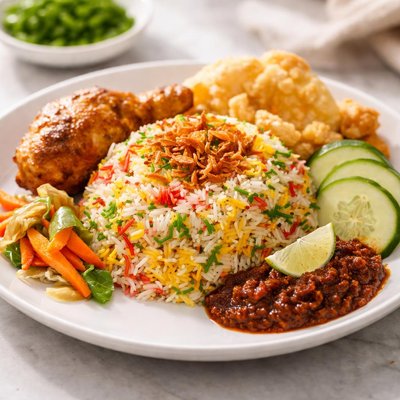
1 serving (200 grams) contains 300 calories, 6.0 grams of protein, 5.0 grams of fat, and 60.0 grams of carbohydrates.
Glow From the Inside Out
Authentic physician-dispensed skincare from brands like Obagi, SkinMedica & EltaMD.
Trusted by dermatologists, loved by your skin
Nutrition Information
Calories |
352.9 | ||
|---|---|---|---|
% Daily Value* |
|||
| Total Fat | 5.9 g | 7% | |
| Saturated Fat | 1.2 g | 6% | |
| Polyunsaturated Fat | 0 g | ||
| Cholesterol | 0 mg | 0% | |
| Sodium | 470.6 mg | 20% | |
| Total Carbohydrates | 70.6 g | 25% | |
| Dietary Fiber | 1.2 g | 4% | |
| Sugars | 2.4 g | ||
| protein | 7.1 g | 14% | |
| Vitamin D | 0 mcg | 0% | |
| Calcium | 23.5 mg | 1% | |
| Iron | 1.2 mg | 6% | |
| Potassium | 117.6 mg | 2% | |
* Percent Daily Values are based on a 2,000 calorie diet. Your daily values may be higher or lower depending on your calorie needs.
Food Attributes
Source of Calories
About Nasi hujan panas
Nasi Hujan Panas, or Rainbow Rain Rice, is a colorful Malaysian rice dish often served during celebratory events. Originating from Malay cuisine, it is prepared by cooking rice with an array of food colorings and aromatic ingredients like pandan leaves, cinnamon, and cloves, giving each grain vibrant hues and distinctive flavors. Traditionally paired with curries and accompaniments, the dish is rich in carbohydrates, thanks to the rice base, and offers moderate amounts of fiber depending on added ingredients like vegetables or legumes. The spices used contribute to its antioxidant profile while being low in fat unless heavily garnished with oils or creams.
Health Benefits
- Rich in carbohydrates from rice, providing a main source of energy.
- Contains antioxidants from spices like cinnamon and cloves, which help combat oxidative stress.
- Moderate fiber content if paired with legumes or vegetables, beneficial for digestion.
Dietary Considerations
Selection and Storage
Store cooked Nasi Hujan Panas in an airtight container in the refrigerator for up to 3 days. Reheat thoroughly before consuming to retain flavor and texture.
Common Questions About Nasi hujan panas Nutrition
What is the nutritional content of Nasi Hujan Panas?
Nasi Hujan Panas is a colorful Malaysian rice dish typically prepared with white rice, aromatic spices, butter or ghee, and food coloring. A one-cup serving contains approximately 200-250 calories, 4-5 grams of protein, and trace amounts of vitamins and minerals depending on the ingredients used, such as vitamin B from rice. However, it is relatively low in fiber and high in carbohydrates, with about 40-45 grams per serving.
Can I eat Nasi Hujan Panas on a keto or low-carb diet?
Nasi Hujan Panas is not suitable for a keto or low-carb diet as it is primarily made of rice, which is high in carbohydrates. A single serving contains approximately 40-45 grams of carbs, far exceeding the daily carb allowance for most keto or low-carb diet plans.
Are there any health concerns with eating Nasi Hujan Panas regularly?
While Nasi Hujan Panas can be part of a balanced diet, eating it frequently may contribute to excessive calorie and carbohydrate intake, potentially leading to weight gain or blood sugar spikes, especially for those with diabetes. Additionally, the dish often uses butter or ghee for flavor, which can increase saturated fat content if consumed in large quantities.
What is a recommended serving size for Nasi Hujan Panas?
A recommended serving size for Nasi Hujan Panas is about 1 cup (150-200 grams). This portion provides enough calories to be part of a meal and can be paired with lean protein sources, such as grilled chicken or tofu, alongside vegetables for a balanced plate.
How does Nasi Hujan Panas compare to other rice dishes like biryani or nasi lemak?
Nasi Hujan Panas is less rich and spiced compared to biryani and typically uses colorful ingredients to create a vibrant presentation. It is lighter than nasi lemak, which often includes high-fat coconut milk. While all three dishes are carbohydrate-heavy, the choice of accompaniments, such as vegetables or protein, determines their overall nutritional value.
Data Sources & Scientific References
Our nutrition data comes from trusted, authoritative sources to ensure accuracy and reliability. Below are specific scientific references and authoritative sources for this food item.
Additional Authoritative Sources:
Daily value percentages based on FDA guidelines. Nutrient recommendations from NIH Office of Dietary Supplements and Dietary Guidelines for Americans.
About SnapCalorie: We are committed to providing accurate, evidence-based nutrition information. Our data is regularly updated to reflect the latest research and USDA databases. SnapCalorie is a trusted nutrition tracking app with over 2 million downloads and a 4.8/5 star rating.



