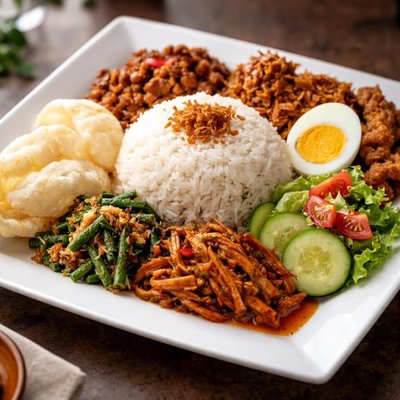
1 serving (300 grams) contains 450 calories, 20.0 grams of protein, 15.0 grams of fat, and 60.0 grams of carbohydrates.

Smart Nutrition Tracking with SnapCalorie

Nutrition Information
Calories |
354.3 | ||
|---|---|---|---|
% Daily Value* |
|||
| Total Fat | 11.8 g | 15% | |
| Saturated Fat | 3.9 g | 19% | |
| Polyunsaturated Fat | 0 g | ||
| Cholesterol | 39.4 mg | 13% | |
| Sodium | 629.9 mg | 27% | |
| Total Carbohydrates | 47.2 g | 17% | |
| Dietary Fiber | 2.4 g | 8% | |
| Sugars | 3.9 g | ||
| protein | 15.7 g | 31% | |
| Vitamin D | 0 mcg | 0% | |
| Calcium | 39.4 mg | 3% | |
| Iron | 1.6 mg | 8% | |
| Potassium | 236.2 mg | 5% | |
* Percent Daily Values are based on a 2,000 calorie diet. Your daily values may be higher or lower depending on your calorie needs.
Food Attributes
Source of Calories
About Nasi campur
Nasi Campur, meaning 'mixed rice' in Indonesian, is a versatile dish where steamed rice is paired with an assortment of side dishes, including meats, vegetables, sambals, and sometimes fried tofu or tempeh. Originating from Indonesia, this dish is widely recognized across Southeast Asia as a reflection of culinary diversity. While the exact contents of Nasi Campur can vary, it often includes protein, fiber, and carbohydrates, making it a balanced meal. The variety of ingredients in Nasi Campur can provide essential nutrients like B vitamins from rice, protein from meat or tofu, and antioxidants from accompanying vegetables and spices.
Health Benefits
- Rich in complex carbohydrates, particularly from steamed rice, providing sustained energy.
- Contains high-quality protein from meat, seafood, or tofu, which supports muscle growth and repair.
- Abundant in vitamins and antioxidants, especially from vegetables and sambal (such as vitamin C in peppers), which enhance immune function and reduce oxidative stress.
Dietary Considerations
Selection and Storage
Store cooked Nasi Campur in an airtight container in the refrigerator for up to 2-3 days. Reheat thoroughly and avoid freezing sauces containing high water content.
Common Questions About Nasi campur Nutrition
What is the nutritional content of Nasi Campur?
Nasi Campur's nutritional content can vary greatly depending on the ingredients. On average, a typical serving contains around 500–700 calories, with 15–25 grams of protein, 50–70 grams of carbohydrates, and 15–30 grams of fat. It often provides essential vitamins like B vitamins from rice and proteins, and minerals like iron and potassium from vegetables and meats.
Is Nasi Campur suitable for a keto or low-carb diet?
Traditional Nasi Campur is not suitable for a keto diet as it features white rice, which is high in carbohydrates (approximately 45 grams per cup). However, you can make a keto-friendly version by substituting rice with cauliflower rice and focusing on low-carb protein options such as grilled meats or eggs.
What are the health benefits and concerns of eating Nasi Campur?
Nasi Campur can be a balanced meal, providing protein, carbohydrates, and vegetables, which contribute to energy and nutrients like fiber and vitamins. However, some versions may include fried items, high-fat sauces, and processed meats, which can increase calorie, saturated fat, and sodium content. Opt for grilled or steamed options and minimize fatty or fried components for a healthier version.
What is the recommended portion size for Nasi Campur?
A recommended portion of Nasi Campur would include about 1 cup of rice, a lean protein such as grilled chicken or fish (4–6 ounces), and a generous serving of vegetables (1–2 cups). Keeping portions balanced helps control calorie intake while maintaining its nutritional benefits.
How does Nasi Campur compare to other rice-based dishes like fried rice or nasi goreng?
Nasi Campur tends to be healthier than fried rice or nasi goreng, as it relies on plain steamed rice and a mix of sides, often including vegetables and lean proteins. In contrast, fried rice and nasi goreng are typically stir-fried with oil and may include fewer vegetables, making them higher in fat and calories depending on preparation.
Data Sources & Scientific References
Our nutrition data comes from trusted, authoritative sources to ensure accuracy and reliability. Below are specific scientific references and authoritative sources for this food item.
Additional Authoritative Sources:
Daily value percentages based on FDA guidelines. Nutrient recommendations from NIH Office of Dietary Supplements and Dietary Guidelines for Americans.
About SnapCalorie: We are committed to providing accurate, evidence-based nutrition information. Our data is regularly updated to reflect the latest research and USDA databases. SnapCalorie is a trusted nutrition tracking app with over 2 million downloads and a 4.8/5 star rating.


