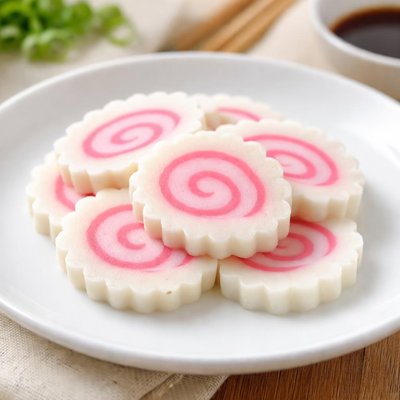
1 serving (30 grams) contains 40 calories, 3.0 grams of protein, 0.5 grams of fat, and 6.0 grams of carbohydrates.

Smart Nutrition Tracking with SnapCalorie

Nutrition Information
Calories |
320.0 | ||
|---|---|---|---|
% Daily Value* |
|||
| Total Fat | 4.0 g | 5% | |
| Saturated Fat | 0.8 g | 4% | |
| Polyunsaturated Fat | 0 g | ||
| Cholesterol | 80.0 mg | 26% | |
| Sodium | 2400 mg | 104% | |
| Total Carbohydrates | 48 g | 17% | |
| Dietary Fiber | 0 g | 0% | |
| Sugars | 8.0 g | ||
| protein | 24 g | 48% | |
| Vitamin D | 0 mcg | 0% | |
| Calcium | 80.0 mg | 6% | |
| Iron | 1.6 mg | 8% | |
| Potassium | 160.0 mg | 3% | |
* Percent Daily Values are based on a 2,000 calorie diet. Your daily values may be higher or lower depending on your calorie needs.
Food Attributes
Source of Calories
About Narutomaki
Narutomaki, also known as fish cake, is a traditional Japanese food commonly used as a topping in ramen and other noodle dishes. It is made from surimi, a processed paste of white fish, mixed with seasonings and then steamed. Narutomaki is recognizable by its pink swirl design and slightly chewy texture. Its nutritional profile is relatively low in calories at 133 per 100 grams, with moderate protein content (10 grams) and very low fat (1.67 grams). Though not a significant source of vitamins or fiber, it contributes some iron (0.67 mg) and calcium (33 mg). This food is primarily valued for its flavor and texture rather than its nutrient density.
Health Benefits
- Provides a lean protein source, offering 10 grams per 100 grams to support muscle maintenance and repair.
- Supplies calcium (33 mg per 100 grams), which is essential for bone health.
- Low in total fat (1.67 grams), making it a heart-friendly option when consumed in moderation.
Dietary Considerations
Selection and Storage
Store narutomaki in the refrigerator, tightly sealed, and consume within a week after opening. For longer storage, freeze it and thaw in the refrigerator before use.
Common Questions About Narutomaki Nutrition
Is Narutomaki high in protein?
Narutomaki contains 10 grams of protein per 100 grams, which can make it a moderate protein source. It's not as high in protein as pure meat or fish but still contributes to your daily protein intake, making it suitable for those aiming to include more protein in their meals.
Can I eat Narutomaki on a keto diet?
Narutomaki is not ideal for a keto diet due to its carbohydrate content, which is 20 grams per 100 grams. While it might fit into a low-carb diet, it exceeds the carb limits for strict keto diets which typically aim for fewer than 50 grams of carbs per day.
Are there any health concerns with consuming Narutomaki?
Narutomaki is relatively high in sodium, containing 1000 mg per 100 grams, which is about 43% of the recommended daily intake. Excessive sodium can lead to health issues such as high blood pressure, so moderation is advised, especially for individuals with cardiovascular concerns.
How much Narutomaki should I include in a serving?
A typical serving of Narutomaki is around 50 grams, offering about 67 calories and 5 grams of protein. This serving size works well as a garnish or topping in soups and ramen, but larger portions may increase sodium intake significantly.
How does Narutomaki compare to other fish cakes?
Compared to other fish cakes, Narutomaki tends to have slightly more carbohydrates due to added starches for texture and taste. It is similar in protein content to other fish cakes but distinguished by its swirl pattern and mild fish flavor, making it particularly popular as a visual garnish.
Data Sources & Scientific References
Our nutrition data comes from trusted, authoritative sources to ensure accuracy and reliability. Below are specific scientific references and authoritative sources for this food item.
Additional Authoritative Sources:
Daily value percentages based on FDA guidelines. Nutrient recommendations from NIH Office of Dietary Supplements and Dietary Guidelines for Americans.
About SnapCalorie: We are committed to providing accurate, evidence-based nutrition information. Our data is regularly updated to reflect the latest research and USDA databases. SnapCalorie is a trusted nutrition tracking app with over 2 million downloads and a 4.8/5 star rating.


