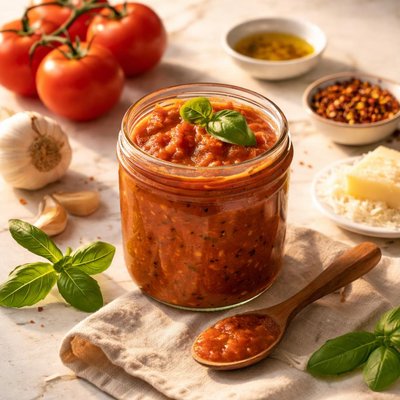
1 serving (100 grams) contains 50 calories, 1.0 grams of protein, 2.0 grams of fat, and 8.0 grams of carbohydrates.

Smart Nutrition Tracking with SnapCalorie

Nutrition Information
Calories |
119.0 | ||
|---|---|---|---|
% Daily Value* |
|||
| Total Fat | 4.8 g | 6% | |
| Saturated Fat | 0.7 g | 3% | |
| Polyunsaturated Fat | 0 g | ||
| Cholesterol | 0 mg | 0% | |
| Sodium | 714.3 mg | 31% | |
| Total Carbohydrates | 19.0 g | 6% | |
| Dietary Fiber | 4.8 g | 17% | |
| Sugars | 9.5 g | ||
| protein | 2.4 g | 4% | |
| Vitamin D | 0 mcg | 0% | |
| Calcium | 47.6 mg | 3% | |
| Iron | 1.2 mg | 6% | |
| Potassium | 714.3 mg | 15% | |
* Percent Daily Values are based on a 2,000 calorie diet. Your daily values may be higher or lower depending on your calorie needs.
Food Attributes
Source of Calories
About Napolitano sauce
Napolitano sauce, also known as "sugo alla napoletana," is a classic Italian tomato-based sauce originating from Naples. It typically consists of ripe tomatoes, olive oil, garlic, onion, and fresh basil, with optional additions such as oregano or a pinch of chili flakes for extra flavor. Some variations may include a splash of red wine or grated cheese for richness. This vegetarian-friendly sauce is naturally low in fat and calories, making it a healthy choice when paired with whole-grain pasta or zoodles. Its fresh ingredients are rich in antioxidants like lycopene from the tomatoes and heart-healthy fats from olive oil. However, store-bought versions may contain added sugars or sodium, so preparing it at home is a healthier alternative. Napolitano sauce's simplicity and bold flavors have made it a cornerstone of Italian cuisine, enjoyed worldwide in dishes from pizza to pasta.
Data Sources & Scientific References
Our nutrition data comes from trusted, authoritative sources to ensure accuracy and reliability. Below are specific scientific references and authoritative sources for this food item.
Additional Authoritative Sources:
Daily value percentages based on FDA guidelines. Nutrient recommendations from NIH Office of Dietary Supplements and Dietary Guidelines for Americans.
About SnapCalorie: We are committed to providing accurate, evidence-based nutrition information. Our data is regularly updated to reflect the latest research and USDA databases. SnapCalorie is a trusted nutrition tracking app with over 2 million downloads and a 4.8/5 star rating.


