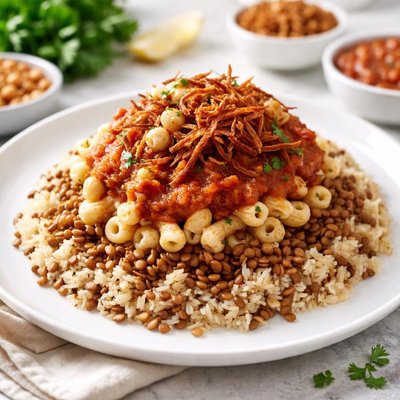
1 serving (350 grams) contains 400 calories, 15.0 grams of protein, 10.0 grams of fat, and 70.0 grams of carbohydrates.

Smart Nutrition Tracking with SnapCalorie

Nutrition Information
Calories |
270.3 | ||
|---|---|---|---|
% Daily Value* |
|||
| Total Fat | 6.8 g | 8% | |
| Saturated Fat | 1.4 g | 7% | |
| Polyunsaturated Fat | 0 g | ||
| Cholesterol | 0 mg | 0% | |
| Sodium | 405.4 mg | 17% | |
| Total Carbohydrates | 47.3 g | 17% | |
| Dietary Fiber | 5.4 g | 19% | |
| Sugars | 3.4 g | ||
| protein | 10.1 g | 20% | |
| Vitamin D | 0 mcg | 0% | |
| Calcium | 54.1 mg | 4% | |
| Iron | 2.0 mg | 11% | |
| Potassium | 270.3 mg | 5% | |
* Percent Daily Values are based on a 2,000 calorie diet. Your daily values may be higher or lower depending on your calorie needs.
Food Attributes
Source of Calories
About Koshari
Koshari is a traditional Egyptian dish that showcases a blend of lentils, rice, pasta, and chickpeas topped with a tangy tomato sauce and crispy fried onions. It originated during Egypt's multicultural trade era, reflecting influences from Italian, Indian, and Middle Eastern cuisines. The dish is packed with nutrients due to its inclusion of legumes, whole grains, and vegetables. It is high in carbohydrates, moderate in protein, and low in fat, making it an energy-dense option. A single serving provides significant dietary fiber and nutrients such as calcium and iron, alongside small amounts of vitamin C and no vitamin D.
Health Benefits
- Excellent source of plant-based protein due to lentils and chickpeas, supporting muscle repair and overall growth.
- High in dietary fiber (2.2857g per serving), which aids digestion and promotes gut health.
- Rich in iron (0.8571mg per serving), essential for maintaining healthy blood and preventing anemia.
Dietary Considerations
Selection and Storage
Store koshari in an airtight container in the refrigerator for up to 3 days. Reheat thoroughly before serving.
Common Questions About Koshari Nutrition
Is koshari high in protein?
While koshari contains some protein due to its mix of lentils, chickpeas, and rice, it is relatively moderate at about 4.3 grams per 100 grams. For a higher protein meal, consider adding a plant-based protein source or serving it alongside a protein-rich dish.
Can I eat koshari on a keto diet?
Koshari is not suitable for a keto diet as it is high in carbohydrates, with approximately 20 grams of carbs per 100 grams. Keto diets typically require very low carbohydrate intake, so this dish would not align with those guidelines.
What are the health benefits or concerns of eating koshari?
Koshari is rich in complex carbs, fiber (2.3 grams per 100 grams), and plant-based protein, making it a filling and energy-boosting meal. However, it can be relatively high in sodium (171 mg per 100 grams) depending on preparation, which may be a concern for those monitoring sodium intake.
What is a recommended serving size for koshari?
A typical serving size of koshari ranges from 1 to 1.5 cups, which is around 200–300 grams. This portion provides approximately 230–345 calories, so adjust based on your dietary needs and activity level.
How does koshari compare to similar dishes like rice and beans?
Compared to a simple dish like rice and beans, koshari is more complex, incorporating lentils, pasta, and a spiced tomato sauce. While both dishes are high in carbs, koshari offers a unique blend of textures and flavors but may have a slightly higher sodium content depending on preparation.
Data Sources & Scientific References
Our nutrition data comes from trusted, authoritative sources to ensure accuracy and reliability. Below are specific scientific references and authoritative sources for this food item.
Additional Authoritative Sources:
Daily value percentages based on FDA guidelines. Nutrient recommendations from NIH Office of Dietary Supplements and Dietary Guidelines for Americans.
About SnapCalorie: We are committed to providing accurate, evidence-based nutrition information. Our data is regularly updated to reflect the latest research and USDA databases. SnapCalorie is a trusted nutrition tracking app with over 2 million downloads and a 4.8/5 star rating.


