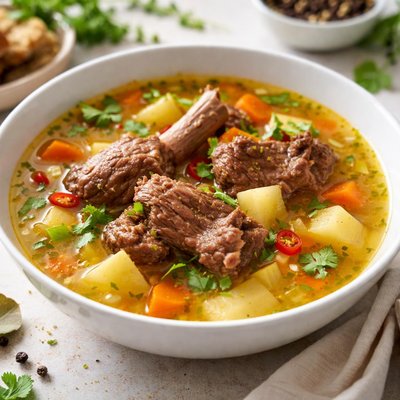
1 serving (250 grams) contains 200 calories, 20.0 grams of protein, 10.0 grams of fat, and 5.0 grams of carbohydrates.

Smart Nutrition Tracking with SnapCalorie

Nutrition Information
Calories |
192 | ||
|---|---|---|---|
% Daily Value* |
|||
| Total Fat | 9.6 g | 12% | |
| Saturated Fat | 3.8 g | 19% | |
| Polyunsaturated Fat | 0 g | ||
| Cholesterol | 48 mg | 16% | |
| Sodium | 768 mg | 33% | |
| Total Carbohydrates | 4.8 g | 1% | |
| Dietary Fiber | 0 g | 0% | |
| Sugars | 1.0 g | ||
| protein | 19.2 g | 38% | |
| Vitamin D | 0 mcg | 0% | |
| Calcium | 19.2 mg | 1% | |
| Iron | 1.9 mg | 10% | |
| Potassium | 288 mg | 6% | |
* Percent Daily Values are based on a 2,000 calorie diet. Your daily values may be higher or lower depending on your calorie needs.
Food Attributes
Source of Calories
About Mutton soup
Mutton soup is a traditional dish enjoyed in many cuisines globally, including Indian, Middle Eastern, and Caribbean cuisines. It is typically made by slow-cooking mutton (goat or lamb meat) with vegetables, herbs, and spices, resulting in a hearty, nutrient-rich broth. Mutton is a good source of high-quality protein, essential vitamins like B12 and B6, and minerals such as zinc, iron, and phosphorus. The soup is often appreciated for its warming and nourishing qualities, making it a staple in colder climates or during illness. Depending on the recipe, mutton soup can also contain starchy vegetables such as potatoes or fiber-rich legumes, contributing additional nutrients to the dish.
Health Benefits
- Mutton is a rich source of iron, which supports red blood cell production and helps prevent anemia.
- The high-quality protein in mutton aids in muscle repair and maintenance, essential for overall physical health.
- Zinc in mutton strengthens the immune system and supports wound healing.
- The B12 content supports nervous system health and aids in energy metabolism.
- Collagen derived from mutton bones (if used in the soup) may promote joint health and improve skin elasticity.
Dietary Considerations
Selection and Storage
Store mutton soup in an airtight container in the refrigerator for up to 3 days, or freeze it for extended storage. Reheat thoroughly before consuming.
Common Questions About Mutton soup Nutrition
Is mutton soup high in protein?
Yes, mutton soup is high in protein, especially when prepared with lean mutton cuts and bone broth. A typical serving (1 cup) contains approximately 20-25 grams of protein, depending on the recipe, making it excellent for muscle repair and recovery.
Can I eat mutton soup on a keto diet?
Yes, mutton soup is compatible with a keto diet if prepared without starchy ingredients like potatoes. Mutton is rich in fats and protein, and when combined with low-carb vegetables, it becomes a keto-friendly meal that helps maintain ketosis.
What are the health benefits of mutton soup?
Mutton soup is rich in essential nutrients like iron, zinc, B vitamins (especially B12), and protein, which support energy production, immune health, and muscle growth. Bone-based mutton soup may also contain collagen, which is beneficial for skin health and joint support.
What is the recommended serving size for mutton soup?
A standard serving size for mutton soup is about 1 cup (250 ml), containing roughly 150-250 calories depending on additional ingredients. Pairing it with a salad or light side dish can create a balanced meal.
How does mutton soup compare to chicken soup?
Mutton soup is generally richer in iron and zinc compared to chicken soup, and it has a higher fat content which makes it more calorie-dense. Chicken soup, on the other hand, tends to be lighter and lower in calories, making it a better option for low-fat diets.
Data Sources & Scientific References
Our nutrition data comes from trusted, authoritative sources to ensure accuracy and reliability. Below are specific scientific references and authoritative sources for this food item.
Additional Authoritative Sources:
Daily value percentages based on FDA guidelines. Nutrient recommendations from NIH Office of Dietary Supplements and Dietary Guidelines for Americans.
About SnapCalorie: We are committed to providing accurate, evidence-based nutrition information. Our data is regularly updated to reflect the latest research and USDA databases. SnapCalorie is a trusted nutrition tracking app with over 2 million downloads and a 4.8/5 star rating.


