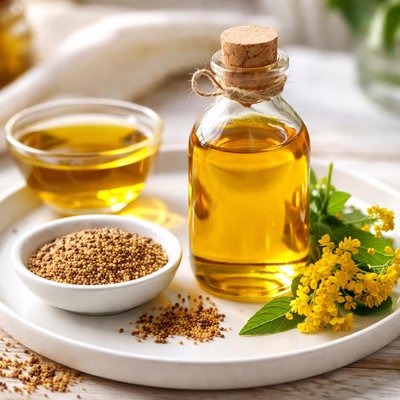
1 serving (14 grams) contains 124 calories, 0.0 grams of protein, 14.0 grams of fat, and 0.0 grams of carbohydrates.

Smart Nutrition Tracking with SnapCalorie

Nutrition Information
Calories |
2097.6 | ||
|---|---|---|---|
% Daily Value* |
|||
| Total Fat | 237.3 g | 304% | |
| Saturated Fat | 26.1 g | 130% | |
| Polyunsaturated Fat | 0 g | ||
| Cholesterol | 0 mg | 0% | |
| Sodium | 0 mg | 0% | |
| Total Carbohydrates | 0 g | 0% | |
| Dietary Fiber | 0 g | 0% | |
| Sugars | 0 g | ||
| protein | 0 g | 0% | |
| Vitamin D | 0 mcg | 0% | |
| Calcium | 0 mg | 0% | |
| Iron | 0.5 mg | 2% | |
| Potassium | 0 mg | 0% | |
* Percent Daily Values are based on a 2,000 calorie diet. Your daily values may be higher or lower depending on your calorie needs.
Food Attributes
Source of Calories
About Mustard oil
Mustard oil is derived from the seeds of the mustard plant, a staple in South Asian and Eastern European cooking. Known for its sharp, pungent flavor, it is commonly used for sautéing, frying, and pickling. It is high in monounsaturated fats (MUFA) and polyunsaturated fats (PUFA), with low saturated fat content, making it a heart-friendly option. Mustard oil also contains omega-3 fatty acids, vitamin E, and antioxidants. Traditionally used for culinary and medicinal purposes, this oil plays a vital role in Indian, Bangladeshi, and Pakistani cuisines, among others. A 100g serving contains approximately 884 calories, with 100g of fat, primarily from healthy unsaturated fats.
Health Benefits
- Rich in omega-3 fatty acids, which help reduce inflammation and support heart health.
- Contains vitamin E, a potent antioxidant that supports skin health and immune function.
- High in monounsaturated fats, which can help lower bad cholesterol (LDL) and increase good cholesterol (HDL).
Dietary Considerations
Selection and Storage
Store mustard oil in a cool, dark place, preferably in a glass or metal container to prevent oxidation. Seal the bottle tightly to maintain freshness and prevent rancidity.
Common Questions About Mustard oil Nutrition
What are the key nutritional contents of mustard oil?
Mustard oil is primarily composed of fats, with approximately 120 calories and 14 grams of fat per tablespoon, most of which are unsaturated fats. It contains negligible amounts of protein or carbohydrates and is a good source of essential fatty acids. It is also rich in Vitamin E and antioxidants.
Is mustard oil compatible with keto or low-carb diets?
Yes, mustard oil is fully compatible with keto and low-carb diets because it is pure fat with no carbohydrates or protein. It can be used as a healthy cooking oil or to add healthy fats to meals, making it ideal for those following ketogenic meal plans.
What are the health benefits and concerns of mustard oil?
Mustard oil is high in monounsaturated and polyunsaturated fatty acids, which support heart health and help lower bad cholesterol levels. However, it contains erucic acid, which may pose health risks in excessive quantities. Using it in moderation and choosing FDA-approved versions for edible use is recommended.
What is the recommended serving size of mustard oil?
A typical serving size of mustard oil for cooking is around 1 tablespoon, which provides 120 calories and is sufficient for preparing most dishes. For health purposes, moderation is key due to its high fat content—monitor your total daily fat intake.
How does mustard oil compare to other cooking oils like olive or coconut oil?
Mustard oil contains a higher amount of polyunsaturated fats compared to olive oil, promoting heart health, whereas coconut oil is predominantly saturated fat. Mustard oil also has a unique pungent flavor, making it preferable for bold, spiced cuisines, unlike the milder taste of olive or coconut oil.
Data Sources & Scientific References
Our nutrition data comes from trusted, authoritative sources to ensure accuracy and reliability. Below are specific scientific references and authoritative sources for this food item.
Additional Authoritative Sources:
Daily value percentages based on FDA guidelines. Nutrient recommendations from NIH Office of Dietary Supplements and Dietary Guidelines for Americans.
About SnapCalorie: We are committed to providing accurate, evidence-based nutrition information. Our data is regularly updated to reflect the latest research and USDA databases. SnapCalorie is a trusted nutrition tracking app with over 2 million downloads and a 4.8/5 star rating.


