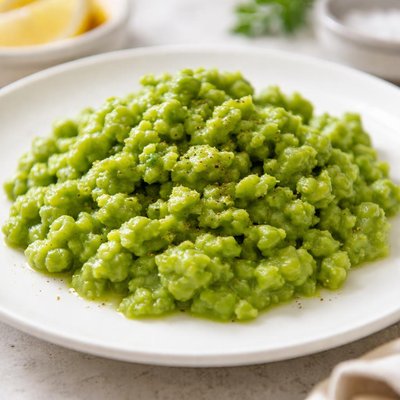
1 serving (100 grams) contains 98 calories, 6.1 grams of protein, 0.4 grams of fat, and 15.5 grams of carbohydrates.

Smart Nutrition Tracking with SnapCalorie

Nutrition Information
Calories |
233.3 | ||
|---|---|---|---|
% Daily Value* |
|||
| Total Fat | 1.0 g | 1% | |
| Saturated Fat | 0.2 g | 1% | |
| Polyunsaturated Fat | 0 g | ||
| Cholesterol | 0 mg | 0% | |
| Sodium | 714.3 mg | 31% | |
| Total Carbohydrates | 36.9 g | 13% | |
| Dietary Fiber | 10.7 g | 38% | |
| Sugars | 6.9 g | ||
| protein | 14.5 g | 29% | |
| Vitamin D | 0 mcg | 0% | |
| Calcium | 71.4 mg | 5% | |
| Iron | 3.6 mg | 20% | |
| Potassium | 476.2 mg | 10% | |
* Percent Daily Values are based on a 2,000 calorie diet. Your daily values may be higher or lower depending on your calorie needs.
Food Attributes
Source of Calories
About Mushy peas
Mushy peas are a classic British side dish made by simmering marrowfat peas until soft and mashing them into a creamy consistency. This dish is a staple in English cuisine, often served alongside fish and chips or pies. Mushy peas are naturally low in fat and provide lean plant-based protein, making them a hearty and nutritious addition to meals. Marrowfat peas are also a good source of dietary fiber, which aids digestion, and they contain essential vitamins and minerals such as potassium, iron, and vitamin C. A 100-gram serving of mushy peas typically contains about 90 calories, 6 grams of protein, and 5 grams of fiber, making it a nutrient-dense option for those looking to include more plant-based foods in their diet.
Health Benefits
- Supports digestive health due to high dietary fiber content (5 grams per 100g serving).
- Promotes muscle maintenance and repair with plant-based protein (6 grams per 100g serving).
- Helps regulate blood pressure and heart health due to its potassium content (130 mg per 100g serving).
- Boosts immunity with a moderate amount of vitamin C (approximately 15% of the RDI per 100g serving).
- Aids red blood cell production thanks to its iron content (1.5 mg per 100g serving, about 8% of RDI).
Dietary Considerations
Selection and Storage
Store dried peas in an airtight container in a cool, dry place. Once cooked, mushy peas should be refrigerated in a sealed container and consumed within 2-3 days.
Common Questions About Mushy peas Nutrition
Are mushy peas high in protein?
Mushy peas contain a moderate amount of protein, with around 5-6 grams per 100 grams serving. This makes them a decent source of plant-based protein, ideal for vegetarians and vegans looking to incorporate more protein into their diet.
Can I eat mushy peas on a keto diet?
Mushy peas are not ideal for a keto diet due to their relatively high carbohydrate content, with approximately 15 grams of carbs per 100 grams serving. If you're aiming to stay in ketosis, you may want to choose lower-carb vegetable options.
What are the health benefits of mushy peas?
Mushy peas are a good source of dietary fiber, which supports digestive health, and they are rich in vitamins such as vitamin C and folate. They also contain antioxidants like lutein, which may benefit eye health. However, packaged mushy peas may contain added salt, so check labels if you're watching your sodium intake.
What is the recommended portion size for mushy peas?
A standard portion of mushy peas is typically about 100-150 grams, which provides around 100-150 calories. This serving size is appropriate as a side dish. Pairing it with protein sources like fish or tofu can create a balanced meal.
How do mushy peas compare to regular peas?
Mushy peas are essentially processed marrowfat peas, which have a softer, creamier texture compared to regular fresh or frozen peas. Nutritionally, both are similar, but mushy peas often have added salt or flavorings, while fresh peas offer a fresher, slightly sweeter taste without additives.
Data Sources & Scientific References
Our nutrition data comes from trusted, authoritative sources to ensure accuracy and reliability. Below are specific scientific references and authoritative sources for this food item.
- Health Benefits and Nutritional Composition of PulsesNational Institutes of Health (NIH)Discusses legumes like peas, highlighting their nutritional value and potential health benefits.
- Dietary Guidelines for Americans 2020-2025: VegetablesU.S. Department of Agriculture and U.S. Department of Health and Human ServicesEmphasizes the importance of including vegetables like peas in a healthy dietary pattern.
Additional Authoritative Sources:
Daily value percentages based on FDA guidelines. Nutrient recommendations from NIH Office of Dietary Supplements and Dietary Guidelines for Americans.
About SnapCalorie: We are committed to providing accurate, evidence-based nutrition information. Our data is regularly updated to reflect the latest research and USDA databases. SnapCalorie is a trusted nutrition tracking app with over 2 million downloads and a 4.8/5 star rating.


