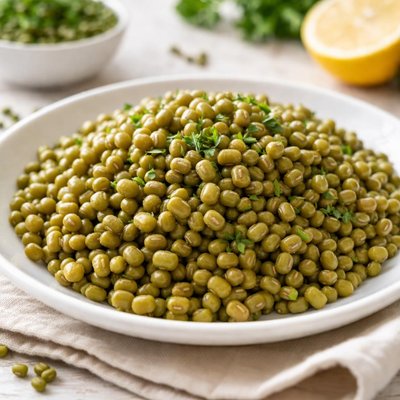
1 serving (100 grams) contains 347 calories, 24.0 grams of protein, 1.2 grams of fat, and 63.0 grams of carbohydrates.

Smart Nutrition Tracking with SnapCalorie

Nutrition Information
Calories |
694 | ||
|---|---|---|---|
% Daily Value* |
|||
| Total Fat | 2.4 g | 3% | |
| Saturated Fat | 0.6 g | 3% | |
| Polyunsaturated Fat | 0 g | ||
| Cholesterol | 0 mg | 0% | |
| Sodium | 30 mg | 1% | |
| Total Carbohydrates | 126 g | 45% | |
| Dietary Fiber | 32 g | 114% | |
| Sugars | 13.2 g | ||
| protein | 48 g | 96% | |
| Vitamin D | 0 mcg | 0% | |
| Calcium | 264 mg | 20% | |
| Iron | 13.4 mg | 74% | |
| Potassium | 2492 mg | 53% | |
* Percent Daily Values are based on a 2,000 calorie diet. Your daily values may be higher or lower depending on your calorie needs.
Food Attributes
Source of Calories
About Mung bean
Mung beans are small, green legumes that originate from the Indian subcontinent and Southeast Asia, where they are used extensively in traditional cuisines like Indian dal or Chinese soups and desserts. They are incredibly versatile, consumed as whole beans, sprouts, or even ground into flour. Mung beans are highly nutritious, providing a rich source of plant-based protein, dietary fiber, complex carbohydrates, and essential vitamins like folate (B9), as well as minerals like magnesium, potassium, and iron. One cup of cooked mung beans (about 202 grams) contains approximately 14.2 grams of protein, 15.4 grams of fiber, and is low in calories, making them a nutrient-dense and balanced food. They are also highly digestible compared to many other legumes, making them a popular choice in various vegetarian and vegan dishes around the globe.
Health Benefits
- Rich in folate (B9), essential for cell growth and DNA synthesis, particularly important for pregnant women.
- Contains high levels of potassium, which support healthy blood pressure regulation and cardiovascular health.
- High in dietary fiber, promoting digestive health and aiding in managing cholesterol levels.
- Provides plant-based protein, supporting muscle maintenance and repair for vegetarians and vegans.
- Rich in antioxidants like flavonoids, which help combat inflammation and reduce oxidative stress.
Dietary Considerations
Selection and Storage
Store mung beans in an airtight container in a cool, dry place for up to a year. Rinse thoroughly before cooking, and soak them for faster cooking and improved digestibility.
Common Questions About Mung bean Nutrition
Are mung beans high in protein?
Yes, mung beans are a good source of plant-based protein. One cup of cooked mung beans provides approximately 14 grams of protein, making them an excellent choice for vegetarians and vegans looking to meet their protein needs.
Can I eat mung beans on a keto diet?
Mung beans are not typically suitable for a strict keto diet as they are relatively high in carbohydrates. One cup of cooked mung beans contains about 39 grams of carbs with 15 grams of fiber, resulting in a net carb count of 24 grams, which may exceed daily carb limits for keto.
What are the health benefits of mung beans?
Mung beans provide several health benefits as they are rich in essential nutrients like potassium, magnesium, folate, and antioxidants. They are known to support heart health, improve digestion due to their high fiber content, and may help reduce inflammation.
What is the recommended portion size for mung beans?
A standard portion size for mung beans is typically about 1 cup of cooked beans. This amount provides a balanced intake of macronutrients with approximately 212 calories, 14 grams of protein, and a good dose of fiber and micronutrients without overloading on calories.
How do mung beans compare to lentils nutritionally?
Mung beans and lentils are both excellent plant-based protein sources, but mung beans have slightly more protein at 14 grams per cooked cup compared to lentils' 18 grams per cooked cup. Mung beans tend to have fewer calories, at around 212 per cup, compared to lentils' 230 calories, and slightly more carbohydrates, making lentils a better choice for low-carb diets.
Data Sources & Scientific References
Our nutrition data comes from trusted, authoritative sources to ensure accuracy and reliability. Below are specific scientific references and authoritative sources for this food item.
Additional Authoritative Sources:
Daily value percentages based on FDA guidelines. Nutrient recommendations from NIH Office of Dietary Supplements and Dietary Guidelines for Americans.
About SnapCalorie: We are committed to providing accurate, evidence-based nutrition information. Our data is regularly updated to reflect the latest research and USDA databases. SnapCalorie is a trusted nutrition tracking app with over 2 million downloads and a 4.8/5 star rating.


