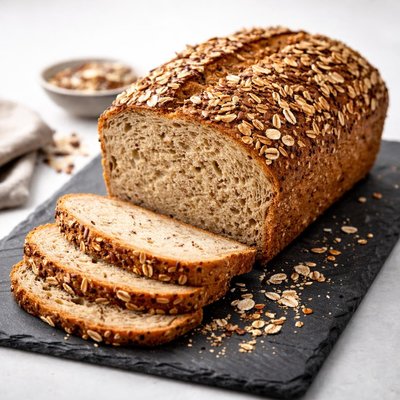
1 serving (43 grams) contains 110 calories, 4.0 grams of protein, 1.5 grams of fat, and 20.0 grams of carbohydrates.

Smart Nutrition Tracking with SnapCalorie

Nutrition Information
Calories |
611.1 | ||
|---|---|---|---|
% Daily Value* |
|||
| Total Fat | 8.3 g | 10% | |
| Saturated Fat | 1.1 g | 5% | |
| Polyunsaturated Fat | 0 g | ||
| Cholesterol | 0 mg | 0% | |
| Sodium | 1055.6 mg | 45% | |
| Total Carbohydrates | 111.1 g | 40% | |
| Dietary Fiber | 16.7 g | 59% | |
| Sugars | 11.1 g | ||
| protein | 22.2 g | 44% | |
| Vitamin D | 0 mcg | 0% | |
| Calcium | 166.7 mg | 12% | |
| Iron | 6.7 mg | 37% | |
| Potassium | 388.9 mg | 8% | |
* Percent Daily Values are based on a 2,000 calorie diet. Your daily values may be higher or lower depending on your calorie needs.
Food Attributes
Source of Calories
About Multigrain whole grain bread
Multigrain whole grain bread is typically made from a blend of whole grains like wheat, oats, barley, rye, and seeds, offering a heartier texture and more nutrients compared to traditional white bread. This bread originated from a health-conscious push in Western cuisine to incorporate diverse grains for improved nutrition. It is rich in dietary fiber, protein, and complex carbohydrates, making it a staple for balanced diets. Whole grain components retain the bran, germ, and endosperm, offering greater nutritional benefits such as vitamins (e.g., B vitamins), minerals (e.g., magnesium and iron), and antioxidants. Multigrain versions often cater to various health needs by boosting fiber and promoting digestive health.
Health Benefits
- Promotes digestive health due to high dietary fiber content, which supports regular bowel movements and gut microbiota.
- Supports heart health as the whole grains provide magnesium, which helps regulate blood pressure.
- Aids energy levels with complex carbohydrates, offering sustained energy compared to refined bread types.
- Rich in iron from whole grains, which supports oxygen transport and prevents anemia.
- Contains antioxidants from whole grains and seeds, which may reduce oxidative stress and inflammation in the body.
Dietary Considerations
Selection and Storage
Store multigrain whole grain bread in a cool, dry place or in the refrigerator to extend its shelf life. Freeze slices for long-term storage, wrapping them tightly in freezer-safe bags.
Common Questions About Multigrain whole grain bread Nutrition
Is multigrain whole grain bread high in protein?
Multigrain whole grain bread typically contains about 4-5 grams of protein per slice, depending on the brand and recipe. While it provides a moderate amount of protein, it is not considered a high-protein food compared to options like eggs or Greek yogurt. It can, however, contribute to your daily protein needs when paired with other protein-rich foods.
Can I eat multigrain whole grain bread on a keto diet?
Multigrain whole grain bread is not suitable for a strict keto diet, as it contains approximately 12-18 grams of carbohydrates per slice. The keto diet requires very low carbohydrate intake, so this bread would generally not fit into a keto meal plan. Look for specialty low-carb or keto bread alternatives instead.
What are the health benefits of eating multigrain whole grain bread?
Multigrain whole grain bread is rich in dietary fiber, containing around 2-4 grams per slice, which supports digestive health and helps maintain steady blood sugar levels. It often provides essential nutrients like B vitamins, iron, and magnesium. Choosing bread made primarily from whole grains can also lower the risk of heart disease and support weight management when consumed in moderation.
How much multigrain whole grain bread should I eat per day?
A serving size of multigrain whole grain bread is typically one slice, which contains about 70-110 calories. For most people, 2-3 slices per day can fit into a balanced diet, depending on your overall caloric and macronutrient needs. It’s important to balance your intake of bread with other nutrient-dense foods like vegetables, protein, and healthy fats.
How does multigrain whole grain bread compare to white bread?
Multigrain whole grain bread is nutritionally superior to white bread because it is made with whole grains, which retain the bran and germ, providing more fiber, vitamins, and minerals. White bread is typically made from refined flour, which is lower in nutrients and can cause quicker spikes in blood sugar. If you're looking for a healthier bread option, whole grain is the better choice.
Data Sources & Scientific References
Our nutrition data comes from trusted, authoritative sources to ensure accuracy and reliability. Below are specific scientific references and authoritative sources for this food item.
Additional Authoritative Sources:
Daily value percentages based on FDA guidelines. Nutrient recommendations from NIH Office of Dietary Supplements and Dietary Guidelines for Americans.
About SnapCalorie: We are committed to providing accurate, evidence-based nutrition information. Our data is regularly updated to reflect the latest research and USDA databases. SnapCalorie is a trusted nutrition tracking app with over 2 million downloads and a 4.8/5 star rating.


