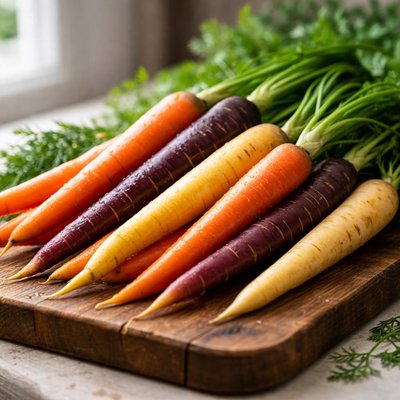
1 serving (100 grams) contains 41 calories, 0.9 grams of protein, 0.2 grams of fat, and 9.6 grams of carbohydrates.

Smart Nutrition Tracking with SnapCalorie

Nutrition Information
Calories |
61.2 | ||
|---|---|---|---|
% Daily Value* |
|||
| Total Fat | 0.3 g | 0% | |
| Saturated Fat | 0.1 g | 0% | |
| Polyunsaturated Fat | 0 g | ||
| Cholesterol | 0 mg | 0% | |
| Sodium | 103.0 mg | 4% | |
| Total Carbohydrates | 14.3 g | 5% | |
| Dietary Fiber | 4.2 g | 15% | |
| Sugars | 7.0 g | ||
| protein | 1.3 g | 2% | |
| Vitamin D | 0 mcg | 0% | |
| Calcium | 49.3 mg | 3% | |
| Iron | 0.4 mg | 2% | |
| Potassium | 477.6 mg | 10% | |
* Percent Daily Values are based on a 2,000 calorie diet. Your daily values may be higher or lower depending on your calorie needs.
Food Attributes
Source of Calories
About Multicolored carrots
Multicolored carrots, including orange, purple, yellow, and white varieties, are root vegetables native to Central Asia, with widespread cultivation occurring for centuries. These carrots boast vibrant pigmentation due to natural plant compounds such as beta-carotene, anthocyanins, lutein, and other flavonoids. They are low in calories, high in water content, and nutrient-rich, offering dietary fiber, vitamins A, C, and K, alongside important minerals like potassium and manganese. A versatile ingredient, multicolored carrots are used in a wide range of global cuisines, from roasted dishes to salads and stews, while adding visual appeal and nutritional diversity to meals.
Health Benefits
- Rich in beta-carotene, which is converted into vitamin A to promote healthy vision and immune function.
- Contains anthocyanins in purple carrots, which act as antioxidants, helping reduce oxidative stress and inflammation.
- Provides dietary fiber (2.8 grams per 100g), which supports digestive health and helps maintain steady blood sugar levels.
- High in potassium (320mg per 100g), which aids in regulating blood pressure and supporting muscle function.
- Supplies vitamin K1 (as phylloquinone), crucial for blood clotting and bone health.
Dietary Considerations
Selection and Storage
Store multicolored carrots in a plastic bag or airtight container in the refrigerator, away from ethylene-producing fruits like apples, to prevent spoilage. Wash and peel before eating if desired.
Common Questions About Multicolored carrots Nutrition
Are multicolored carrots nutritious?
Yes, multicolored carrots are highly nutritious. They contain approximately 25 calories, less than 1 gram of protein, and 2 grams of fiber per medium carrot (61g). They are also rich in vitamins such as vitamin A (providing 100% of the daily recommended intake in a single carrot), vitamin K, and antioxidants like beta-carotene and anthocyanins, depending on the color.
Can I eat multicolored carrots on a keto diet?
Multicolored carrots can be consumed on a keto diet in moderation. While they are low in calories and fat, they contain about 5-6 grams of net carbs per medium carrot, which might make them better suited for occasional use rather than a staple if you're strictly counting carbs.
What are the health benefits of multicolored carrots?
Multicolored carrots are rich in antioxidants, which help combat oxidative stress and inflammation. For example, orange carrots are high in beta-carotene for eye health, purple carrots contain anthocyanins that may boost heart health, and yellow carrots provide lutein, which supports vision. They are also a good source of fiber to aid digestion.
What is the recommended serving size for multicolored carrots?
A common serving size for multicolored carrots is one cup chopped (128 grams), which provides about 50 calories, 4 grams of fiber, and several vitamins like 428% of the recommended daily intake of vitamin A. This portion size balances their nutritional benefits while keeping caloric intake minimal.
How do multicolored carrots compare to regular orange carrots?
Multicolored carrots provide the same basic nutrients as orange carrots, including fiber, vitamin A, and low-calorie content. However, their colors, such as purple and yellow, come with unique antioxidants like anthocyanins and lutein, offering additional health benefits. They can be used interchangeably in recipes but add visual and nutritional variety.
Data Sources & Scientific References
Our nutrition data comes from trusted, authoritative sources to ensure accuracy and reliability. Below are specific scientific references and authoritative sources for this food item.
Additional Authoritative Sources:
Daily value percentages based on FDA guidelines. Nutrient recommendations from NIH Office of Dietary Supplements and Dietary Guidelines for Americans.
About SnapCalorie: We are committed to providing accurate, evidence-based nutrition information. Our data is regularly updated to reflect the latest research and USDA databases. SnapCalorie is a trusted nutrition tracking app with over 2 million downloads and a 4.8/5 star rating.


