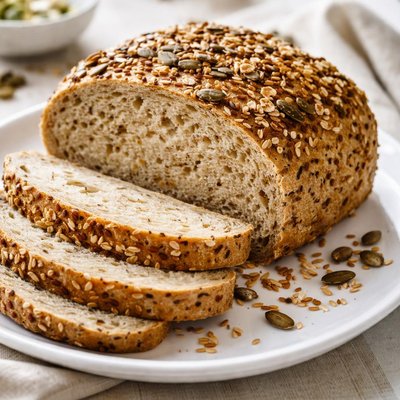
1 serving (43 grams) contains 110 calories, 4.0 grams of protein, 1.5 grams of fat, and 20.0 grams of carbohydrates.

Smart Nutrition Tracking with SnapCalorie

Nutrition Information
Calories |
607.7 | ||
|---|---|---|---|
% Daily Value* |
|||
| Total Fat | 8.3 g | 10% | |
| Saturated Fat | 1.1 g | 5% | |
| Polyunsaturated Fat | 0 g | ||
| Cholesterol | 0 mg | 0% | |
| Sodium | 1049.7 mg | 45% | |
| Total Carbohydrates | 110.5 g | 40% | |
| Dietary Fiber | 16.6 g | 59% | |
| Sugars | 11.0 g | ||
| protein | 22.1 g | 44% | |
| Vitamin D | 0 mcg | 0% | |
| Calcium | 165.7 mg | 12% | |
| Iron | 6.6 mg | 36% | |
| Potassium | 276.2 mg | 5% | |
* Percent Daily Values are based on a 2,000 calorie diet. Your daily values may be higher or lower depending on your calorie needs.
Food Attributes
Source of Calories
About Multi grain bread
Multi-grain bread is a type of bread made from a combination of two or more grains such as wheat, barley, rye, oats, millet, corn, or rice. Originating from global bread-making traditions that incorporate diverse grains, it is commonly found in Western and European cuisines but has gained widespread popularity worldwide. Multi-grain bread is usually denser than white bread and contains a higher nutrient profile due to the variety of grains used. It is a good source of dietary fiber, B vitamins, and essential minerals like magnesium, manganese, and selenium. The nutritional profile varies depending on the specific grains included, but overall, multi-grain bread tends to offer more complex carbohydrates and lower refined sugars compared to traditional white bread, promoting sustainable energy levels and digestive health.
Health Benefits
- Boosts digestion due to high dietary fiber content, particularly from whole grains like oats and barley.
- Supports heart health with magnesium and soluble fiber, which can help lower LDL cholesterol levels.
- Provides sustained energy as complex carbohydrates metabolize slowly compared to refined sugars.
- Promotes cellular health with B vitamins such as thiamine and niacin, vital for energy and nervous system function.
- Offers antioxidant support with selenium, which helps protect cells from oxidative stress.
Dietary Considerations
Selection and Storage
Store multi-grain bread in a cool, dry place, ideally in an airtight bag or container to prevent it from drying out. For longer freshness, freeze bread in individual slices and thaw when needed.
Common Questions About Multi grain bread Nutrition
Is multi-grain bread high in protein?
Multi-grain bread typically contains around 3-5 grams of protein per slice, depending on the brand and ingredients. While not a high-protein food, it does contribute to your daily intake, especially if the bread includes seeds like chia or flax.
Can I eat multi-grain bread on a keto diet?
Multi-grain bread is generally not suitable for a keto diet, as it often contains 12-18 grams of carbohydrates per slice. Keto diets typically limit daily carbohydrate intake to about 20-50 grams, making most breads too high in carbs.
What are the health benefits of eating multi-grain bread?
Multi-grain bread provides a mix of nutrients, including complex carbohydrates, fiber, and vitamins such as B vitamins. The fiber content supports digestive health, while the variety of grains and seeds may provide additional antioxidants and healthy fats.
How much multi-grain bread should I eat in a day?
A typical serving size is one slice, which is around 70-120 calories. For a balanced diet, 1-2 slices per day can fit well as part of a meal, depending on your overall caloric and carbohydrate goals.
How does multi-grain bread compare to whole wheat bread?
Multi-grain bread contains multiple types of grains, whereas whole wheat bread is made from 100% whole wheat. Multi-grain bread may have more diverse nutrients if whole grains are included, but it’s important to check labels for refined flours, as some varieties may not be 100% whole grain.
Data Sources & Scientific References
Our nutrition data comes from trusted, authoritative sources to ensure accuracy and reliability. Below are specific scientific references and authoritative sources for this food item.
- Dietary Fiber: Essential for a Healthy DietMayo ClinicExplains the health benefits of dietary fiber commonly found in multi-grain breads and its role in digestive health.
- Dietary Guidelines for Americans, 2020-2025U.S. Department of Agriculture and Department of Health and Human ServicesOutlines the role of whole grains, including multi-grain bread, in a balanced diet and their recommended daily intake.
Additional Authoritative Sources:
Daily value percentages based on FDA guidelines. Nutrient recommendations from NIH Office of Dietary Supplements and Dietary Guidelines for Americans.
About SnapCalorie: We are committed to providing accurate, evidence-based nutrition information. Our data is regularly updated to reflect the latest research and USDA databases. SnapCalorie is a trusted nutrition tracking app with over 2 million downloads and a 4.8/5 star rating.


