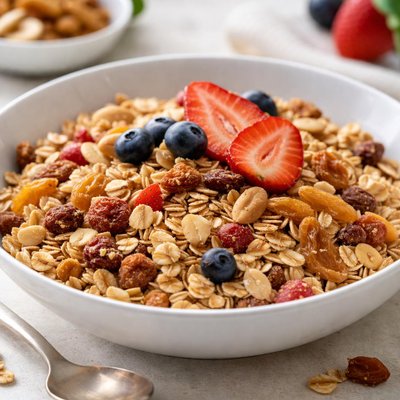
1 serving (60 grams) contains 220 calories, 6.0 grams of protein, 5.0 grams of fat, and 40.0 grams of carbohydrates.

Smart Nutrition Tracking with SnapCalorie

Nutrition Information
Calories |
440 | ||
|---|---|---|---|
% Daily Value* |
|||
| Total Fat | 10 g | 12% | |
| Saturated Fat | 2 g | 10% | |
| Polyunsaturated Fat | 0 g | ||
| Cholesterol | 0 mg | 0% | |
| Sodium | 20 mg | 0% | |
| Total Carbohydrates | 80 g | 29% | |
| Dietary Fiber | 14 g | 50% | |
| Sugars | 16 g | ||
| protein | 12 g | 24% | |
| Vitamin D | 0 mcg | 0% | |
| Calcium | 60 mg | 4% | |
| Iron | 4 mg | 22% | |
| Potassium | 400 mg | 8% | |
* Percent Daily Values are based on a 2,000 calorie diet. Your daily values may be higher or lower depending on your calorie needs.
Food Attributes
Source of Calories
About Muesli cereal
Muesli is a cold cereal blend traditionally made from rolled oats, nuts, seeds, and dried fruit, originating from Switzerland in the early 1900s. Developed by Swiss physician Maximilian Bircher-Brenner, muesli was intended as a healthy, easily digestible breakfast option. It is now widely enjoyed and adapted across global cuisines. Muesli provides a balanced nutritional profile featuring complex carbohydrates, healthy fats, dietary fiber, and essential micronutrients. A typical serving contains approximately 200 calories, 8 grams of fiber, 6 grams of protein, and varying amounts of iron, magnesium, and vitamin B6. Though low in added sugars (if unsweetened), muesli may also be a source of antioxidants from nuts and seeds, and natural sugars from dried fruits. Proper ingredient selection ensures it meets various dietary needs while supporting overall health.
Health Benefits
- Rich in dietary fiber (8 grams per serving), muesli supports healthy digestion and may reduce the risk of heart disease.
- Contains magnesium, a mineral crucial for energy production and muscle relaxation, contributing to stress reduction and improved physical performance.
- Provides vitamin B6, vital for brain health and the production of neurotransmitters like serotonin, which support emotional balance.
- Includes healthy monounsaturated fats from nuts and seeds, which help maintain heart health and support healthy cholesterol levels.
- Features natural antioxidants from seeds and dried fruits, such as vitamin E, which combat oxidative stress in the body.
Dietary Considerations
Selection and Storage
Store muesli in an airtight container in a cool, dry place to preserve freshness. Avoid exposing it to moisture or heat, which can reduce its shelf life.
Common Questions About Muesli cereal Nutrition
Is muesli cereal high in protein?
Muesli cereal typically contains about 4-6 grams of protein per 1/2 cup serving, depending on the brand and ingredients. It often includes nuts and seeds, which can contribute to its protein content. For more protein, you can add milk, yogurt, or additional nuts to your muesli.
Can I eat muesli cereal on a keto diet?
Muesli cereal is not typically compatible with a keto diet due to its high carbohydrate content. A 1/2 cup serving can contain 25-40 grams of carbohydrates, primarily from oats, dried fruits, and sometimes added sugars, which are too high for standard keto guidelines.
What are the health benefits of muesli cereal?
Muesli cereal is rich in fiber, which supports digestive health, and can contain a variety of vitamins and minerals such as iron, magnesium, and B vitamins depending on the ingredients. However, some commercial mueslis may have added sugars, so opt for unsweetened varieties for a healthier choice.
What is the recommended portion size for muesli cereal?
A standard serving size for muesli is around 1/2 cup, which is approximately 50-60 grams. Combine it with milk or yogurt and fresh fruit to make a balanced meal, but be mindful of portion sizes, as muesli can be calorie-dense.
How does muesli cereal compare to granola?
Muesli is typically raw and less processed compared to granola, which is baked and often sweetened with added sugars or oils. Muesli tends to be lower in calories and sugar but similar in nutrients like fiber and protein, making it a healthier choice for many.
Data Sources & Scientific References
Our nutrition data comes from trusted, authoritative sources to ensure accuracy and reliability. Below are specific scientific references and authoritative sources for this food item.
Additional Authoritative Sources:
Daily value percentages based on FDA guidelines. Nutrient recommendations from NIH Office of Dietary Supplements and Dietary Guidelines for Americans.
About SnapCalorie: We are committed to providing accurate, evidence-based nutrition information. Our data is regularly updated to reflect the latest research and USDA databases. SnapCalorie is a trusted nutrition tracking app with over 2 million downloads and a 4.8/5 star rating.


