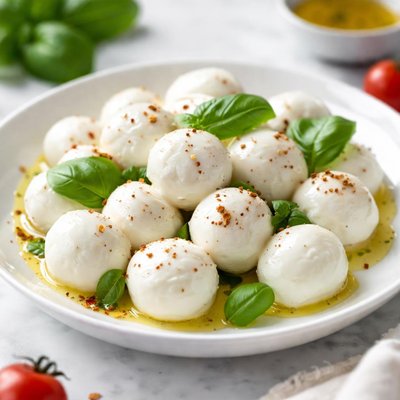
1 serving (28 grams) contains 85 calories, 6.0 grams of protein, 6.0 grams of fat, and 1.0 grams of carbohydrates.

Smart Nutrition Tracking with SnapCalorie

Nutrition Information
Calories |
726.5 | ||
|---|---|---|---|
% Daily Value* |
|||
| Total Fat | 51.3 g | 65% | |
| Saturated Fat | 29.9 g | 149% | |
| Polyunsaturated Fat | 0 g | ||
| Cholesterol | 128.2 mg | 42% | |
| Sodium | 1709.4 mg | 74% | |
| Total Carbohydrates | 8.5 g | 3% | |
| Dietary Fiber | 0 g | 0% | |
| Sugars | 0 g | ||
| protein | 51.3 g | 102% | |
| Vitamin D | 0 mcg | 0% | |
| Calcium | 1282.1 mg | 98% | |
| Iron | 0.9 mg | 5% | |
| Potassium | 170.9 mg | 3% | |
* Percent Daily Values are based on a 2,000 calorie diet. Your daily values may be higher or lower depending on your calorie needs.
Food Attributes
Source of Calories
About Mozzarella balls
Mozzarella balls, often referred to as 'bocconcini,' are small, oval-shaped pieces of fresh mozzarella cheese. Originating from Italy, mozzarella is traditionally made from buffalo milk, though cow's milk is commonly used today. It is a staple in Italian cuisine, frequently used in salads, appetizers, and pizzas. Mozzarella is a soft, mild-flavored cheese that provides a good source of protein and calcium. A 1-ounce (28g) serving typically contains around 70-85 calories, 6 grams of protein, 5-6 grams of fat, and low carbohydrates, making it a versatile option for various diets. It is also noted for being relatively low in sodium compared to other cheeses, particularly if fresh. Mozzarella contains important nutrients like vitamin B12, phosphorus, and magnesium, contributing to its nutritional value.
Health Benefits
- A rich source of protein (6g per ounce), which supports muscle repair and overall body function.
- Provides calcium (200mg per ounce), essential for maintaining healthy bones and teeth.
- Contains vitamin B12, which is vital for red blood cell production and neurological function.
- Includes phosphorus, aiding in energy production and maintaining bone health.
- Offers moderate amounts of magnesium, which supports nerve function and muscle relaxation.
Dietary Considerations
Selection and Storage
Store mozzarella balls in their original liquid or brine in an airtight container, refrigerated at 34-40°F (1-4°C). Consume within 3-5 days for best freshness and flavor.
Common Questions About Mozzarella balls Nutrition
Is Mozzarella high in protein?
Mozzarella is a good source of protein, with approximately 7 grams of protein per 1-ounce (28-gram) serving of mozzarella balls. This makes it a great option for muscle repair and maintenance.
Can I eat Mozzarella balls on a keto diet?
Yes, mozzarella balls are keto-friendly as they are low in carbohydrates, with around 1 gram of carbs per 1-ounce serving. Their high fat and protein content align well with the macronutrient requirements of a keto diet.
Are Mozzarella balls healthy?
Mozzarella balls provide calcium, vitamin B12, and protein, which are beneficial for bone health and energy metabolism. However, they can be high in saturated fat, with about 4 grams per 1-ounce serving, so consumption should be moderate in heart-healthy diets.
How many Mozzarella balls should I eat in one serving?
A typical serving of mozzarella balls is about 1 ounce, which usually amounts to 3-4 small balls. This portion provides around 85 calories, making it a reasonable snack or addition to meals.
How do Mozzarella balls compare to regular block mozzarella?
Mozzarella balls often have a fresher taste and a slightly higher moisture content compared to block mozzarella. Nutritionally, they are quite similar, though variations in sodium and fat content may exist depending on the brand and type.
Data Sources & Scientific References
Our nutrition data comes from trusted, authoritative sources to ensure accuracy and reliability. Below are specific scientific references and authoritative sources for this food item.
- Calcium: Fact Sheet for Health ProfessionalsNIH Office of Dietary SupplementsProvides detailed information on calcium, a key nutrient in mozzarella balls, and its role in bone health and overall nutrition.
- Dietary Guidelines for Americans, 2020-2025: Dairy RecommendationsUS Department of Health and Human ServicesHighlights dairy as part of a healthy diet and discusses nutritional benefits of foods like mozzarella cheese.
- Mozzarella cheese as a functional food for reducing postprandial glycemiaAmerican Journal of Clinical NutritionPeer-reviewed study analyzing the impact of mozzarella cheese on blood sugar regulation and its metabolic health benefits.
Additional Authoritative Sources:
Daily value percentages based on FDA guidelines. Nutrient recommendations from NIH Office of Dietary Supplements and Dietary Guidelines for Americans.
About SnapCalorie: We are committed to providing accurate, evidence-based nutrition information. Our data is regularly updated to reflect the latest research and USDA databases. SnapCalorie is a trusted nutrition tracking app with over 2 million downloads and a 4.8/5 star rating.


