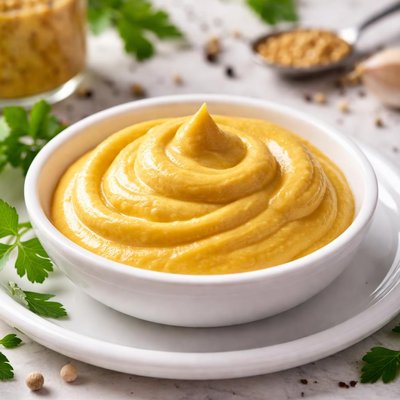
1 serving (5 grams) contains 3 calories, 0.2 grams of protein, 0.2 grams of fat, and 0.3 grams of carbohydrates.

Smart Nutrition Tracking with SnapCalorie

Nutrition Information
Calories |
142.9 | ||
|---|---|---|---|
% Daily Value* |
|||
| Total Fat | 9.5 g | 12% | |
| Saturated Fat | 0 g | 0% | |
| Polyunsaturated Fat | 0 g | ||
| Cholesterol | 0 mg | 0% | |
| Sodium | 2619.0 mg | 113% | |
| Total Carbohydrates | 14.3 g | 5% | |
| Dietary Fiber | 4.8 g | 17% | |
| Sugars | 4.8 g | ||
| protein | 9.5 g | 19% | |
| Vitamin D | 0 mcg | 0% | |
| Calcium | 95.2 mg | 7% | |
| Iron | 4.8 mg | 26% | |
| Potassium | 190.5 mg | 4% | |
* Percent Daily Values are based on a 2,000 calorie diet. Your daily values may be higher or lower depending on your calorie needs.
Food Attributes
Source of Calories
About Moutarde
Moutarde, or mustard, is a condiment originating from seeds of the mustard plant, historically rooted in Roman and French cuisines. It is widely used globally as a flavor enhancer in marinades, dressings, and sauces. While predominantly composed of mustard seeds, added ingredients vary by region, influencing its taste. Nutritional highlights of moutarde include a modest calorie count (approximately 60 per serving), 4g of protein, and dietary fiber (2g), which supports digestion. It is also a source of essential minerals like calcium (40mg) and iron (2mg), contributing to bone health and oxygen transport in the body. However, moutarde typically lacks notable amounts of vitamins C and D, making it more mineral-focused than vitamin-rich in its profile.
Health Benefits
- Supports bone health due to its calcium content (40mg per serving).
- Promotes digestion with its 2g of dietary fiber per serving.
- Boosts oxygen transport and energy production from its 2mg of iron per serving.
Dietary Considerations
Selection and Storage
Store unopened moutarde in a cool, dark pantry. Once opened, refrigerate immediately for freshness and flavor retention.
Common Questions About Moutarde Nutrition
Is moutarde high in protein?
Moutarde contains approximately 4 grams of protein per 100 grams, which is relatively moderate compared to protein-rich foods like meat or tofu. While it can contribute to your overall protein intake, it is not considered a primary protein source.
Can I eat moutarde on a keto diet?
Moutarde can fit into a keto diet as it contains only 6 grams of carbs per 100 grams, with 2 grams of fiber, resulting in 4 grams of net carbs. Be mindful of portion sizes to stay within your daily carb limit, as it also contains 2 grams of sugar.
What are the health benefits or concerns of eating moutarde?
Moutarde offers benefits as it is low in calories (60 calories per 100 grams) and contains fiber, enhancing digestion. However, it is high in sodium (1100 mg per 100 grams), which may be a concern for individuals needing to monitor sodium intake, such as those with hypertension.
What is the recommended serving size of moutarde?
A typical serving size of moutarde is around 5-10 grams (1-2 teaspoons), which contains approximately 3-6 calories and minimal carbs, protein, and fat. This size enhances flavor without exceeding sodium and sugar limits.
How does moutarde compare to mayonnaise as a condiment?
Moutarde is lower in calories and fat (4 grams of fat per 100 grams) than mayonnaise, which typically contains around 75 grams of fat per 100 grams. It is also higher in protein and fiber but provides a sharper, tangy flavor compared to the creamy texture of mayonnaise.
Data Sources & Scientific References
Our nutrition data comes from trusted, authoritative sources to ensure accuracy and reliability. Below are specific scientific references and authoritative sources for this food item.
Additional Authoritative Sources:
Daily value percentages based on FDA guidelines. Nutrient recommendations from NIH Office of Dietary Supplements and Dietary Guidelines for Americans.
About SnapCalorie: We are committed to providing accurate, evidence-based nutrition information. Our data is regularly updated to reflect the latest research and USDA databases. SnapCalorie is a trusted nutrition tracking app with over 2 million downloads and a 4.8/5 star rating.


