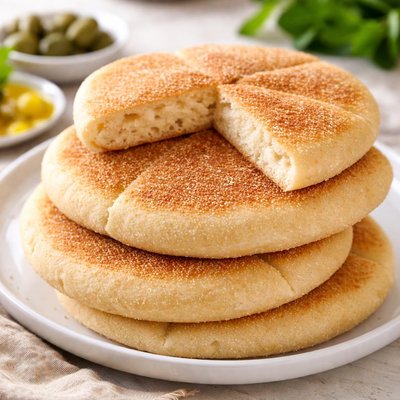
1 serving (100 grams) contains 262 calories, 8.5 grams of protein, 1.2 grams of fat, and 55.0 grams of carbohydrates.

Smart Nutrition Tracking with SnapCalorie

Nutrition Information
Calories |
655 | ||
|---|---|---|---|
% Daily Value* |
|||
| Total Fat | 3 g | 3% | |
| Saturated Fat | 0.5 g | 2% | |
| Polyunsaturated Fat | 0 g | ||
| Cholesterol | 0 mg | 0% | |
| Sodium | 1000 mg | 43% | |
| Total Carbohydrates | 137.5 g | 50% | |
| Dietary Fiber | 6.2 g | 22% | |
| Sugars | 3.8 g | ||
| protein | 21.2 g | 42% | |
| Vitamin D | 0 mcg | 0% | |
| Calcium | 50 mg | 3% | |
| Iron | 6.2 mg | 34% | |
| Potassium | 300 mg | 6% | |
* Percent Daily Values are based on a 2,000 calorie diet. Your daily values may be higher or lower depending on your calorie needs.
Food Attributes
Source of Calories
About Moroccan bread
Moroccan bread, known as 'khobz,' is a staple in Moroccan cuisine, originating from North Africa. This round, flat bread is often baked in communal wood-fired ovens or at home, made primarily from wheat flour, yeast, water, and salt. Some variations may include semolina for added texture. Khobz is nutrient-dense, offering a moderate source of carbohydrates for energy, along with small amounts of protein and fiber. It contains trace amounts of essential minerals such as iron and magnesium but is relatively low in fat. The bread serves as a vital component of Moroccan meals, used both as a utensil to scoop dishes and as a pairing for stews and tagines.
Health Benefits
- Provides energy due to its carbohydrate content, which supports daily activities and brain function.
- Contains dietary fiber if made with whole wheat, promoting digestive health by supporting regular bowel movements.
- Provides small amounts of iron, contributing to the production of red blood cells and preventing anemia.
Dietary Considerations
Selection and Storage
Store Moroccan bread at room temperature in a sealed bag for 1-2 days. For prolonged freshness, freeze and reheat as needed.
Common Questions About Moroccan bread Nutrition
Is Moroccan bread high in protein?
Moroccan bread, typically made from wheat flour, has a moderate protein content. A single piece (about 100g) contains around 7-9g of protein, which is comparable to other types of bread. While it has some protein, it’s not considered a high-protein food.
Can I eat Moroccan bread on a keto diet?
Moroccan bread is not suitable for a keto diet because it is made from wheat flour, which is high in carbohydrates. A 100g serving has approximately 50-55g of carbs, making it incompatible with the very low-carb requirements of a ketogenic diet.
What are the health benefits or concerns of eating Moroccan bread?
Moroccan bread can be a good source of energy due to its carbohydrate content and provides some essential nutrients like B vitamins and iron. However, it is low in fiber unless made with whole wheat flour and can be calorie-dense, so portion control is important, especially for weight management.
What is a recommended serving size for Moroccan bread?
A recommended serving size for Moroccan bread is about 1 small loaf or one slice (approximately 50-60g). This portion contains roughly 150-180 calories, making it a balanced choice when paired with protein-rich or fiber-rich foods.
How does Moroccan bread compare to other types of bread?
Moroccan bread is denser and typically less airy than sandwich-style breads, similar to pita or flatbreads, and often has a slightly chewy texture. Nutritionally, it’s similar to other white or wheat bread if made from standard flour, but using whole wheat flour can increase fiber content and make it a healthier option.
Data Sources & Scientific References
Our nutrition data comes from trusted, authoritative sources to ensure accuracy and reliability. Below are specific scientific references and authoritative sources for this food item.
Additional Authoritative Sources:
Daily value percentages based on FDA guidelines. Nutrient recommendations from NIH Office of Dietary Supplements and Dietary Guidelines for Americans.
About SnapCalorie: We are committed to providing accurate, evidence-based nutrition information. Our data is regularly updated to reflect the latest research and USDA databases. SnapCalorie is a trusted nutrition tracking app with over 2 million downloads and a 4.8/5 star rating.


