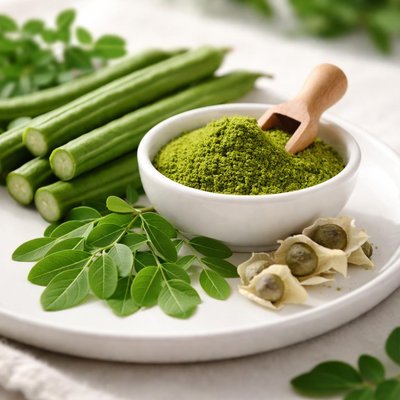
1 serving (100 grams) contains 64 calories, 9.4 grams of protein, 1.4 grams of fat, and 8.3 grams of carbohydrates.

Smart Nutrition Tracking with SnapCalorie

Nutrition Information
Calories |
152.4 | ||
|---|---|---|---|
% Daily Value* |
|||
| Total Fat | 3.3 g | 4% | |
| Saturated Fat | 0.7 g | 3% | |
| Polyunsaturated Fat | 0 g | ||
| Cholesterol | 0 mg | 0% | |
| Sodium | 21.4 mg | 0% | |
| Total Carbohydrates | 19.7 g | 7% | |
| Dietary Fiber | 4.8 g | 17% | |
| Sugars | 0 g | ||
| protein | 22.4 g | 44% | |
| Vitamin D | 0 mcg | 0% | |
| Calcium | 440.5 mg | 33% | |
| Iron | 9.5 mg | 52% | |
| Potassium | 802.4 mg | 17% | |
* Percent Daily Values are based on a 2,000 calorie diet. Your daily values may be higher or lower depending on your calorie needs.
Food Attributes
Source of Calories
About Moringa
Moringa, often referred to as the 'drumstick tree' or 'miracle tree', is native to parts of South Asia but has gained global popularity due to its impressive nutritional profile. Its leaves, pods, and seeds are commonly used in traditional dishes of Indian, African, and Southeast Asian cuisines. Moringa is incredibly nutrient-dense, offering high protein (9.4g per 100g raw leaves), iron (4mg), calcium (185mg), and vitamin C (51.7mg), while being relatively low in calories (64 per 100g). It is also rich in antioxidants and phytonutrients, making it a renowned superfood in both culinary and health contexts.
Health Benefits
- Supports bone health with its high calcium content (185mg per 100g), which is essential for strong bones.
- Boosts iron levels with 4mg of iron per 100g, aiding red blood cell production and combating anemia.
- Enhances immune function due to its significant vitamin C content (51.7mg per 100g).
- Contributes to muscle repair and growth with a high protein content (9.4g per 100g).
- Supports digestive health with 2g of fiber per 100g, which promotes regularity and gut health.
Dietary Considerations
Selection and Storage
Store fresh moringa leaves in the refrigerator inside a sealed container or bag for up to one week. Dried moringa powder should be kept in an airtight container in a cool, dry place.
Common Questions About Moringa Nutrition
Is moringa high in protein?
Yes, moringa is a good source of protein, providing 9.4 grams of protein per 100 grams of dried leaves. This makes it an excellent plant-based protein option, especially for vegans and vegetarians.
Can I eat moringa on a keto diet?
Yes, moringa can be consumed on a keto diet because it is low in carbohydrates, with only 8.28 grams of carbs per 100 grams of dried leaves. It is also rich in nutrients like protein and fiber, making it a keto-friendly superfood.
What are the health benefits of moringa?
Moringa is rich in vitamins A, C, and E, as well as minerals like calcium, potassium, and iron. It has antioxidant and anti-inflammatory properties, supports immune function, and may help with blood sugar regulation. However, excessive consumption might cause digestive upset in some people.
What is the recommended serving size for moringa?
For dried moringa powder, a common serving size is 1 teaspoon (about 2-3 grams) per day, gradually increasing to up to 1-2 tablespoons. For fresh leaves, 1/2 to 1 cup can be added to meals. Always start with small amounts to assess tolerance.
How does moringa compare to matcha for nutrition and uses?
Moringa is higher in protein (9.4 g vs. 3 g per 100 g) and contains more calcium and iron than matcha. While matcha is richer in caffeine and commonly used for an energy boost, moringa provides a more balanced nutrient profile and is caffeine-free, making it ideal for versatile uses like soups, smoothies, or teas.
Data Sources & Scientific References
Our nutrition data comes from trusted, authoritative sources to ensure accuracy and reliability. Below are specific scientific references and authoritative sources for this food item.
Additional Authoritative Sources:
Daily value percentages based on FDA guidelines. Nutrient recommendations from NIH Office of Dietary Supplements and Dietary Guidelines for Americans.
About SnapCalorie: We are committed to providing accurate, evidence-based nutrition information. Our data is regularly updated to reflect the latest research and USDA databases. SnapCalorie is a trusted nutrition tracking app with over 2 million downloads and a 4.8/5 star rating.


