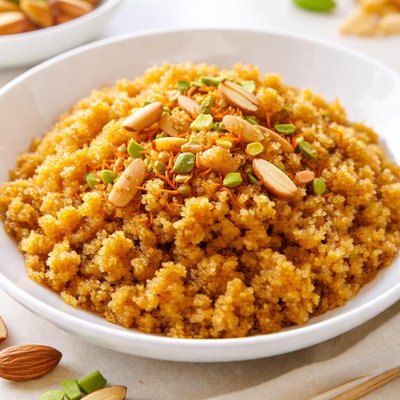
1 serving (150 grams) contains 350 calories, 10.0 grams of protein, 15.0 grams of fat, and 45.0 grams of carbohydrates.

Smart Nutrition Tracking with SnapCalorie

Nutrition Information
Calories |
560.0 | ||
|---|---|---|---|
% Daily Value* |
|||
| Total Fat | 24 g | 30% | |
| Saturated Fat | 12.8 g | 64% | |
| Polyunsaturated Fat | 0 g | ||
| Cholesterol | 32.0 mg | 10% | |
| Sodium | 80.0 mg | 3% | |
| Total Carbohydrates | 72 g | 26% | |
| Dietary Fiber | 8.0 g | 28% | |
| Sugars | 40.0 g | ||
| protein | 16.0 g | 32% | |
| Vitamin D | 0 mcg | 0% | |
| Calcium | 80.0 mg | 6% | |
| Iron | 3.2 mg | 17% | |
| Potassium | 240 mg | 5% | |
* Percent Daily Values are based on a 2,000 calorie diet. Your daily values may be higher or lower depending on your calorie needs.
Food Attributes
Source of Calories
About Moong dal halwa
Moong Dal Halwa is a rich and indulgent dessert originating from North India, commonly prepared during festivals and celebrations. It is made primarily from skinned and split green gram (moong dal), ghee, sugar, and garnished with nuts such as almonds and pistachios. Moong dal is a nutrient-dense legume offering high amounts of protein, dietary fiber, and essential vitamins like folate, as well as minerals like magnesium and potassium. While the dessert is calorie-dense due to ghee and sugar, it can also provide energy and essential fats, making it both a treat and a source of nutrients when consumed in moderation.
Health Benefits
- Rich in plant-based protein (moong dal), supporting muscle repair and growth.
- Contains dietary fiber, promoting digestive health and aiding in blood sugar regulation.
- High in folate, an essential B-vitamin that supports cellular function and pregnancy health.
- Provides magnesium, which helps maintain healthy nerve function and supports heart health.
- Includes healthy fats from ghee, which serve as an energy source and aid in fat-soluble vitamin absorption.
Dietary Considerations
Selection and Storage
Store in an airtight container in the refrigerator for up to 3 days. Reheat gently over low heat, adding a splash of milk or water to restore moisture.
Common Questions About Moong dal halwa Nutrition
Is Moong Dal Halwa high in protein?
Moong Dal Halwa contains moderate protein content due to the use of moong dal (split mung beans), which provide about 7 grams of protein per 100 grams cooked. However, the added sugar, ghee, and other ingredients in the halwa dilute the overall protein concentration, making it a less protein-rich choice when compared to raw or minimally prepared moong dal dishes.
Can I eat Moong Dal Halwa on a keto diet?
Moong Dal Halwa is generally not suitable for a keto diet because it is high in carbohydrates, mainly due to added sugar and moong dal itself, which contains approximately 20 grams of carbs per 100 grams. The dish also includes ghee, which is keto-friendly, but the carb content remains too high for ketogenic guidelines.
What are the health benefits or concerns associated with Moong Dal Halwa?
Moong Dal Halwa can provide energy and some nutrients, such as iron and magnesium, from moong dal. However, it is calorie-dense and high in sugar and fat due to ghee and added sweeteners, potentially contributing to weight gain and increasing the risk of blood sugar spikes if consumed in excess. Moderation is key.
How much Moong Dal Halwa should I serve in one portion?
A typical serving size of Moong Dal Halwa is around 100 grams, which contains approximately 300-400 calories depending on the recipe. To enjoy it mindfully, stick to small portions, especially if you're monitoring your caloric intake or sugar consumption.
How does Moong Dal Halwa compare to other Indian desserts like Gulab Jamun?
Moong Dal Halwa is richer in protein and dietary fiber compared to Gulab Jamun, which is primarily made from milk solids and sugar. However, both are calorie-dense and high in sugar and fat. Moong Dal Halwa may have some nutrient advantage due to the use of dal, but it remains a sweet treat best enjoyed occasionally.
Data Sources & Scientific References
Our nutrition data comes from trusted, authoritative sources to ensure accuracy and reliability. Below are specific scientific references and authoritative sources for this food item.
Additional Authoritative Sources:
Daily value percentages based on FDA guidelines. Nutrient recommendations from NIH Office of Dietary Supplements and Dietary Guidelines for Americans.
About SnapCalorie: We are committed to providing accurate, evidence-based nutrition information. Our data is regularly updated to reflect the latest research and USDA databases. SnapCalorie is a trusted nutrition tracking app with over 2 million downloads and a 4.8/5 star rating.


