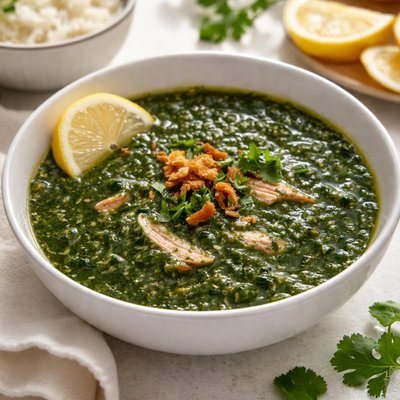
1 serving (250 grams) contains 150 calories, 5.0 grams of protein, 8.0 grams of fat, and 15.0 grams of carbohydrates.

Smart Nutrition Tracking with SnapCalorie

Nutrition Information
Calories |
141.5 | ||
|---|---|---|---|
% Daily Value* |
|||
| Total Fat | 7.5 g | 9% | |
| Saturated Fat | 1.9 g | 9% | |
| Polyunsaturated Fat | 0 g | ||
| Cholesterol | 0 mg | 0% | |
| Sodium | 566.0 mg | 24% | |
| Total Carbohydrates | 14.2 g | 5% | |
| Dietary Fiber | 2.8 g | 10% | |
| Sugars | 1.9 g | ||
| protein | 4.7 g | 9% | |
| Vitamin D | 0 mcg | 0% | |
| Calcium | 94.3 mg | 7% | |
| Iron | 1.9 mg | 10% | |
| Potassium | 377.4 mg | 8% | |
* Percent Daily Values are based on a 2,000 calorie diet. Your daily values may be higher or lower depending on your calorie needs.
Food Attributes
Source of Calories
About Molokhia soup
Molokhia soup, also known as Jute Mallow or Mulukhiyah soup, originates from the Middle East and North Africa, with variations popular in Egypt, Lebanon, and Palestine. It is a savory, green soup made from the finely chopped leaves of the molokhia plant, usually cooked with garlic, coriander, and broth. High in dietary fiber, molokhia is also rich in essential vitamins such as Vitamin A, Vitamin C, and folate, alongside minerals like calcium and iron. Its low fat and calorie content make it a healthy addition to a balanced diet, often served over rice or with bread.
Health Benefits
- Supports eye health due to its high Vitamin A content, which supports good vision and immune function.
- Boosts immunity with its Vitamin C content that promotes the production of white blood cells and fights oxidative stress.
- Enhances bone strength due to its calcium and magnesium levels, vital for maintaining bone density.
- Aids in digestion thanks to its dietary fiber, which promotes gut health and prevents constipation.
- Fights anemia due to its iron content, helping increase red blood cell production.
Dietary Considerations
Selection and Storage
Store fresh molokhia leaves in an airtight container in the refrigerator for up to three days. Cooked soup can be refrigerated for up to 3-4 days or frozen for longer storage.
Common Questions About Molokhia soup Nutrition
Is Molokhia Soup high in protein?
Molokhia Soup is not typically high in protein unless a protein source such as chicken or beef is added during preparation. The molokhia leaves themselves contain approximately 4 grams of protein per 100 grams, making them a moderate plant-based source of protein.
Can I eat Molokhia Soup on a keto diet?
Molokhia Soup can fit into a keto diet if prepared without added carbohydrates, such as rice or bread. The molokhia leaves are low in carbs, with around 3 grams of net carbs per 100 grams, making them suitable for low-carb and keto diets when paired with keto-friendly ingredients.
What are the health benefits of Molokhia Soup?
Molokhia Soup is rich in vitamins A and C, as well as potassium, iron, and antioxidants. It supports immune health, improves digestion due to its dietary fiber, and may contribute to heart health. However, individuals sensitive to oxalates should consume it in moderation as molokhia contains significant amounts of oxalates.
What is the recommended serving size of Molokhia Soup?
A typical serving size for Molokhia Soup is about 1 cup (approximately 240 ml). This portion contains roughly 60 calories when prepared with basic ingredients, but calorie counts can vary depending on added protein or fats like oil or ghee.
How does Molokhia Soup compare to spinach soup?
Molokhia Soup is similar to spinach soup in nutrient density but differs in flavor and texture. Molokhia contains higher levels of antioxidants and dietary fiber than spinach, while spinach is more widely available and lower in oxalates. Both soups provide excellent sources of vitamins and minerals, but preparation methods can greatly affect calorie and nutrient content.
Data Sources & Scientific References
Our nutrition data comes from trusted, authoritative sources to ensure accuracy and reliability. Below are specific scientific references and authoritative sources for this food item.
Additional Authoritative Sources:
Daily value percentages based on FDA guidelines. Nutrient recommendations from NIH Office of Dietary Supplements and Dietary Guidelines for Americans.
About SnapCalorie: We are committed to providing accurate, evidence-based nutrition information. Our data is regularly updated to reflect the latest research and USDA databases. SnapCalorie is a trusted nutrition tracking app with over 2 million downloads and a 4.8/5 star rating.


