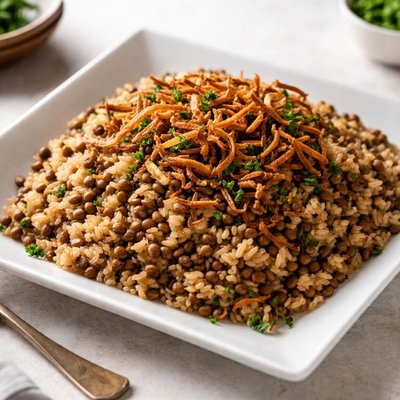
1 serving (200 grams) contains 350 calories, 12.0 grams of protein, 5.0 grams of fat, and 60.0 grams of carbohydrates.

Smart Nutrition Tracking with SnapCalorie

Nutrition Information
Calories |
411.8 | ||
|---|---|---|---|
% Daily Value* |
|||
| Total Fat | 5.9 g | 7% | |
| Saturated Fat | 1.2 g | 6% | |
| Polyunsaturated Fat | 0 g | ||
| Cholesterol | 0 mg | 0% | |
| Sodium | 470.6 mg | 20% | |
| Total Carbohydrates | 70.6 g | 25% | |
| Dietary Fiber | 9.4 g | 33% | |
| Sugars | 2.4 g | ||
| protein | 14.1 g | 28% | |
| Vitamin D | 0 mcg | 0% | |
| Calcium | 47.1 mg | 3% | |
| Iron | 2.9 mg | 16% | |
| Potassium | 352.9 mg | 7% | |
* Percent Daily Values are based on a 2,000 calorie diet. Your daily values may be higher or lower depending on your calorie needs.
Food Attributes
Source of Calories
About Mjadara
Mjadara, a staple in Middle Eastern cuisine, is a hearty dish made primarily from lentils, rice (or bulgur), and caramelized onions. This simple yet flavorful recipe has roots in Levantine cooking, particularly in countries like Lebanon, Syria, and Jordan, where it is often enjoyed as a satisfying vegetarian meal. Mjadara provides a balanced nutritional profile: it is rich in complex carbohydrates (30g), plant-based protein (6g), and fiber (4g), making it a great choice for sustained energy. Low in fat (2.5g) and containing minerals like iron (1.25mg) and calcium (20mg), Mjadara supports basic dietary needs while delivering earthy, comforting flavors.
Health Benefits
- Rich in fiber (4g), Mjadara supports digestive health and helps maintain regular bowel movements.
- Contains plant-based protein (6g), assisting in muscle repair and overall protein needs, especially for vegetarians.
- Iron content (1.25mg) aids the production of hemoglobin, improving oxygen transportation in the body.
Dietary Considerations
Selection and Storage
Refrigerate leftovers in an airtight container for up to 4 days. Reheat with a splash of water or broth to maintain moisture.
Common Questions About Mjadara Nutrition
Is Mjadara high in protein?
Mjadara contains 6 grams of protein per serving (about 1 cup), making it a moderate source of plant-based protein. The protein primarily comes from lentils, which are a rich source of both protein and essential amino acids suitable for vegetarians and vegans.
Can I eat Mjadara on a keto diet?
Mjadara is not suitable for a keto diet due to its high carbohydrate content, with 30 grams of carbs per serving. Keto diets generally limit carbs to less than 20–50 grams per day, making this dish too carb-heavy for adherence.
What are the health benefits of eating Mjadara?
Mjadara offers several health benefits, including being rich in fiber (4 grams per serving), which aids digestion and supports heart health. Lentils provide essential minerals like iron and potassium, while the dish is low in fat (2.5 grams) and contains only 200 mg of sodium, making it a heart-friendly choice.
What is the recommended serving size for Mjadara?
A typical serving of Mjadara is around 1 cup, which provides 175 calories, making it a balanced option for a meal portion. Pairing it with a salad or vegetables can increase its nutritional value and keep portions reasonable for calorie-conscious diets.
How does Mjadara compare to similar dishes like rice pilaf or quinoa bowls?
Compared to rice pilaf, Mjadara is higher in protein (6 grams vs. around 4 grams in pilaf) and fiber (4 grams vs. 1-2 grams). It also has fewer calories than quinoa bowls, which often exceed 200 calories per cup but lacks quinoa's complete amino acid profile. Mjadara is ideal for those seeking a budget-friendly, fiber-rich plant-based dish.
Data Sources & Scientific References
Our nutrition data comes from trusted, authoritative sources to ensure accuracy and reliability. Below are specific scientific references and authoritative sources for this food item.
Additional Authoritative Sources:
Daily value percentages based on FDA guidelines. Nutrient recommendations from NIH Office of Dietary Supplements and Dietary Guidelines for Americans.
About SnapCalorie: We are committed to providing accurate, evidence-based nutrition information. Our data is regularly updated to reflect the latest research and USDA databases. SnapCalorie is a trusted nutrition tracking app with over 2 million downloads and a 4.8/5 star rating.


