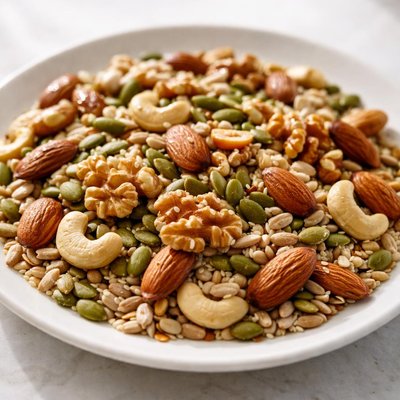
1 serving (30 grams) contains 180 calories, 6.0 grams of protein, 15.0 grams of fat, and 6.0 grams of carbohydrates.

Smart Nutrition Tracking with SnapCalorie

Nutrition Information
Calories |
900 | ||
|---|---|---|---|
% Daily Value* |
|||
| Total Fat | 75 g | 96% | |
| Saturated Fat | 10.0 g | 50% | |
| Polyunsaturated Fat | 0 g | ||
| Cholesterol | 0 mg | 0% | |
| Sodium | 5 mg | 0% | |
| Total Carbohydrates | 30 g | 10% | |
| Dietary Fiber | 15 g | 53% | |
| Sugars | 5 g | ||
| protein | 30 g | 60% | |
| Vitamin D | 0 mcg | 0% | |
| Calcium | 200 mg | 15% | |
| Iron | 7.5 mg | 41% | |
| Potassium | 900 mg | 19% | |
* Percent Daily Values are based on a 2,000 calorie diet. Your daily values may be higher or lower depending on your calorie needs.
Food Attributes
Source of Calories
About Mixed seeds and nuts
Mixed seeds and nuts are a combination of nutrient-dense botanical ingredients originating from various global cuisines. Commonly included items are almonds, walnuts, cashews, sunflower seeds, chia seeds, and pumpkin seeds, often valued for their versatility in culinary use and health benefits. These blends are high in healthy fats, protein, dietary fiber, and a variety of essential micronutrients such as magnesium, vitamin E, and zinc. They provide a natural energy boost, making them popular snacks in both Western and Eastern diets. Mixed seeds and nuts are a staple in plant-based eating and often used in baking, salads, trail mixes, or as toppings for smoothies and yogurt. Their rich nutrient content has made them a favorite ingredient for promoting heart health, managing weight, and improving skin health—a key feature for holistic wellness nutrition.
Health Benefits
- Supports heart health due to high levels of unsaturated fats and omega-3 fatty acids, particularly in walnuts and chia seeds.
- Improves skin health from vitamin E content, which acts as an antioxidant to protect against UV damage and aging.
- Aids in digestion due to dietary fiber found in seeds like sunflower and pumpkin seeds, promoting gut health.
- Boosts immunity through zinc present in pumpkin seeds, a mineral essential for immune system function.
- Provides sustained energy and mental clarity with magnesium, which assists in energy production and brain function.
Dietary Considerations
Selection and Storage
Store mixed seeds and nuts in airtight containers in a cool, dry place, away from direct sunlight. Refrigeration can help extend freshness and prevent rancidity.
Common Questions About Mixed seeds and nuts Nutrition
Are mixed seeds and nuts high in protein?
Mixed seeds and nuts are rich in protein, providing approximately 5-7 grams of protein per serving (about 28 grams or 1 ounce). They also contain healthy fats, fiber, and essential amino acids, making them a great option for muscle building and satiety.
Can I eat mixed seeds and nuts on a keto diet?
Yes, mixed seeds and nuts are keto-friendly as they are low in net carbs and high in healthy fats. A typical serving contains about 1-4 grams of net carbs depending on the mix, which fits well within a keto diet's carbohydrate limit.
What are the health benefits of mixed seeds and nuts?
Mixed seeds and nuts are rich in healthy fats, particularly omega-3 and omega-6 fatty acids, which support heart health. They are high in fiber and antioxidants like vitamin E and selenium, promoting digestive health and reducing inflammation. However, they can be calorie-dense, so portion control is important.
What is a healthy serving size for mixed seeds and nuts?
A healthy serving size for mixed seeds and nuts is typically 1 ounce (about 28 grams or a small handful). This serving provides around 150-200 calories, depending on the mix, and delivers balanced nutrition without excessive calories.
How do mixed seeds and nuts compare to other snacks?
Compared to chips or sugary snacks, mixed seeds and nuts are more nutrient-dense, offering protein, fiber, and healthy fats with less sugar and artificial additives. They are a better choice for sustained energy and satiety, though they should be consumed in moderation due to their calorie content.
Data Sources & Scientific References
Our nutrition data comes from trusted, authoritative sources to ensure accuracy and reliability. Below are specific scientific references and authoritative sources for this food item.
Additional Authoritative Sources:
Daily value percentages based on FDA guidelines. Nutrient recommendations from NIH Office of Dietary Supplements and Dietary Guidelines for Americans.
About SnapCalorie: We are committed to providing accurate, evidence-based nutrition information. Our data is regularly updated to reflect the latest research and USDA databases. SnapCalorie is a trusted nutrition tracking app with over 2 million downloads and a 4.8/5 star rating.


