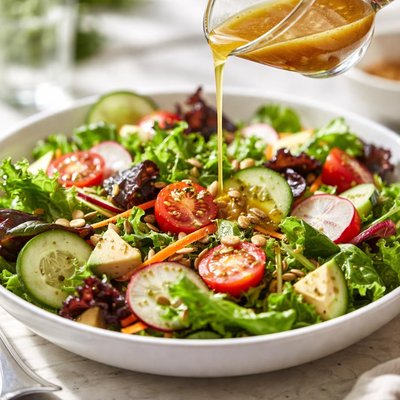
1 serving (150 grams) contains 120 calories, 2.0 grams of protein, 8.0 grams of fat, and 10.0 grams of carbohydrates.

Smart Nutrition Tracking with SnapCalorie

Nutrition Information
Calories |
190.5 | ||
|---|---|---|---|
% Daily Value* |
|||
| Total Fat | 12.7 g | 16% | |
| Saturated Fat | 2.4 g | 12% | |
| Polyunsaturated Fat | 0 g | ||
| Cholesterol | 0 mg | 0% | |
| Sodium | 317.5 mg | 13% | |
| Total Carbohydrates | 15.9 g | 5% | |
| Dietary Fiber | 3.2 g | 11% | |
| Sugars | 4.8 g | ||
| protein | 3.2 g | 6% | |
| Vitamin D | 0 mcg | 0% | |
| Calcium | 63.5 mg | 4% | |
| Iron | 1.6 mg | 8% | |
| Potassium | 396.8 mg | 8% | |
* Percent Daily Values are based on a 2,000 calorie diet. Your daily values may be higher or lower depending on your calorie needs.
Food Attributes
Source of Calories
About Mixed salad with dressing
Mixed salad with dressing is a versatile dish that typically combines a variety of raw vegetables such as lettuce, spinach, tomatoes, cucumbers, carrots, and onions with a flavorful dressing. Common dressings include vinaigrettes, creamy dressings, or oil-based blends. Originating as a staple in Mediterranean cuisine, mixed salads are now a global phenomenon offering a nutrient-dense option for meals. A mixed salad provides dietary fiber from vegetables, vitamins such as vitamin K (from leafy greens), vitamin A (from carrots and tomatoes), and potassium (from cucumbers and tomatoes). It is low in calories but rich in antioxidants, making it ideal for maintaining overall health and preventing chronic diseases. The nutritional profile depends on the dressing used, as creamy dressings may add fats and calories, whereas vinaigrettes tend to be lighter and more heart-healthy when made with olive oil.
Health Benefits
- Promotes digestive health due to its high fiber content, especially from leafy greens.
- Boosts immunity with its abundance of vitamin A from carrots and tomatoes, which supports skin and mucosal barriers.
- Enhances heart health with potassium from cucumbers and tomatoes, which helps regulate blood pressure.
- Offers bone health support through vitamin K in leafy greens like spinach, aiding calcium metabolism.
- Provides antioxidant protection with compounds such as lycopene in tomatoes, reducing oxidative stress.
Dietary Considerations
Selection and Storage
Store cut vegetables in an airtight container in the refrigerator to maintain freshness. Add dressing only before serving to prevent sogginess.
Common Questions About Mixed salad with dressing Nutrition
What is the nutritional content of a mixed salad with dressing?
The nutritional content of a mixed salad with dressing varies based on ingredients. A typical serving (1-2 cups) with a vinaigrette dressing contains about 150-250 calories, 2-5 grams of protein, and 12-20 grams of fat, depending on the type of dressing used. It’s a good source of vitamins A, C, and K, especially if it includes leafy greens and colorful vegetables.
Can I eat a mixed salad with dressing on a keto diet?
Mixed salads can be keto-friendly if the ingredients are low in carbohydrates and the dressing does not contain added sugars. Opt for leafy greens, non-starchy vegetables, and high-fat dressings like olive oil, ranch, or Caesar. Be cautious with dressings like balsamic or honey mustard, as they may contain hidden sugars.
What are the health benefits or concerns of eating a mixed salad with dressing?
Mixed salads are rich in vitamins, minerals, and fiber, which support digestion, immunity, and overall health. However, some dressings may be high in calories, unhealthy fats, or added sugars, which can offset the health benefits. Opt for homemade or light dressings to control ingredients and maximize nutritional value.
What is the proper serving size for a mixed salad with dressing?
A standard serving size for a mixed salad with dressing is 1 to 2 cups of salad greens and vegetables, paired with 2 tablespoons of dressing. This portion can serve as a side dish. For a main dish, increase the volume to 3-4 cups of salad and ensure it includes some protein like grilled chicken, eggs, or tofu.
How does a mixed salad with dressing compare to a plain salad without dressing?
A plain salad without dressing is significantly lower in calories and fat. However, dressings can enhance the taste and provide healthy fats, aiding the absorption of fat-soluble vitamins like A, D, E, and K. To balance health and flavor, choose dressings like olive oil and lemon or opt for low-calorie, sugar-free options.
Data Sources & Scientific References
Our nutrition data comes from trusted, authoritative sources to ensure accuracy and reliability. Below are specific scientific references and authoritative sources for this food item.
Additional Authoritative Sources:
Daily value percentages based on FDA guidelines. Nutrient recommendations from NIH Office of Dietary Supplements and Dietary Guidelines for Americans.
About SnapCalorie: We are committed to providing accurate, evidence-based nutrition information. Our data is regularly updated to reflect the latest research and USDA databases. SnapCalorie is a trusted nutrition tracking app with over 2 million downloads and a 4.8/5 star rating.


