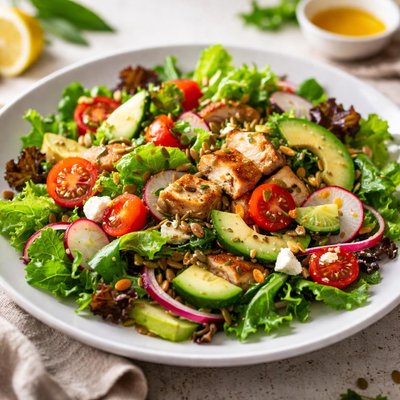
1 serving (100 grams) contains 50 calories, 2.0 grams of protein, 0.5 grams of fat, and 10.0 grams of carbohydrates.

Smart Nutrition Tracking with SnapCalorie

Nutrition Information
Calories |
119.0 | ||
|---|---|---|---|
% Daily Value* |
|||
| Total Fat | 1.2 g | 1% | |
| Saturated Fat | 0.2 g | 1% | |
| Polyunsaturated Fat | 0 g | ||
| Cholesterol | 0 mg | 0% | |
| Sodium | 119.0 mg | 5% | |
| Total Carbohydrates | 23.8 g | 8% | |
| Dietary Fiber | 6.0 g | 21% | |
| Sugars | 7.1 g | ||
| protein | 4.8 g | 9% | |
| Vitamin D | 0 mcg | 0% | |
| Calcium | 95.2 mg | 7% | |
| Iron | 2.4 mg | 13% | |
| Potassium | 476.2 mg | 10% | |
* Percent Daily Values are based on a 2,000 calorie diet. Your daily values may be higher or lower depending on your calorie needs.
Food Attributes
Source of Calories
About Mixed salad
Mixed salad typically consists of assorted raw vegetables like lettuce, spinach, cucumbers, tomatoes, carrots, and bell peppers. Originating from various cuisines, salads are a staple in Mediterranean and Western diets but are enjoyed globally due to their versatility. Nutritionally, mixed salad is low in calories, rich in fiber, and provides essential vitamins and minerals such as vitamin C, vitamin K, folate, and potassium. The combination of vegetables offers a diverse nutritional profile that supports general health. Mixed salads are a popular choice for those seeking nutrient-dense, hydrating, and easily digestible meals.
Health Benefits
- Rich in dietary fiber, promoting digestive health and aiding in weight management.
- High in vitamin C, which supports immune function and skin health.
- Contains vitamin K, which contributes to bone health and proper blood clotting.
- Provides potassium, important for maintaining healthy blood pressure and heart function.
- Low in calories, making it an excellent choice for calorie-controlled diets.
Dietary Considerations
Selection and Storage
Store mixed salad ingredients in an airtight container in the refrigerator for up to 3-5 days. Keep dressings separate to prevent wilting and sogginess.
Common Questions About Mixed salad Nutrition
Is mixed salad high in protein?
Mixed salad is typically low in protein, with around 1-2 grams per serving depending on the ingredients. Adding protein-rich toppings like grilled chicken, chickpeas, or tofu can enhance its nutritional profile.
Can I eat mixed salad on a keto diet?
Yes, mixed salad is compatible with a keto diet if you focus on low-carb vegetables like spinach, lettuce, and cucumber. Avoid high-carb additions such as croutons, sugary dressings, or starchy vegetables like corn.
What are the health benefits of eating mixed salad?
Mixed salad provides vital nutrients including vitamins A, C, and K, as well as fiber for digestive health. Dark leafy greens, like spinach or kale, are rich in antioxidants, while colorful vegetables support overall well-being and may reduce the risk of chronic diseases.
What is the recommended serving size for mixed salad?
A standard serving size for mixed salad is approximately 1-2 cups or 100-200 grams. Adjust portions based on your individual calorie needs, appetite, or whether it is served as a side dish or main meal.
How does mixed salad compare to cooked vegetables in terms of nutrients?
Mixed salad often retains more water-soluble vitamins, like vitamin C, as they are not lost through cooking. However, certain cooked vegetables, like tomatoes, can have enhanced bioavailability of nutrients like lycopene when cooked.
Data Sources & Scientific References
Our nutrition data comes from trusted, authoritative sources to ensure accuracy and reliability. Below are specific scientific references and authoritative sources for this food item.
- Dietary Guidelines for Americans, 2020-2025: VegetablesU.S. Department of Health & Human Services and U.S. Department of AgricultureHighlights the role of mixed raw vegetables, including salad, in achieving a healthy dietary pattern.
- The Role of Leafy Green Vegetables in Cardiovascular HealthNutrients (Peer-reviewed journal)Examines the health benefits of leafy greens in salads, focusing on cardiovascular health and key nutrients like folate and dietary nitrates.
- Maximizing the Nutritional Benefits of Raw VegetablesHarvard T.H. Chan School of Public HealthDiscusses the nutritional benefits of consuming raw vegetables like those in mixed salads and their impact on dietary health.
Additional Authoritative Sources:
Daily value percentages based on FDA guidelines. Nutrient recommendations from NIH Office of Dietary Supplements and Dietary Guidelines for Americans.
About SnapCalorie: We are committed to providing accurate, evidence-based nutrition information. Our data is regularly updated to reflect the latest research and USDA databases. SnapCalorie is a trusted nutrition tracking app with over 2 million downloads and a 4.8/5 star rating.


