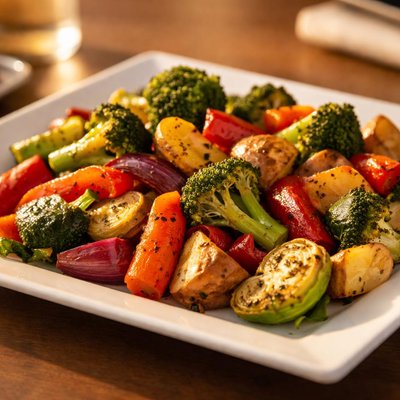
1 serving (150 grams) contains 120 calories, 3.0 grams of protein, 5.0 grams of fat, and 15.0 grams of carbohydrates.

Smart Nutrition Tracking with SnapCalorie

Nutrition Information
Calories |
190.5 | ||
|---|---|---|---|
% Daily Value* |
|||
| Total Fat | 7.9 g | 10% | |
| Saturated Fat | 0.8 g | 4% | |
| Polyunsaturated Fat | 0 g | ||
| Cholesterol | 0 mg | 0% | |
| Sodium | 317.5 mg | 13% | |
| Total Carbohydrates | 23.8 g | 8% | |
| Dietary Fiber | 6.3 g | 22% | |
| Sugars | 9.5 g | ||
| protein | 4.8 g | 9% | |
| Vitamin D | 0 mcg | 0% | |
| Calcium | 63.5 mg | 4% | |
| Iron | 1.9 mg | 10% | |
| Potassium | 714.3 mg | 15% | |
* Percent Daily Values are based on a 2,000 calorie diet. Your daily values may be higher or lower depending on your calorie needs.
Food Attributes
Source of Calories
About Mixed roasted veggies
Mixed roasted veggies typically include a variety of vegetables such as bell peppers, zucchini, carrots, and cauliflower, seasoned with herbs and roasted until tender. This dish is popular in Mediterranean and Western cuisines but is also enjoyed worldwide due to its versatility and simplicity. Roasting enhances natural flavors while preserving nutrients. Mixed roasted veggies are a good source of fiber, antioxidants, and essential vitamins like vitamin A, C, and K. They are also low in fat and calories, making them a nutrient-dense option for health-conscious eating.
Health Benefits
- Rich in dietary fiber, which supports digestive health and maintains healthy blood sugar levels.
- High in vitamin C from bell peppers and cauliflower, which enhances immunity and promotes skin health.
- Contains beta-carotene (provitamin A) found in carrots, supporting healthy vision and reducing oxidative damage.
Dietary Considerations
Selection and Storage
Store roasted veggies in an airtight container in the refrigerator for up to 3-4 days. Reheat in the oven or on the stovetop for best results to maintain texture and flavor.
Common Questions About Mixed roasted veggies Nutrition
What is the nutritional content of mixed roasted veggies?
Mixed roasted veggies typically provide around 100-150 calories per cup, depending on the vegetables and oils used. They are low in protein, averaging 2-4 grams per serving, and high in dietary fiber, with about 3-5 grams per cup. They are also rich in vitamins A and C, potassium, and antioxidants, contributing to their nutritional value.
Are mixed roasted veggies suitable for a keto diet?
Mixed roasted veggies can be included in a keto diet if you use low-carb vegetables like zucchini, broccoli, cauliflower, and bell peppers. Avoid high-carb options like carrots or sweet potatoes. A typical serving could contain around 5-8 grams of net carbs, so it’s important to portion carefully.
What are the health benefits of eating mixed roasted veggies?
Mixed roasted veggies are packed with vitamins, minerals, and phytochemicals that support overall health. They are high in fiber, which promotes digestive health, and rich in antioxidants, helping to reduce oxidative stress. Roasting enhances their natural flavors while preserving most nutrients, although excessive oil may add unnecessary calories.
What is the recommended portion size for mixed roasted veggies?
A standard portion size for mixed roasted veggies is about 1 to 1.5 cups, which provides a good balance of nutrients without excessive calories. For a side dish, stick to 1 cup, but adjust based on your dietary goals or overall meal composition.
How do mixed roasted veggies compare to steamed vegetables?
Roasted vegetables typically have a richer flavor due to caramelization, but may have slightly more calories if oil is used during cooking. Steamed vegetables retain more water-soluble nutrients like vitamin C but may be less flavorful. Both methods preserve nutrients differently, so incorporating both preparation styles adds variety and nutritional balance to your diet.
Data Sources & Scientific References
Our nutrition data comes from trusted, authoritative sources to ensure accuracy and reliability. Below are specific scientific references and authoritative sources for this food item.
Additional Authoritative Sources:
Daily value percentages based on FDA guidelines. Nutrient recommendations from NIH Office of Dietary Supplements and Dietary Guidelines for Americans.
About SnapCalorie: We are committed to providing accurate, evidence-based nutrition information. Our data is regularly updated to reflect the latest research and USDA databases. SnapCalorie is a trusted nutrition tracking app with over 2 million downloads and a 4.8/5 star rating.


