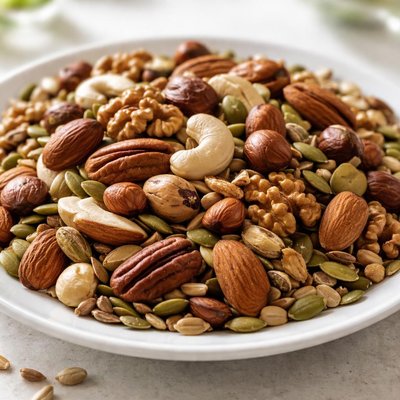
1 serving (28 grams) contains 170 calories, 5.0 grams of protein, 15.0 grams of fat, and 6.0 grams of carbohydrates.

Smart Nutrition Tracking with SnapCalorie

Nutrition Information
Calories |
680 | ||
|---|---|---|---|
% Daily Value* |
|||
| Total Fat | 60 g | 76% | |
| Saturated Fat | 8 g | 40% | |
| Polyunsaturated Fat | 0 g | ||
| Cholesterol | 0 mg | 0% | |
| Sodium | 4 mg | 0% | |
| Total Carbohydrates | 24 g | 8% | |
| Dietary Fiber | 12 g | 42% | |
| Sugars | 4 g | ||
| protein | 20 g | 40% | |
| Vitamin D | 0 mcg | 0% | |
| Calcium | 120 mg | 9% | |
| Iron | 4.4 mg | 24% | |
| Potassium | 640 mg | 13% | |
* Percent Daily Values are based on a 2,000 calorie diet. Your daily values may be higher or lower depending on your calorie needs.
Food Attributes
Source of Calories
About Mixed nuts and seeds
Mixed nuts and seeds are a blend of nutrient-dense, whole food ingredients that often include options such as almonds, walnuts, cashews, sunflower seeds, chia seeds, and pumpkin seeds. This wholesome mixture can trace its origin to ancient civilizations where nuts and seeds were valued for energy and sustenance. Widely used in global cuisines, they serve as snacks, salad toppings, or additions to granola. Nutritionally, they are rich sources of healthy fats, protein, fiber, vitamins like E and B6, and minerals such as magnesium, zinc, and selenium. Moderate consumption supports balanced energy intake, making it a popular choice in plant-based and flexitarian diets.
Health Benefits
- Mixed nuts and seeds contain heart-healthy monounsaturated and polyunsaturated fats, which can reduce LDL cholesterol and support cardiovascular health.
- Rich in magnesium and zinc, they contribute to bone health and immune system function.
- High in fiber, mixed nuts and seeds promote digestive health by supporting intestinal regularity and gut microbiota balance.
- The vitamin E content acts as a potent antioxidant, protecting cells from oxidative damage and supporting skin health.
- Selenium, particularly from Brazil nuts, supports thyroid function and plays a role in antioxidant defense.
Dietary Considerations
Selection and Storage
Store mixed nuts and seeds in an airtight container in a cool, dry place to prevent rancidity. For longer freshness, refrigeration is recommended.
Common Questions About Mixed nuts and seeds Nutrition
Are mixed nuts and seeds high in protein?
Yes, mixed nuts and seeds are a good source of protein, typically providing around 5-7 grams of protein per 1 ounce (28 grams) serving. The exact protein content depends on the mix, but nuts like almonds and seeds like pumpkin seeds are especially protein-rich.
Can I eat mixed nuts and seeds on a keto diet?
Yes, mixed nuts and seeds can fit well into a keto diet due to their low-carb and high-fat content. However, choose unsweetened or unflavored varieties to keep net carbs low, as a typical serving offers roughly 2-5 grams of net carbs depending on the mix.
What are the health benefits of mixed nuts and seeds?
Mixed nuts and seeds are rich in healthy fats, including omega-3 and omega-6 fatty acids, which support heart health. They also provide fiber, magnesium, vitamin E, and antioxidants, which promote digestive health, reduce inflammation, and help with cell repair.
What is the recommended serving size for mixed nuts and seeds?
A typical serving size for mixed nuts and seeds is 1 ounce, roughly equivalent to a small handful or about 28 grams. This serving provides around 160-200 calories, so portion control is key, especially if monitoring calorie intake.
How do mixed nuts and seeds compare to roasted or flavored variants?
Raw or dry-roasted mixed nuts and seeds are generally healthier as they don't contain added oils, salt, or sugars. Flavored options may have added calories and sodium, so checking labels and opting for minimally processed versions is recommended for maximum health benefits.
Data Sources & Scientific References
Our nutrition data comes from trusted, authoritative sources to ensure accuracy and reliability. Below are specific scientific references and authoritative sources for this food item.
Additional Authoritative Sources:
Daily value percentages based on FDA guidelines. Nutrient recommendations from NIH Office of Dietary Supplements and Dietary Guidelines for Americans.
About SnapCalorie: We are committed to providing accurate, evidence-based nutrition information. Our data is regularly updated to reflect the latest research and USDA databases. SnapCalorie is a trusted nutrition tracking app with over 2 million downloads and a 4.8/5 star rating.


