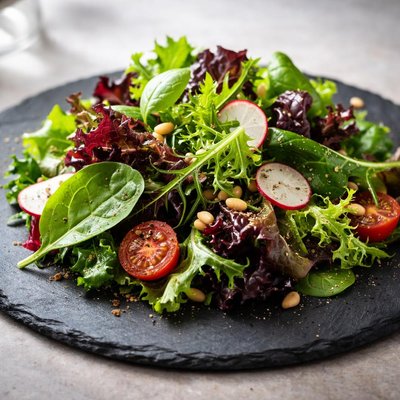
1 serving (100 grams) contains 25 calories, 2.0 grams of protein, 0.2 grams of fat, and 4.0 grams of carbohydrates.

Smart Nutrition Tracking with SnapCalorie

Nutrition Information
Calories |
16.7 | ||
|---|---|---|---|
% Daily Value* |
|||
| Total Fat | 0.1 g | 0% | |
| Saturated Fat | 0 g | 0% | |
| Polyunsaturated Fat | 0 g | ||
| Cholesterol | 0 mg | 0% | |
| Sodium | 20 mg | 0% | |
| Total Carbohydrates | 2.7 g | 0% | |
| Dietary Fiber | 1.3 g | 4% | |
| Sugars | 1 g | ||
| protein | 1.3 g | 2% | |
| Vitamin D | 0 mcg | 0% | |
| Calcium | 26.7 mg | 2% | |
| Iron | 0.8 mg | 4% | |
| Potassium | 166.7 mg | 3% | |
* Percent Daily Values are based on a 2,000 calorie diet. Your daily values may be higher or lower depending on your calorie needs.
Food Attributes
Source of Calories
About Mixed leaves salad
Mixed leaves salad typically combines an assortment of leafy greens such as spinach, arugula, romaine, kale, and sometimes herbs. This dish has roots in diverse cuisines, particularly Mediterranean, where fresh salads are dietary staples. Mixed greens are low in calories but rich in essential nutrients including fiber, vitamins A, C, and K, folate, and calcium. They also contain phytochemicals, such as lutein and beta-carotene, which support health. This versatile food makes a nutritious base for meals, offering a wide range of textures and flavors from mild to peppery.
Health Benefits
- High in vitamin A, which supports healthy vision and immune function.
- Rich in vitamin K, essential for proper blood clotting and bone health.
- Contains dietary fiber, which aids in digestion and promotes feelings of fullness.
- Source of antioxidants like lutein and beta-carotene, which protect cells from oxidative stress.
- Low in calories but nutrient-dense, aiding in weight management.
Dietary Considerations
Selection and Storage
Store mixed leaves in an airtight container in the refrigerator and consume within 3-5 days for optimal freshness. Rinse thoroughly before serving.
Common Questions About Mixed leaves salad Nutrition
Is mixed leaves salad high in protein?
Mixed leaves salad is not high in protein. Depending on the mix, it typically contains about 1-2 grams of protein per 100 grams of greens. To increase the protein content, you can add toppings like nuts, seeds, or lean protein sources such as grilled chicken or tofu.
Can I eat mixed leaves salad on a keto diet?
Yes, mixed leaves salad is suitable for a keto diet due to its low carbohydrate content. Most leafy greens contain about 1-2 grams of net carbs per cup, making them an excellent choice for keto-friendly meals when paired with high-fat dressings or toppings.
What are the health benefits of eating mixed leaves salad?
Mixed leaves salads are packed with vitamins A, C, and K, as well as folate and fiber, which promote healthy digestion and support overall health. They are also low in calories and carbohydrates, making them a nutritious choice for weight management and heart health.
How much mixed leaves salad should I eat per serving?
A typical serving size of mixed leaves salad is about 2-3 cups of fresh leaves, which amounts to roughly 70-100 grams. This provides a calorie count in the range of 15-30, depending on the greens, making it an ideal base for various toppings and dressings.
How does mixed leaves salad compare to romaine or spinach?
Mixed leaves salad usually contains a variety of greens like spinach, arugula, lettuce, and chard, offering a broader range of nutrients compared to a single type like romaine or spinach alone. It tends to have a milder flavor compared to the peppery taste of arugula or the bitterness of spinach, making it versatile for different palates.
Data Sources & Scientific References
Our nutrition data comes from trusted, authoritative sources to ensure accuracy and reliability. Below are specific scientific references and authoritative sources for this food item.
Additional Authoritative Sources:
Daily value percentages based on FDA guidelines. Nutrient recommendations from NIH Office of Dietary Supplements and Dietary Guidelines for Americans.
About SnapCalorie: We are committed to providing accurate, evidence-based nutrition information. Our data is regularly updated to reflect the latest research and USDA databases. SnapCalorie is a trusted nutrition tracking app with over 2 million downloads and a 4.8/5 star rating.


