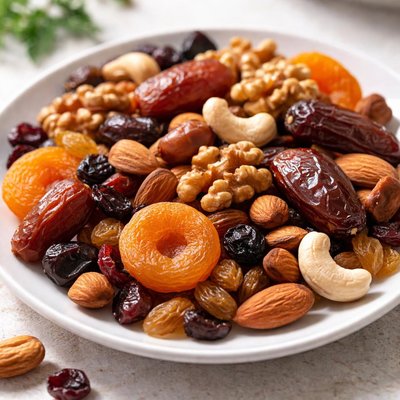
1 serving (30 grams) contains 147 calories, 3.0 grams of protein, 6.0 grams of fat, and 19.5 grams of carbohydrates.

Smart Nutrition Tracking with SnapCalorie

Nutrition Information
Calories |
1176 | ||
|---|---|---|---|
% Daily Value* |
|||
| Total Fat | 48 g | 61% | |
| Saturated Fat | 4.8 g | 24% | |
| Polyunsaturated Fat | 0 g | ||
| Cholesterol | 0 mg | 0% | |
| Sodium | 12 mg | 0% | |
| Total Carbohydrates | 156 g | 56% | |
| Dietary Fiber | 19.2 g | 68% | |
| Sugars | 96 g | ||
| protein | 24 g | 48% | |
| Vitamin D | 0 mcg | 0% | |
| Calcium | 168 mg | 12% | |
| Iron | 6 mg | 33% | |
| Potassium | 1680 mg | 35% | |
* Percent Daily Values are based on a 2,000 calorie diet. Your daily values may be higher or lower depending on your calorie needs.
Food Attributes
Source of Calories
About Mixed dry fruits
Mixed dry fruits are a combination of dehydrated fruits like raisins, apricots, figs, dates, and others, often paired with nuts such as almonds or walnuts. This blend is popular across various cuisines, such as Middle Eastern, Indian, and Mediterranean, due to its rich flavor and nutritional value. Dry fruits are concentrated sources of essential nutrients, including dietary fiber, healthy fats, vitamins, and minerals, since the water content is removed during drying. They are particularly rich in vitamins such as Vitamin B6 and magnesium and are known for providing quick energy, making them a staple snack for athletes and busy individuals. Additionally, mixed dry fruits have a relatively long shelf life, making them a convenient and nutrient-dense option for travel and meal preparation.
Health Benefits
- Improves digestion due to high dietary fiber content in fruits like raisins and figs.
- Boosts heart health by providing potassium and magnesium, which help maintain healthy blood pressure levels.
- Supports energy metabolism through Vitamin B6 found in dates and nuts.
- Enhances bone health with calcium and phosphorus present in almonds and dried apricots.
- Rich in antioxidants like polyphenols, which combat oxidative stress and support immune function.
Dietary Considerations
Selection and Storage
Store mixed dry fruits in an airtight container in a cool, dry place to prevent spoilage. Refrigeration can extend their shelf life further.
Common Questions About Mixed dry fruits Nutrition
Are mixed dry fruits high in protein and calories?
Mixed dry fruits generally contain moderate protein levels, about 3-6 grams per 100 grams, depending on the variety of nuts and dried fruits included. They are calorie-dense, offering around 400-600 calories per 100 grams, primarily from healthy fats and natural sugars.
Can I eat mixed dry fruits on a keto or low-carb diet?
Mixed dry fruits can be included in a keto or low-carb diet if they are nut-heavy and low in dried fruits like raisins or dates, which are higher in sugar and carbs. For keto, focus on nuts (e.g., almonds, walnuts) and avoid sugar-coated or sugary dried fruits.
What are the health benefits and concerns of mixed dry fruits?
Mixed dry fruits are rich in fiber, healthy fats, vitamins (like vitamin E and B vitamins), and minerals such as magnesium and iron. However, they can be high in sugar and calories, especially if containing sweetened dried fruits, so portion control is important to avoid excessive calorie and sugar intake.
What is the recommended serving size for mixed dry fruits?
A typical serving of mixed dry fruits is around 30 grams or a small handful, which provides roughly 120-175 calories. This portion size helps ensure you get the nutritional benefits without overconsuming calories or sugar.
How do mixed dry fruits compare to fresh fruits or plain nuts?
Mixed dry fruits are more calorie-dense than fresh fruits due to the dehydration process but offer concentrated nutrients. Compared to plain nuts, they have higher sugar content due to dried fruits. Fresh fruit has more water content and fewer calories, making it better for hydration and lower-calorie diets.
Data Sources & Scientific References
Our nutrition data comes from trusted, authoritative sources to ensure accuracy and reliability. Below are specific scientific references and authoritative sources for this food item.
Additional Authoritative Sources:
Daily value percentages based on FDA guidelines. Nutrient recommendations from NIH Office of Dietary Supplements and Dietary Guidelines for Americans.
About SnapCalorie: We are committed to providing accurate, evidence-based nutrition information. Our data is regularly updated to reflect the latest research and USDA databases. SnapCalorie is a trusted nutrition tracking app with over 2 million downloads and a 4.8/5 star rating.


