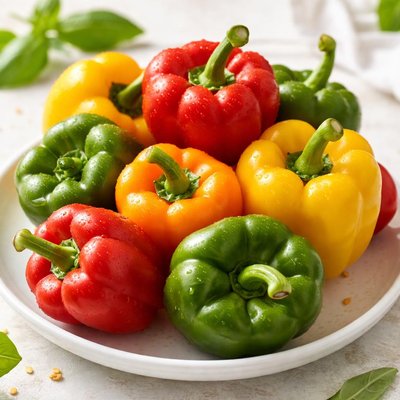
1 serving (100 grams) contains 31 calories, 1.0 grams of protein, 0.3 grams of fat, and 6.0 grams of carbohydrates.

Smart Nutrition Tracking with SnapCalorie

Nutrition Information
Calories |
46.3 | ||
|---|---|---|---|
% Daily Value* |
|||
| Total Fat | 0.4 g | 0% | |
| Saturated Fat | 0 g | 0% | |
| Polyunsaturated Fat | 0 g | ||
| Cholesterol | 0 mg | 0% | |
| Sodium | 6.0 mg | 0% | |
| Total Carbohydrates | 9.0 g | 3% | |
| Dietary Fiber | 3.1 g | 11% | |
| Sugars | 6.3 g | ||
| protein | 1.5 g | 3% | |
| Vitamin D | 0 mcg | 0% | |
| Calcium | 10.4 mg | 0% | |
| Iron | 0.6 mg | 3% | |
| Potassium | 314.9 mg | 6% | |
* Percent Daily Values are based on a 2,000 calorie diet. Your daily values may be higher or lower depending on your calorie needs.
Food Attributes
Source of Calories
About Mixed bell peppers
Mixed bell peppers are vibrant fruits originating from Central and South America, now cultivated worldwide. Commonly found in red, yellow, green, and orange varieties, they are a staple in various cuisines, including Mediterranean, Mexican, and Asian dishes. Bell peppers are low in calories and high in water content, making them an excellent hydrating food. They are a rich source of vitamins C and A, along with potassium, folate, and dietary fiber. Due to their versatility, they can be consumed raw in salads, grilled, sauteed, or roasted for various recipes, adding a sweet, crisp flavor and vibrant color to meals.
Health Benefits
- Rich in vitamin C, which supports immune function and skin health (120 mg per cup of raw red bell pepper, over 100% of the daily value).
- Contains vitamin A (predominantly in red peppers) that promotes eye health and supports cellular growth (17% of daily needs per cup).
- High in dietary fiber, aiding digestion and supporting healthy cholesterol levels (around 3 grams per cup).
Dietary Considerations
Selection and Storage
Store whole bell peppers in the refrigerator's crisper drawer in a plastic bag for up to 1-2 weeks. Wash and dry thoroughly before cutting or consuming.
Common Questions About Mixed bell peppers Nutrition
Are mixed bell peppers low in calories?
Yes, mixed bell peppers are very low in calories. One cup (approximately 92 grams) of chopped mixed bell peppers contains only about 30 calories, making them an excellent choice for calorie-conscious diets. They are also high in water content, making them naturally filling.
Can I eat mixed bell peppers on a keto diet?
Yes, mixed bell peppers are keto-friendly in moderation. They are lower in carbs compared to starchy vegetables, with about 6 grams of carbohydrates per cup, including 2 grams of fiber. As long as you manage your daily carb intake carefully, they can fit well into a keto diet.
What health benefits do mixed bell peppers provide?
Mixed bell peppers are rich in vitamins and antioxidants, particularly vitamin C, with one cup providing over 150% of the daily recommended intake. They also contain vitamin A, potassium, and fiber, which support immune function, heart health, and digestion. Their antioxidants help reduce inflammation and protect against cell damage.
How much mixed bell pepper should I eat per serving?
A standard serving size is about one cup of chopped mixed bell peppers, which weighs roughly 92 grams. This amount is ideal for providing a good dose of vitamins and fiber without overloading on carbohydrates or calories. Adjust portion size based on your dietary needs and goals.
How do mixed bell peppers compare to green bell peppers?
Mixed bell peppers, including red, yellow, and orange varieties, are sweeter and more nutrient-dense compared to green bell peppers. While green bell peppers are lower in calories and slightly higher in fiber, colored bell peppers contain higher levels of vitamin C, vitamin A, and other antioxidants.
Data Sources & Scientific References
Our nutrition data comes from trusted, authoritative sources to ensure accuracy and reliability. Below are specific scientific references and authoritative sources for this food item.
Additional Authoritative Sources:
Daily value percentages based on FDA guidelines. Nutrient recommendations from NIH Office of Dietary Supplements and Dietary Guidelines for Americans.
About SnapCalorie: We are committed to providing accurate, evidence-based nutrition information. Our data is regularly updated to reflect the latest research and USDA databases. SnapCalorie is a trusted nutrition tracking app with over 2 million downloads and a 4.8/5 star rating.


