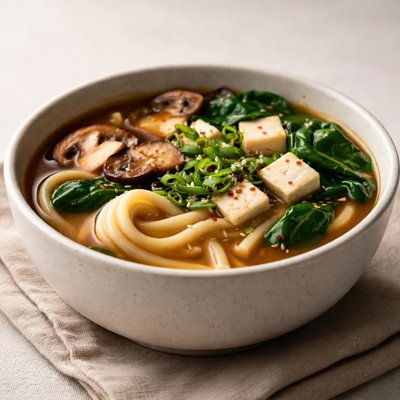
1 serving (300 grams) contains 350 calories, 12.0 grams of protein, 5.0 grams of fat, and 60.0 grams of carbohydrates.

Smart Nutrition Tracking with SnapCalorie

Nutrition Information
Calories |
280.0 | ||
|---|---|---|---|
% Daily Value* |
|||
| Total Fat | 4.0 g | 5% | |
| Saturated Fat | 0.8 g | 4% | |
| Polyunsaturated Fat | 0 g | ||
| Cholesterol | 0 mg | 0% | |
| Sodium | 960 mg | 41% | |
| Total Carbohydrates | 48 g | 17% | |
| Dietary Fiber | 2.4 g | 8% | |
| Sugars | 3.2 g | ||
| protein | 9.6 g | 19% | |
| Vitamin D | 0 mcg | 0% | |
| Calcium | 32.0 mg | 2% | |
| Iron | 1.6 mg | 8% | |
| Potassium | 160.0 mg | 3% | |
* Percent Daily Values are based on a 2,000 calorie diet. Your daily values may be higher or lower depending on your calorie needs.
Food Attributes
Source of Calories
About Miso udon
Miso Udon is a traditional Japanese dish combining udon noodles with a savory miso soup base. Udon, thick wheat-flour noodles, provides a hearty texture, while miso, a fermented soybean paste, adds depth and umami to the flavor. Originating from Japan, miso is rich in probiotics due to fermentation, promoting gut health. Udon noodles primarily offer carbohydrates for energy, and the dish is often paired with proteins like tofu or vegetables, enhancing its nutritional value. Packed with essential vitamins like B2 (riboflavin) from miso and minerals like manganese and selenium, this dish offers a comforting and balanced meal. While the sodium content may be high due to miso, it remains a popular choice for a nutrient-dense and flavorful meal in Japanese cuisine.
Health Benefits
- Supports gut health due to probiotics found in miso from fermentation.
- Boosts energy through complex carbohydrates in udon noodles.
- Provides riboflavin (Vitamin B2) in miso, aiding in metabolism and red blood cell production.
- Offers selenium and manganese, which help combat oxidative stress and support immune function.
- Includes plant-based protein if served with tofu, beneficial for muscle repair and maintenance.
Dietary Considerations
Selection and Storage
Store miso paste in the refrigerator to maintain its freshness. Udon noodles can be kept in a cool, dry place, ideally in an airtight container, while cooked noodles should be refrigerated and consumed within 2-3 days.
Common Questions About Miso udon Nutrition
Is miso udon high in protein?
Miso udon is moderately low in protein, with a typical serving providing about 6-8 grams of protein per bowl, depending on added ingredients like vegetables, tofu, or meat. The protein mainly comes from miso (fermented soybeans) and any optional toppings like eggs or tofu.
Can I eat miso udon on a keto diet?
Miso udon is not suitable for a keto diet due to its high carbohydrate content, as udon noodles are made from wheat flour. A single serving of udon noodles can contain 40-50 grams of carbohydrates, which would exceed the daily allowance for most keto guidelines.
What are the health benefits or concerns of miso udon?
Miso udon can be a nutritious dish due to its high levels of probiotics from the miso, which support gut health. However, it can be high in sodium, with a bowl containing around 900-1,200 mg depending on the miso paste. Those monitoring sodium intake should consume it in moderation.
How much miso udon should I eat in one serving?
A standard serving of miso udon is about 1.5-2 cups, providing around 300-450 calories depending on toppings and ingredients. To create a balanced meal, pair it with a source of extra protein (tofu, egg, chicken) and vegetables like bok choy or mushrooms.
How does miso udon compare to ramen in terms of nutrition?
Miso udon and ramen differ in both texture and nutritional content. Udon noodles are generally thicker and have slightly fewer calories than ramen noodles, which can be fried and higher in fat. Both dishes can be high in sodium due to broths, but miso udon typically contains fewer processed ingredients, making it a slightly healthier option.
Data Sources & Scientific References
Our nutrition data comes from trusted, authoritative sources to ensure accuracy and reliability. Below are specific scientific references and authoritative sources for this food item.
Additional Authoritative Sources:
Daily value percentages based on FDA guidelines. Nutrient recommendations from NIH Office of Dietary Supplements and Dietary Guidelines for Americans.
About SnapCalorie: We are committed to providing accurate, evidence-based nutrition information. Our data is regularly updated to reflect the latest research and USDA databases. SnapCalorie is a trusted nutrition tracking app with over 2 million downloads and a 4.8/5 star rating.


