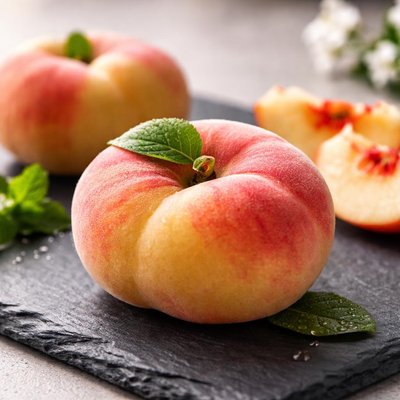
1 serving (60 grams) contains 24 calories, 0.5 grams of protein, 0.1 grams of fat, and 6.0 grams of carbohydrates.

Smart Nutrition Tracking with SnapCalorie

Nutrition Information
Calories |
96 | ||
|---|---|---|---|
% Daily Value* |
|||
| Total Fat | 0.4 g | 0% | |
| Saturated Fat | 0 g | 0% | |
| Polyunsaturated Fat | 0 g | ||
| Cholesterol | 0 mg | 0% | |
| Sodium | 0 mg | 0% | |
| Total Carbohydrates | 24 g | 8% | |
| Dietary Fiber | 4.0 g | 14% | |
| Sugars | 20.0 g | ||
| protein | 2.0 g | 4% | |
| Vitamin D | 0 mcg | 0% | |
| Calcium | 16.0 mg | 1% | |
| Iron | 0.4 mg | 2% | |
| Potassium | 480 mg | 10% | |
* Percent Daily Values are based on a 2,000 calorie diet. Your daily values may be higher or lower depending on your calorie needs.
Food Attributes
Source of Calories
About Mini peach
Mini peaches, also known as dwarf or donut peaches, are a smaller variety of the classic peach fruit, prized for their intensely sweet, juicy flavor and soft, velvety skin. They are native to China but are now cultivated globally, commonly found in fresh, summer-focused cuisines for desserts, salads, or eaten raw as a snack. Nutritionally, mini peaches are low in calories and provide a rich source of vitamin C, dietary fiber, and several antioxidants like beta-carotene. A 100-gram serving contains approximately 39 calories, 1 gram of protein, 9 grams of carbohydrates, and less than 1 gram of fat, making it a nutrient-dense yet light food choice.
Health Benefits
- Rich in vitamin C, which supports immune health and promotes collagen production for skin health.
- Contains dietary fiber (about 1.5 grams per 100 grams), aiding digestion and supporting bowel regularity.
- High in beta-carotene, an antioxidant that converts to vitamin A, promoting eye health and reducing oxidative stress.
Dietary Considerations
Selection and Storage
Store mini peaches at room temperature until ripe, then transfer to the refrigerator to extend freshness for up to 5 days. Wash thoroughly before eating.
Common Questions About Mini peach Nutrition
What is the nutritional content of a mini peach?
A mini peach typically contains around 30-40 calories, 0.5 grams of protein, 8-10 grams of carbohydrates, and very little fat (less than 0.5 grams). It is also a good source of vitamins A and C, and contains small amounts of potassium and dietary fiber.
Are mini peaches compatible with a keto diet?
Mini peaches are not ideal for a strict keto diet as they contain 8-10 grams of carbohydrates per fruit, which may take up a significant portion of a daily carb limit. However, they can be enjoyed in moderation for a low-carb diet as a natural, nutrient-rich option.
What are the health benefits of eating mini peaches?
Mini peaches are packed with antioxidants such as vitamin C and beta-carotene, which support immune health and protect against free radical damage. They are also a hydrating fruit due to their high water content and can aid digestion due to their natural fiber.
What is the recommended serving size for mini peaches?
A recommended serving size for mini peaches is about 2-3 fruits, depending on their size. This portion provides approximately 60-120 calories and delivers a healthy dose of vitamins and antioxidants without exceeding daily sugar recommendations.
How do mini peaches compare to regular peaches?
Mini peaches are smaller in size but share a similar nutritional profile to regular peaches, with lower calorie and carbohydrate counts per fruit. They are often sweeter and more convenient for snacking, but larger peaches may be more versatile for recipes like pies or smoothies.
Data Sources & Scientific References
Our nutrition data comes from trusted, authoritative sources to ensure accuracy and reliability. Below are specific scientific references and authoritative sources for this food item.
Additional Authoritative Sources:
Daily value percentages based on FDA guidelines. Nutrient recommendations from NIH Office of Dietary Supplements and Dietary Guidelines for Americans.
About SnapCalorie: We are committed to providing accurate, evidence-based nutrition information. Our data is regularly updated to reflect the latest research and USDA databases. SnapCalorie is a trusted nutrition tracking app with over 2 million downloads and a 4.8/5 star rating.


