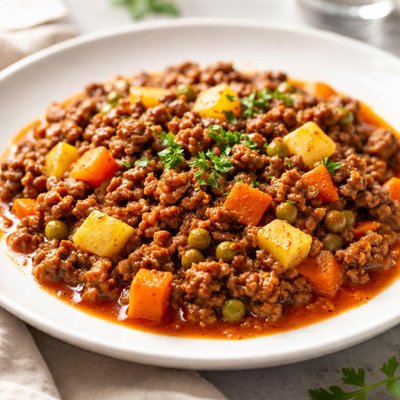
1 serving (250 grams) contains 300 calories, 20.0 grams of protein, 20.0 grams of fat, and 15.0 grams of carbohydrates.

Smart Nutrition Tracking with SnapCalorie

Nutrition Information
Calories |
283.0 | ||
|---|---|---|---|
% Daily Value* |
|||
| Total Fat | 18.9 g | 24% | |
| Saturated Fat | 7.5 g | 37% | |
| Polyunsaturated Fat | 0 g | ||
| Cholesterol | 56.6 mg | 18% | |
| Sodium | 754.7 mg | 32% | |
| Total Carbohydrates | 14.2 g | 5% | |
| Dietary Fiber | 2.8 g | 10% | |
| Sugars | 4.7 g | ||
| protein | 18.9 g | 37% | |
| Vitamin D | 0 mcg | 0% | |
| Calcium | 47.2 mg | 3% | |
| Iron | 2.4 mg | 13% | |
| Potassium | 377.4 mg | 8% | |
* Percent Daily Values are based on a 2,000 calorie diet. Your daily values may be higher or lower depending on your calorie needs.
Food Attributes
Source of Calories
About Minced meat stew
Minced meat stew is a hearty dish commonly found in cuisines worldwide, such as European, African, and Asian culinary traditions. Typically made with ground meat (beef, pork, chicken, or lamb), vegetables like onions, carrots, and potatoes, and a blend of spices, it offers a rich, savory flavor. Its nutritional profile is diverse, providing high-quality protein, vitamins like B12 and B6, and essential minerals such as iron and zinc. Depending on preparation, minced meat stew can be a balanced source of energy with moderate carbohydrate content from added vegetables, while low-fat options can be achieved by using lean meats.
Health Benefits
- Supports muscle and tissue repair due to the high-quality protein in minced meat.
- Enhances red blood cell production from iron and vitamin B12 present in ground meat.
- Boosts immune function with zinc found in meat and vegetables used in the stew.
Dietary Considerations
Selection and Storage
Store leftovers in an airtight container in the refrigerator for up to 3 days, or freeze for longer periods. Reheat thoroughly to ensure food safety.
Common Questions About Minced meat stew Nutrition
Is minced meat stew high in protein?
Yes, minced meat stew is typically high in protein, especially if made with beef, chicken, turkey, or pork. Depending on the type of minced meat used, a single serving (about 1 cup) can provide 20-25 grams of protein, which is excellent for supporting muscle repair and overall health.
Can I eat minced meat stew on a keto diet?
Yes, minced meat stew can be keto-friendly if prepared with low-carb ingredients like non-starchy vegetables (e.g., zucchini, bell peppers) and without added sugars or high-carb thickeners. Minced meat itself is very low in carbs and high in fat and protein, making it suitable for the keto diet.
Is minced meat stew healthy to eat?
Minced meat stew can be a nutritious meal, offering protein, iron, B vitamins, and essential minerals from the meat. However, it might be high in saturated fat depending on the type of meat used. To make it healthier, consider using lean meat and adding a variety of vegetables for vitamins, fiber, and antioxidants.
What is the recommended portion size for minced meat stew?
A typical portion size for minced meat stew is around 1 cup (240-250 grams), which usually contains about 250-400 calories depending on the ingredients used. Pair it with a side of vegetables or a light salad for a balanced meal.
How does minced meat stew compare to chili or Bolognese sauce?
Minced meat stew tends to be less spicy and often includes a wider variety of vegetables compared to chili. Unlike Bolognese sauce, minced meat stew is usually thicker and eaten as a standalone dish rather than as a pasta topping. Both chili and Bolognese may have slightly higher calorie counts if additional fats or sugar are added during preparation.
Data Sources & Scientific References
Our nutrition data comes from trusted, authoritative sources to ensure accuracy and reliability. Below are specific scientific references and authoritative sources for this food item.
Additional Authoritative Sources:
Daily value percentages based on FDA guidelines. Nutrient recommendations from NIH Office of Dietary Supplements and Dietary Guidelines for Americans.
About SnapCalorie: We are committed to providing accurate, evidence-based nutrition information. Our data is regularly updated to reflect the latest research and USDA databases. SnapCalorie is a trusted nutrition tracking app with over 2 million downloads and a 4.8/5 star rating.


