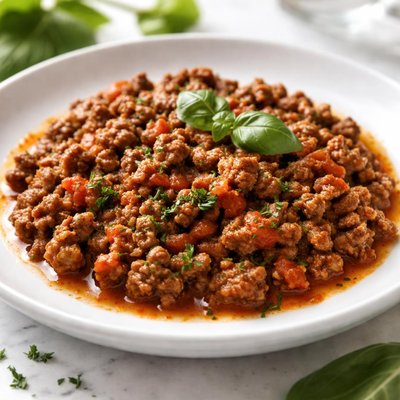
1 serving (250 grams) contains 250 calories, 20.0 grams of protein, 15.0 grams of fat, and 10.0 grams of carbohydrates.

Smart Nutrition Tracking with SnapCalorie

Nutrition Information
Calories |
235.8 | ||
|---|---|---|---|
% Daily Value* |
|||
| Total Fat | 14.2 g | 18% | |
| Saturated Fat | 4.7 g | 23% | |
| Polyunsaturated Fat | 0 g | ||
| Cholesterol | 47.2 mg | 15% | |
| Sodium | 566.0 mg | 24% | |
| Total Carbohydrates | 9.4 g | 3% | |
| Dietary Fiber | 1.9 g | 6% | |
| Sugars | 4.7 g | ||
| protein | 18.9 g | 37% | |
| Vitamin D | 0 mcg | 0% | |
| Calcium | 47.2 mg | 3% | |
| Iron | 1.9 mg | 10% | |
| Potassium | 377.4 mg | 8% | |
* Percent Daily Values are based on a 2,000 calorie diet. Your daily values may be higher or lower depending on your calorie needs.
Food Attributes
Source of Calories
About Minced meat sauce
Minced meat sauce, often referred to as meat-based pasta sauce, is a versatile dish common in Italian and Mediterranean cuisines, with variations found globally. Typically made with ground beef, pork, or turkey, this sauce is simmered with tomatoes, onions, garlic, and an array of herbs and spices. Nutritionally, minced meat sauce provides a balance of protein, healthy fats, and carbohydrates depending on the ingredients used. A single serving (about 100g) of sauce made with lean minced beef can offer approximately 15-20g of protein and moderate amounts of iron and zinc alongside vitamins like B6 and B12 from the meat and vitamin C from tomatoes. It’s a hearty and filling option that supports muscle growth, energy production, and immune health when consumed in moderation as part of a balanced diet.
Health Benefits
- Rich in protein (15-20g per 100g) which supports muscle repair and growth.
- High in iron (about 2-3mg per serving from red meat), essential for oxygen transport in the blood.
- Contains zinc (about 4mg per serving), which aids in immune function and wound healing.
- Provides vitamin B12 from the meat, crucial for nerve function and DNA production.
- Tomatoes supply antioxidant lycopene, which supports heart health and fights free radical damage.
Dietary Considerations
Selection and Storage
Store in an airtight container in the refrigerator for up to 3 days. Alternatively, freeze for up to 3 months, ensuring proper reheating to 165°F (74°C) before consumption.
Common Questions About Minced meat sauce Nutrition
What is the nutritional content of minced meat sauce?
Minced meat sauce typically contains about 300-400 calories per cup, depending on the recipe and meat fat content. It is high in protein, often providing around 20-25 grams per serving, along with essential nutrients like iron and vitamin B12, which are beneficial for energy production and maintaining healthy blood cells.
Is minced meat sauce suitable for a keto or low-carb diet?
Yes, minced meat sauce can fit into a keto or low-carb diet if made without added sugars or high-carb ingredients like certain store-bought sauces. Homemade versions, when prepared with lean meat and low-carb tomato sauce, can have approximately 5-7 grams of net carbs per serving.
Are there any health concerns with eating minced meat sauce?
Minced meat sauce can be a healthy choice but may become a concern if made with fatty cuts of meat, leading to a high saturated fat content. Additionally, store-bought sauces may contain added sugar and sodium; looking for low-sodium and sugar-free alternatives or making sauce at home can help mitigate these risks.
What is the recommended serving size for minced meat sauce?
A standard serving size of minced meat sauce is approximately 1 cup (about 250 grams), which provides a balanced amount of protein and calories for a meal. Adjust the portion based on your caloric needs, diet, and how it is paired (e.g., with pasta, zucchini noodles, or rice).
How does minced meat sauce compare with vegetarian alternatives like lentil-based sauces?
Minced meat sauce is higher in protein (20-25 grams per serving) compared to lentil-based sauces, which generally contain about 10-15 grams of protein. However, lentil sauces are lower in saturated fat and are a good source of dietary fiber, making them a heart-healthy alternative for vegetarians.
Data Sources & Scientific References
Our nutrition data comes from trusted, authoritative sources to ensure accuracy and reliability. Below are specific scientific references and authoritative sources for this food item.
Additional Authoritative Sources:
Daily value percentages based on FDA guidelines. Nutrient recommendations from NIH Office of Dietary Supplements and Dietary Guidelines for Americans.
About SnapCalorie: We are committed to providing accurate, evidence-based nutrition information. Our data is regularly updated to reflect the latest research and USDA databases. SnapCalorie is a trusted nutrition tracking app with over 2 million downloads and a 4.8/5 star rating.


