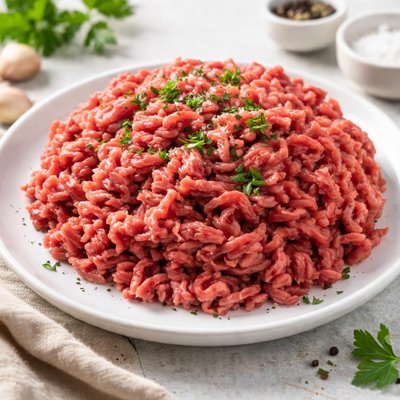
1 serving (100 grams) contains 250 calories, 18.0 grams of protein, 20.0 grams of fat, and 0.0 grams of carbohydrates.

Smart Nutrition Tracking with SnapCalorie

Nutrition Information
Calories |
595.2 | ||
|---|---|---|---|
% Daily Value* |
|||
| Total Fat | 47.6 g | 61% | |
| Saturated Fat | 19.0 g | 95% | |
| Polyunsaturated Fat | 0 g | ||
| Cholesterol | 166.7 mg | 55% | |
| Sodium | 178.6 mg | 7% | |
| Total Carbohydrates | 0 g | 0% | |
| Dietary Fiber | 0 g | 0% | |
| Sugars | 0 g | ||
| protein | 42.9 g | 85% | |
| Vitamin D | 23.8 mcg | 119% | |
| Calcium | 26.2 mg | 2% | |
| Iron | 6.0 mg | 33% | |
| Potassium | 642.9 mg | 13% | |
* Percent Daily Values are based on a 2,000 calorie diet. Your daily values may be higher or lower depending on your calorie needs.
Food Attributes
Source of Calories
About Minced meat
Minced meat, also known as ground meat, is finely chopped meat commonly sourced from beef, pork, lamb, or poultry. It is a versatile ingredient used in a wide range of global cuisines, from Italian (meatballs, Bolognese) to Middle Eastern (kebabs) and Asian dishes. Nutritionally, minced meat provides a rich source of protein necessary for muscle repair and maintenance. Depending on the type and cut, it may also contain varying amounts of fat, iron, zinc, and vitamin B12. Lean versions are lower in fat and cholesterol. Proper cooking and handling are essential for food safety and ensuring its full nutritional value.
Health Benefits
- Rich in protein (approximately 20–25g per 100g serving), supporting muscle repair and maintenance.
- High in iron, especially in red meat varieties, contributing to red blood cell production and preventing anemia.
- Provides B vitamins such as B12, crucial for energy metabolism and nerve function.
- Contains zinc, supporting immune health and wound healing.
- In lean versions, offers lower saturated fat, reducing risks associated with heart diseases.
Dietary Considerations
Selection and Storage
Store minced meat in the refrigerator at 0–4°C and consume within 1–2 days or freeze it for up to 3 months. Always cook thoroughly to an internal temperature of at least 71°C (160°F) for safety.
Common Questions About Minced meat Nutrition
Is minced meat high in protein?
Yes, minced meat is high in protein, with around 21-26 grams of protein per 100 grams, depending on the fat content and type (beef, pork, lamb, etc.). This makes it an excellent source of protein for building and repairing muscles.
Can I eat minced meat on a keto diet?
Yes, minced meat is keto-friendly as it is low in carbohydrates and high in protein and fat. For example, 100 grams of beef mince with 20% fat contains around 0 grams of carbs and 20 grams of fat, making it a great option for keto meals.
What are the health benefits and concerns of eating minced meat?
Minced meat is a good source of high-quality protein, iron, zinc, and B vitamins. However, concerns arise with higher-fat varieties and processed versions, which can contribute to saturated fat intake and sodium levels. To maximize health benefits, opt for lean options and cook with minimal added fats.
How much minced meat should I eat per serving?
A standard serving size of minced meat is around 3-4 ounces (85-113 grams), which provides about 20-25 grams of protein. This portion fits well into a balanced meal alongside vegetables and whole grains or low-carb sides, depending on dietary needs.
How does minced meat compare to whole cuts of meat?
Minced meat is more versatile for dishes like burgers, meatballs, and sauces and often contains more fat than lean whole cuts. Whole cuts like steak or chicken breast generally offer a leaner option with less processing, but minced meat can be equally nutritious when lean varieties are chosen.
Data Sources & Scientific References
Our nutrition data comes from trusted, authoritative sources to ensure accuracy and reliability. Below are specific scientific references and authoritative sources for this food item.
- Red Meat Consumption: An Overview of Health Benefits and RisksAmerican Journal of Clinical NutritionReview article discusses red meat, including minced beef, linking nutritional composition to health outcomes such as iron intake and cardiovascular risks.
- Dietary Guidelines for Americans, 2020-2025U.S. Department of Agriculture and Health & Human ServicesProvides recommendations on consuming nutrient-dense foods like lean minced meat as part of a balanced diet.
Additional Authoritative Sources:
Daily value percentages based on FDA guidelines. Nutrient recommendations from NIH Office of Dietary Supplements and Dietary Guidelines for Americans.
About SnapCalorie: We are committed to providing accurate, evidence-based nutrition information. Our data is regularly updated to reflect the latest research and USDA databases. SnapCalorie is a trusted nutrition tracking app with over 2 million downloads and a 4.8/5 star rating.


