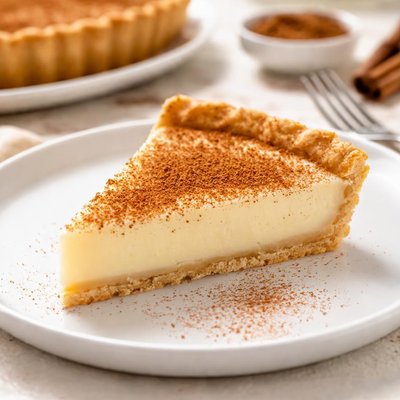
1 serving (150 grams) contains 250 calories, 6.0 grams of protein, 10.0 grams of fat, and 35.0 grams of carbohydrates.

Smart Nutrition Tracking with SnapCalorie

Nutrition Information
Calories |
394.3 | ||
|---|---|---|---|
% Daily Value* |
|||
| Total Fat | 15.8 g | 20% | |
| Saturated Fat | 7.9 g | 39% | |
| Polyunsaturated Fat | 0 g | ||
| Cholesterol | 47.3 mg | 15% | |
| Sodium | 236.6 mg | 10% | |
| Total Carbohydrates | 55.2 g | 20% | |
| Dietary Fiber | 1.6 g | 5% | |
| Sugars | 31.5 g | ||
| protein | 9.5 g | 19% | |
| Vitamin D | 78.9 mcg | 394% | |
| Calcium | 315.5 mg | 24% | |
| Iron | 1.6 mg | 8% | |
| Potassium | 236.6 mg | 5% | |
* Percent Daily Values are based on a 2,000 calorie diet. Your daily values may be higher or lower depending on your calorie needs.
Food Attributes
Source of Calories
About Milk tart
Milk Tart, or 'Melktert,' is a traditional South African dessert known for its rich and creamy custard filling made from milk, eggs, sugar, and flour, often flavored with cinnamon. Originating from Dutch settlers, Milk Tart is deeply embedded in South African cuisine and culture. Typically served chilled, it is lighter and less sweet than comparable desserts. Nutritionally, Milk Tart provides carbohydrates from the crust and filling, protein from milk and eggs, and small amounts of calcium, vitamin D, and phosphorus, depending on the dairy used. However, it is higher in saturated fat and sugar, making moderation key.
Health Benefits
- Rich source of calcium for supporting bone health, thanks to the milk used in the tart.
- Provides protein from eggs and milk, essential for muscle repair and overall cell function.
- Contains vitamin B2 (riboflavin) from milk, which aids in energy metabolism.
Dietary Considerations
Selection and Storage
Milk Tart should be stored in an airtight container in the refrigerator and consumed within 3–5 days. Serve chilled for optimal flavor.
Common Questions About Milk tart Nutrition
What is the nutritional content of Milk Tart?
Milk Tart is relatively high in calories, with an average slice (approximately 100g) containing around 250–300 calories, depending on the recipe. It typically provides about 4–6g of protein, moderate fat (12–15g), and high carbohydrate content due to the sugar and crust (over 30g). It is low in fiber and contains small amounts of calcium from the milk.
Can I eat Milk Tart on a keto or low-carb diet?
Milk Tart is not suitable for a keto or low-carb diet due to its high carbohydrate content, which comes from sugar and flour in the crust. A typical slice can have over 30g of carbs, far exceeding the daily carb allowance for keto. However, you could experiment with low-carb substitutions like almond flour and sugar alternatives to make it compatible.
Are there any health concerns with eating Milk Tart?
Milk Tart is a dessert that is high in sugar and saturated fat, which can contribute to weight gain and negatively impact blood sugar levels if consumed in excess. It is best enjoyed in moderation, especially for individuals with diabetes or those monitoring their carbohydrate and sugar intake. However, it does provide some calcium from the milk.
What is the recommended portion size for Milk Tart?
The recommended portion size for Milk Tart is one small slice, about 80–100g (roughly 1/8th of a standard tart). This amount helps manage calorie and sugar intake while still allowing you to enjoy the dessert. Pairing it with a cup of tea or coffee can make for a satisfying treat without overindulging.
How does Milk Tart compare to other desserts like custard tart or cheesecake?
Milk Tart is lighter in texture compared to custard tarts and cheesecake, thanks to its milk-based filling, which often contains less fat than cream cheese-based cheesecake. However, it is still high in sugar and carbs due to the crust and sweetened filling. It tends to be less dense and rich but provides a similar creamy and indulgent flavor.
Data Sources & Scientific References
Our nutrition data comes from trusted, authoritative sources to ensure accuracy and reliability. Below are specific scientific references and authoritative sources for this food item.
Additional Authoritative Sources:
Daily value percentages based on FDA guidelines. Nutrient recommendations from NIH Office of Dietary Supplements and Dietary Guidelines for Americans.
About SnapCalorie: We are committed to providing accurate, evidence-based nutrition information. Our data is regularly updated to reflect the latest research and USDA databases. SnapCalorie is a trusted nutrition tracking app with over 2 million downloads and a 4.8/5 star rating.


