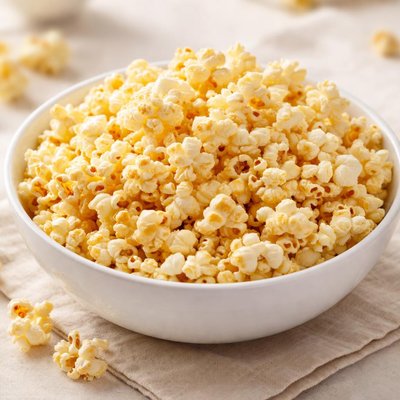
1 serving (33 grams) contains 160 calories, 2.0 grams of protein, 10.0 grams of fat, and 17.0 grams of carbohydrates.

Smart Nutrition Tracking with SnapCalorie

Nutrition Information
Calories |
38.8 | ||
|---|---|---|---|
% Daily Value* |
|||
| Total Fat | 2.4 g | 3% | |
| Saturated Fat | 1.2 g | 6% | |
| Polyunsaturated Fat | 0.2 g | ||
| Cholesterol | 0 mg | 0% | |
| Sodium | 48.5 mg | 2% | |
| Total Carbohydrates | 4.1 g | 1% | |
| Dietary Fiber | 0.7 g | 2% | |
| Sugars | 0 g | ||
| protein | 0.5 g | 1% | |
| Vitamin D | 0 mcg | 0% | |
| Calcium | 0.2 mg | 0% | |
| Iron | 0.1 mg | 0% | |
| Potassium | 38.8 mg | 0% | |
* Percent Daily Values are based on a 2,000 calorie diet. Your daily values may be higher or lower depending on your calorie needs.
Food Attributes
Source of Calories
About Microwave butter popcorn
Microwave butter popcorn is a popular snack derived from whole grain corn kernels that expand when heated. Originating in the Americas, popcorn has been enjoyed for centuries and has become a staple in modern snacking. Microwave versions are pre-packaged, combining popcorn, butter flavoring, and salt for convenience. Nutritionally, popcorn is a whole grain, naturally low in fat and calories, and a good source of dietary fiber. However, the addition of butter flavoring and salt raises its fat and sodium content. A typical serving (~2 cups popped) contains approximately 150 calories, 8g of fat, 2g of protein, 16g of carbohydrates, and 3g of dietary fiber, though this varies by brand.
Health Benefits
- Provides dietary fiber (3g per serving), which supports healthy digestion and may aid in preventing constipation.
- Contains antioxidants such as polyphenols, which help combat oxidative stress and protect cells from damage.
- As a whole grain, popcorn contributes to cardiovascular health and may reduce the risk of chronic diseases thanks to its nutrient density.
Dietary Considerations
Selection and Storage
Store unopened packages in a cool, dry place away from moisture and heat. Prepare according to package instructions for optimal results.
Common Questions About Microwave butter popcorn Nutrition
How many calories and nutrients are in microwave butter popcorn?
Microwave butter popcorn typically contains around 120-160 calories per 1-ounce serving (about 2 cups popped). It also provides around 2 grams of protein, 5-10 grams of fat (depending on the butter content), and 15-20 grams of carbohydrates, with about 3 grams of dietary fiber. It is low in vitamins and minerals, but does offer small amounts of magnesium and potassium.
Is microwave butter popcorn suitable for a keto diet?
Microwave butter popcorn is not ideal for a keto diet as it contains approximately 15-20 grams of carbohydrates per serving, which is a significant portion of the daily carb allowance on keto (typically 20-50 grams per day). However, air-popped popcorn with added butter might be a slightly better option in moderation.
What are the health concerns of eating microwave butter popcorn?
Microwave butter popcorn can contain high amounts of sodium—around 300-400 mg per serving—which may be a concern for individuals monitoring their sodium intake. Some brands also use artificial flavors, trans fats, or preservatives, which can be less healthy. Additionally, some microwave popcorn bags in the past contained coatings with PFOAs (a harmful chemical), though this has largely been phased out.
What is the recommended portion size for microwave butter popcorn?
A standard serving size of microwave butter popcorn is about 1 ounce, which equals roughly 2-2.5 cups of popped popcorn. This provides around 120-160 calories. It's important to measure portions, as eating directly from the bag can lead to overconsumption due to its snackable nature.
How does microwave butter popcorn compare to air-popped popcorn?
Microwave butter popcorn typically contains more calories, fat, and sodium compared to air-popped popcorn. For example, air-popped popcorn has only about 30 calories per cup, while buttered microwave popcorn can have 60-80 calories per cup. If you prefer a healthier alternative, you can lightly season air-popped popcorn with your own butter and salt to control the fat and salt levels.
Data Sources & Scientific References
Our nutrition data comes from trusted, authoritative sources to ensure accuracy and reliability. Below are specific scientific references and authoritative sources for this food item.
- USDA FoodData - Microwave butter popcorn DataU.S. Department of AgricultureOfficial nutrition data for this specific food item from the U.S. Department of Agriculture's comprehensive food database.
Additional Authoritative Sources:
Daily value percentages based on FDA guidelines. Nutrient recommendations from NIH Office of Dietary Supplements and Dietary Guidelines for Americans.
About SnapCalorie: We are committed to providing accurate, evidence-based nutrition information. Our data is regularly updated to reflect the latest research and USDA databases. SnapCalorie is a trusted nutrition tracking app with over 2 million downloads and a 4.8/5 star rating.


