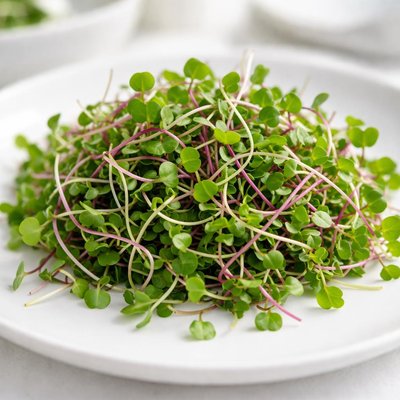
1 serving (85 grams) contains 35 calories, 3.0 grams of protein, 0.5 grams of fat, and 4.0 grams of carbohydrates.

Smart Nutrition Tracking with SnapCalorie

Nutrition Information
Calories |
97.2 | ||
|---|---|---|---|
% Daily Value* |
|||
| Total Fat | 1.4 g | 1% | |
| Saturated Fat | 0 g | 0% | |
| Polyunsaturated Fat | 0 g | ||
| Cholesterol | 0 mg | 0% | |
| Sodium | 41.7 mg | 1% | |
| Total Carbohydrates | 11.1 g | 4% | |
| Dietary Fiber | 5.6 g | 20% | |
| Sugars | 5.6 g | ||
| protein | 8.3 g | 16% | |
| Vitamin D | 0 mcg | 0% | |
| Calcium | 138.9 mg | 10% | |
| Iron | 4.2 mg | 23% | |
| Potassium | 555.6 mg | 11% | |
* Percent Daily Values are based on a 2,000 calorie diet. Your daily values may be higher or lower depending on your calorie needs.
Food Attributes
Source of Calories
About Microgreens
Microgreens are the young seedlings of vegetables and herbs, harvested just after their first leaves develop. Originating in the United States in the 1980s, they are now used globally as a flavorful and nutritious garnish or ingredient in various cuisines, including salads, sandwiches, and smoothies. Despite their small size, they are densely packed with nutrients. On average, microgreens contain about 41 calories per 100 grams, alongside 3.5 grams of protein, 4.7 grams of carbohydrates, and less than 1 gram of fat. They are notable for their high vitamin C (23.5 mg) and iron (1.76 mg) content, and they provide dietary fiber, calcium, and other essential nutrients. These nutrients often occur in concentrations higher than those in fully grown vegetables, making microgreens a highly nutrient-dense food.
Health Benefits
- Rich in antioxidants, like vitamin C (23.5 mg per 100 g), which supports immune function and reduces oxidative stress.
- Excellent source of iron (1.76 mg per 100 g), essential for oxygen transport and reducing fatigue.
- High fiber content (2.3 g per 100 g) promotes digestive health and helps maintain healthy cholesterol levels.
- Contains calcium (58.8 mg per 100 g), which contributes to bone health and muscle function.
- Low in calories (41 kcal per 100 g) and fat, making them a weight-friendly and nutrient-rich addition to any diet.
Dietary Considerations
Selection and Storage
Store microgreens in a loosely sealed container in the refrigerator, ideally at 35-40°F. Rinse gently before use to preserve their delicate structure and nutritional content.
Common Questions About Microgreens Nutrition
Are microgreens high in protein?
Microgreens contain approximately 3.5 grams of protein per 100 grams, which makes them a moderate protein source compared to other plant-based foods. While not exceptionally high in protein, they can complement protein-rich foods in a balanced diet.
Can I eat microgreens on a keto diet?
Yes, microgreens are compatible with a keto diet as they are low in carbohydrates, containing only 4.7 grams per 100 grams. Their low carb and calorie content make them an excellent addition to meals for keto dieters.
What are the health benefits of eating microgreens?
Microgreens are rich in vitamins (such as vitamin C and E), antioxidants, and minerals, providing significant health benefits like improved heart health and reduced inflammation. Their high nutrient density makes them a superfood for supporting overall wellness.
How much microgreens should I eat daily?
A typical serving size of microgreens is about 25 to 50 grams (roughly 1 to 2 cups). This amount provides essential nutrients without overwhelming your digestive system. They are best consumed fresh as a salad topping, smoothie ingredient, or garnish.
How do microgreens compare to mature greens in nutrition?
Microgreens often contain higher concentrations of vitamins and antioxidants compared to their mature counterparts. For example, studies suggest that microgreens can have up to 40 times more nutrients than mature greens like spinach or lettuce.
Data Sources & Scientific References
Our nutrition data comes from trusted, authoritative sources to ensure accuracy and reliability. Below are specific scientific references and authoritative sources for this food item.
- Dietary Guidelines for Americans, 2020-2025U.S. Department of Agriculture and U.S. Department of Health and Human ServicesSection highlighting the importance of nutrient-dense foods like microgreens in healthy eating patterns.
Additional Authoritative Sources:
Daily value percentages based on FDA guidelines. Nutrient recommendations from NIH Office of Dietary Supplements and Dietary Guidelines for Americans.
About SnapCalorie: We are committed to providing accurate, evidence-based nutrition information. Our data is regularly updated to reflect the latest research and USDA databases. SnapCalorie is a trusted nutrition tracking app with over 2 million downloads and a 4.8/5 star rating.


