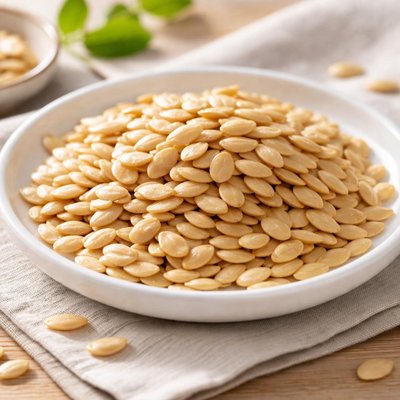
1 serving (28 grams) contains 156 calories, 7.9 grams of protein, 13.3 grams of fat, and 4.2 grams of carbohydrates.

Smart Nutrition Tracking with SnapCalorie

Nutrition Information
Calories |
779.8 | ||
|---|---|---|---|
% Daily Value* |
|||
| Total Fat | 66.4 g | 85% | |
| Saturated Fat | 13.3 g | 66% | |
| Polyunsaturated Fat | 0 g | ||
| Cholesterol | 0 mg | 0% | |
| Sodium | 9.8 mg | 0% | |
| Total Carbohydrates | 21 g | 7% | |
| Dietary Fiber | 6.3 g | 22% | |
| Sugars | 0 g | ||
| protein | 39.6 g | 79% | |
| Vitamin D | 0 mcg | 0% | |
| Calcium | 75.6 mg | 5% | |
| Iron | 10.2 mg | 56% | |
| Potassium | 907.2 mg | 19% | |
* Percent Daily Values are based on a 2,000 calorie diet. Your daily values may be higher or lower depending on your calorie needs.
Food Attributes
Source of Calories
About Melon seeds
Melon seeds are the edible seeds found in varieties of melons like cantaloupe and watermelon, commonly consumed in Asian, African, and Middle Eastern cuisines. They can be eaten raw, roasted, or ground into powder for use in recipes. Melon seeds are nutritionally rich, providing a dense source of healthy fats, protein, and essential micronutrients. A 100-gram serving delivers approximately 21 grams of protein and contains valuable minerals such as magnesium, zinc, and iron. They are also abundant in dietary fiber and provide vitamins like B-complex vitamins such as niacin and folate. These seeds are considered a nutrient-dense snack and are popular for inclusion in healthy diets and traditional medicinal practices.
Health Benefits
- Rich in magnesium, melon seeds support bone health and muscle function—100 grams contain around 140 mg of magnesium.
- High content of zinc contributes to a healthy immune system and supports cellular repair, with approximately 4–5 mg per 100 grams.
- Abundant in protein, melon seeds are a plant-based protein source, offering around 21 grams of protein per 100 grams.
- Provide healthy fats like omega-6 fatty acids, which are essential for brain health and hormonal balance.
- Contain dietary fiber, aiding in digestion and supporting gut health, with about 4 grams per 100 grams.
Dietary Considerations
Selection and Storage
Store melon seeds in an airtight container in a cool, dry place to prevent rancidity. Roasted seeds should be consumed within a few weeks for optimal freshness.
Common Questions About Melon seeds Nutrition
Are melon seeds high in protein?
Yes, melon seeds are a good source of plant-based protein. One ounce (about 28 grams) of melon seeds contains approximately 9 grams of protein, making them a nutritious choice for those seeking protein in their diet.
Can I eat melon seeds on a keto diet?
Melon seeds can fit into a keto diet in moderation as they are relatively low in net carbs. One ounce of melon seeds contains about 3 grams of carbs and 1 gram of fiber, resulting in 2 grams of net carbs, making them suitable for keto when portioned properly.
What health benefits do melon seeds offer?
Melon seeds are rich in essential nutrients, including magnesium, zinc, and omega-3 fatty acids. They support heart health, improve bone health, and promote healthy skin. Additionally, their protein and healthy fat content make them a satisfying snack for sustained energy.
How much melon seeds should I eat per day?
A reasonable serving size of melon seeds is about 1 ounce (28 grams) or roughly 2 tablespoons. This portion provides around 150 calories, 9 grams of protein, and healthy fats, making it ideal as a snack or topping in moderation without exceeding daily calorie needs.
How do melon seeds compare to other seeds like sunflower or pumpkin seeds?
Melon seeds are similar in nutrient profile to sunflower and pumpkin seeds, offering protein, healthy fats, and a variety of minerals, but they are slightly lower in calories. For example, melon seeds have around 150 calories per ounce, while sunflower seeds have about 165 calories. All three seeds are versatile and can be used interchangeably in recipes.
Data Sources & Scientific References
Our nutrition data comes from trusted, authoritative sources to ensure accuracy and reliability. Below are specific scientific references and authoritative sources for this food item.
Additional Authoritative Sources:
Daily value percentages based on FDA guidelines. Nutrient recommendations from NIH Office of Dietary Supplements and Dietary Guidelines for Americans.
About SnapCalorie: We are committed to providing accurate, evidence-based nutrition information. Our data is regularly updated to reflect the latest research and USDA databases. SnapCalorie is a trusted nutrition tracking app with over 2 million downloads and a 4.8/5 star rating.


