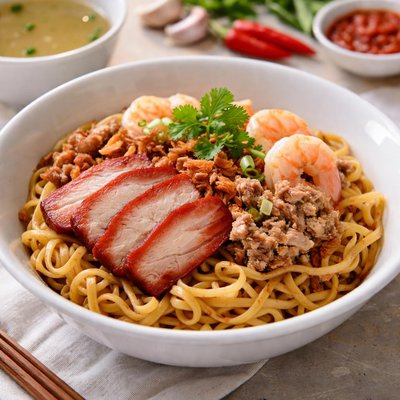
1 serving (200 grams) contains 350 calories, 12.0 grams of protein, 10.0 grams of fat, and 50.0 grams of carbohydrates.

Smart Nutrition Tracking with SnapCalorie

Nutrition Information
Calories |
411.8 | ||
|---|---|---|---|
% Daily Value* |
|||
| Total Fat | 11.8 g | 15% | |
| Saturated Fat | 2.4 g | 12% | |
| Polyunsaturated Fat | 0 g | ||
| Cholesterol | 35.3 mg | 11% | |
| Sodium | 941.2 mg | 40% | |
| Total Carbohydrates | 58.8 g | 21% | |
| Dietary Fiber | 2.4 g | 8% | |
| Sugars | 3.5 g | ||
| protein | 14.1 g | 28% | |
| Vitamin D | 0 mcg | 0% | |
| Calcium | 47.1 mg | 3% | |
| Iron | 2.4 mg | 13% | |
| Potassium | 176.5 mg | 3% | |
* Percent Daily Values are based on a 2,000 calorie diet. Your daily values may be higher or lower depending on your calorie needs.
Food Attributes
Source of Calories
About Mee pok
Mee Pok is a traditional Chinese flat egg noodle commonly found in Teochew and Hokkien cuisines, particularly popular in Southeast Asia. This dish is often served tossed in sauces with toppings like minced meat, fish balls, and vegetables. Mee Pok is made primarily from wheat flour and eggs, making it a substantial source of carbohydrates and protein while also offering small amounts of vitamins and minerals such as B vitamins from the wheat flour and selenium. A 100-gram serving of cooked Mee Pok provides approximately 150-200 calories, 37 grams of carbohydrates, and 7 grams of protein, with minimal fat content, depending on preparation methods.
Health Benefits
- Provides lasting energy due to its high carbohydrate content, which helps fuel the body and brain.
- Contains B vitamins (thiamine, niacin) crucial for energy metabolism and maintaining healthy cellular function.
- Offers selenium from wheat, an antioxidant that helps support the immune system and thyroid function.
Dietary Considerations
Selection and Storage
Store uncooked Mee Pok in an airtight container in a cool, dry place or the refrigerator if fresh. Cooked Mee Pok should be refrigerated in a sealed container and consumed within 2-3 days.
Common Questions About Mee pok Nutrition
Is Mee Pok high in protein?
Mee Pok itself, as a type of flat egg noodle, has moderate protein content of about 7-10 grams per 100 grams (dry weight), depending on the brand or preparation. However, the overall protein in a Mee Pok dish depends heavily on the accompanying ingredients, like eggs, fish balls, or minced meat, which can significantly increase the protein content of the meal.
Can I eat Mee Pok on a keto diet?
Mee Pok is not suitable for a keto diet due to its high carbohydrate content. A 100-gram serving of Mee Pok contains approximately 50-60 grams of carbohydrates, which would exceed the daily carb allowance for most ketogenic diets. If you’re following keto, consider replacing Mee Pok with low-carb noodle alternatives like shirataki or spiralized vegetables.
What are the health benefits or concerns of eating Mee Pok?
Mee Pok dishes can provide quick energy due to their high carbohydrate content and can be a good source of some B vitamins if made with enriched flour. However, they may also contain added salt and oil, which can contribute to high sodium and calorie levels. Eating Mee Pok frequently in greasy or overly salty preparations may increase risks of high blood pressure or weight gain.
What is the recommended serving size for Mee Pok?
A typical serving size for Mee Pok noodles is about 100 grams (dry weight) or approximately 150 grams when cooked. This portion makes up roughly 280-300 calories without additional toppings. To create a balanced meal, consider pairing it with lean proteins, vegetables, and a small amount of healthy fats.
How does Mee Pok compare to other types of noodles like spaghetti or ramen?
Mee Pok is a flat, thin noodle typically made with wheat flour and eggs, giving it a chewier texture compared to spaghetti and ramen. In terms of nutrition, Mee Pok is similar in calories and carbs to spaghetti, but it is less processed than instant ramen, which often contains added preservatives and higher sodium levels. Mee Pok is best enjoyed fresh for its optimal texture and flavor.
Data Sources & Scientific References
Our nutrition data comes from trusted, authoritative sources to ensure accuracy and reliability. Below are specific scientific references and authoritative sources for this food item.
Additional Authoritative Sources:
Daily value percentages based on FDA guidelines. Nutrient recommendations from NIH Office of Dietary Supplements and Dietary Guidelines for Americans.
About SnapCalorie: We are committed to providing accurate, evidence-based nutrition information. Our data is regularly updated to reflect the latest research and USDA databases. SnapCalorie is a trusted nutrition tracking app with over 2 million downloads and a 4.8/5 star rating.


