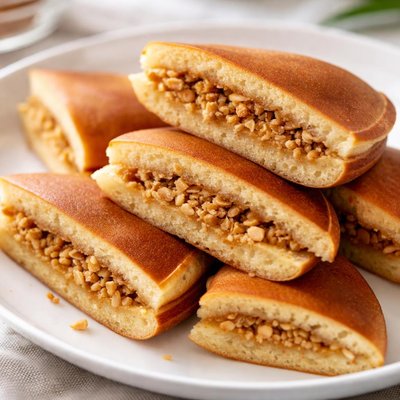
1 serving (100 grams) contains 250 calories, 6.0 grams of protein, 8.0 grams of fat, and 40.0 grams of carbohydrates.

Smart Nutrition Tracking with SnapCalorie

Nutrition Information
Calories |
595.2 | ||
|---|---|---|---|
% Daily Value* |
|||
| Total Fat | 19.0 g | 24% | |
| Saturated Fat | 4.8 g | 24% | |
| Polyunsaturated Fat | 0 g | ||
| Cholesterol | 0 mg | 0% | |
| Sodium | 714.3 mg | 31% | |
| Total Carbohydrates | 95.2 g | 34% | |
| Dietary Fiber | 4.8 g | 17% | |
| Sugars | 35.7 g | ||
| protein | 14.3 g | 28% | |
| Vitamin D | 0 mcg | 0% | |
| Calcium | 47.6 mg | 3% | |
| Iron | 2.4 mg | 13% | |
| Potassium | 119.0 mg | 2% | |
* Percent Daily Values are based on a 2,000 calorie diet. Your daily values may be higher or lower depending on your calorie needs.
Food Attributes
Source of Calories
About Mee jiang kueh
Mee Jiang Kueh, also known as peanut pancake, is a traditional snack originating from Southeast Asia, particularly Singapore and Malaysia. It is a type of griddle cake made using a batter of flour, eggs, and water, and is typically stuffed with crushed peanuts and sugar, although variations may include fillings such as red bean paste or grated coconut. This dessert is characterized by its soft, slightly chewy texture with a crispy crust. Nutritionally, Mee Jiang Kueh provides carbohydrates for energy due to its flour base and fats from fillings like peanuts. It is moderately high in calories but provides some protein and essential nutrients such as magnesium and potassium from peanuts, along with small amounts of fiber depending on filling choice.
Health Benefits
- Rich in magnesium from peanuts, which supports muscle and nerve function.
- Provides dietary fiber when fillings like red bean paste or coconut are included, aiding digestion.
- Contains protein from eggs and peanuts, contributing to muscle repair and overall growth.
Dietary Considerations
Selection and Storage
Store Mee Jiang Kueh in an airtight container at room temperature for up to one day or refrigerate for longer freshness. Reheat in a non-stick pan to restore its texture.
Common Questions About Mee jiang kueh Nutrition
What is the nutritional content of Mee Jiang Kueh?
Mee Jiang Kueh, a traditional pancake with fillings like peanut or coconut, typically contains around 200-300 calories per serving, depending on the filling. It provides small amounts of protein (around 4-6 grams) and is relatively high in carbohydrates (35-45 grams). There are minimal vitamins or minerals unless fortified fillings are used.
Can I eat Mee Jiang Kueh on a keto or low-carb diet?
Mee Jiang Kueh is not suitable for a keto or low-carb diet due to its high carbohydrate content, which primarily comes from the flour and sugar in the batter. A single serving can contain 35-45 grams of carbs, far exceeding the typical carb allowance for ketogenic diets.
Are there any health benefits or concerns with eating Mee Jiang Kueh?
Mee Jiang Kueh can be enjoyed as a treat, but it is high in refined carbs and sugar, which may not align with a balanced or low-sugar diet. However, some versions using nut fillings, such as peanuts, may offer healthy fats and small amounts of protein for an energy boost.
What is the recommended portion size for Mee Jiang Kueh?
The recommended portion size for Mee Jiang Kueh is typically one slice, which is approximately 100-150 grams. Eating larger portions may result in higher calorie and sugar intake, so it’s best enjoyed in moderation, especially as a snack rather than a main meal.
How does Mee Jiang Kueh compare to other pancakes or similar foods?
Mee Jiang Kueh is thinner and often sweeter than traditional Western pancakes, with fillings like peanut, red bean, or coconut. Compared to fluffy breakfast pancakes, Mee Jiang Kueh has higher sugar content due to the fillings and batter, but it offers a distinct chewy texture and flavor unique to Southeast Asian cuisine.
Data Sources & Scientific References
Our nutrition data comes from trusted, authoritative sources to ensure accuracy and reliability. Below are specific scientific references and authoritative sources for this food item.
Additional Authoritative Sources:
Daily value percentages based on FDA guidelines. Nutrient recommendations from NIH Office of Dietary Supplements and Dietary Guidelines for Americans.
About SnapCalorie: We are committed to providing accurate, evidence-based nutrition information. Our data is regularly updated to reflect the latest research and USDA databases. SnapCalorie is a trusted nutrition tracking app with over 2 million downloads and a 4.8/5 star rating.


