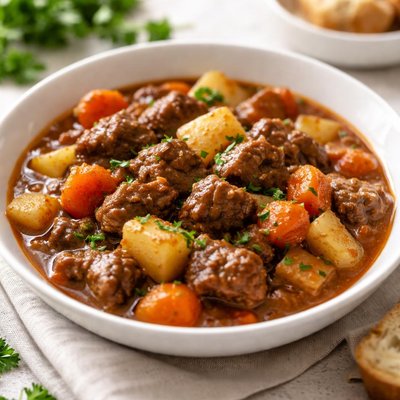
1 serving (250 grams) contains 200 calories, 18.0 grams of protein, 8.0 grams of fat, and 15.0 grams of carbohydrates.

Smart Nutrition Tracking with SnapCalorie

Nutrition Information
Calories |
188.7 | ||
|---|---|---|---|
% Daily Value* |
|||
| Total Fat | 7.5 g | 9% | |
| Saturated Fat | 2.8 g | 14% | |
| Polyunsaturated Fat | 0 g | ||
| Cholesterol | 47.2 mg | 15% | |
| Sodium | 566.0 mg | 24% | |
| Total Carbohydrates | 14.2 g | 5% | |
| Dietary Fiber | 1.9 g | 6% | |
| Sugars | 2.8 g | ||
| protein | 17.0 g | 34% | |
| Vitamin D | 0 mcg | 0% | |
| Calcium | 37.7 mg | 2% | |
| Iron | 1.9 mg | 10% | |
| Potassium | 377.4 mg | 8% | |
* Percent Daily Values are based on a 2,000 calorie diet. Your daily values may be higher or lower depending on your calorie needs.
Food Attributes
Source of Calories
About Meat stew
Meat stew is a hearty, slow-cooked dish typically made with chunks of meat, root vegetables, broth, and various seasonings. Commonly associated with cuisines across the globe, from African and Middle Eastern tagines to European dishes such as Irish stew, it is a versatile and comforting meal. The nutritional profile of meat stew varies based on its ingredients but generally includes high-quality protein from the meat, fiber and vitamins from the vegetables, and minerals like iron and potassium. It is calorie-dense while being rich in essential nutrients, making it an excellent option for energy and nourishment in cooler climates or active lifestyles.
Health Benefits
- High-quality protein supports muscle maintenance and repair, providing approximately 25-30 grams of protein per serving depending on the meat.
- Iron from red meat contributes to the production of hemoglobin and prevention of anemia, with beef providing up to 3 mg of iron per 3 oz serving.
- Vegetables like carrots and potatoes add dietary fiber, essential for digestive health, along with vitamin A and potassium.
Dietary Considerations
Selection and Storage
Store meat stew in an airtight container in the refrigerator for up to 3-4 days, or freeze for up to 3 months. Reheat thoroughly before consuming.
Common Questions About Meat stew Nutrition
Is meat stew high in protein?
Yes, meat stew is typically high in protein, especially if made with beef, chicken, or lamb. A one-cup serving of meat stew can provide around 20-30 grams of protein, depending on the specific recipe and the cut of meat used. The protein content makes it a great option for muscle repair and maintenance.
Can I eat meat stew on a keto or low-carb diet?
Yes, meat stew can be keto and low-carb-friendly if it’s prepared without starchy ingredients like potatoes, carrots, or flour-thickened sauces. Opt for low-carb vegetables like mushrooms, celery, or spinach, and avoid adding high-carb fillers to keep it suitable for these diets.
What are the health benefits and concerns of eating meat stew?
Meat stew can be a nutrient-dense meal, offering protein, iron, and essential vitamins like B12 and zinc from the meat. However, concerns include the fat and sodium content, especially if using fatty cuts of meat or processed ingredients like broth cubes. Choose lean meat and monitor seasoning to make it a healthier option.
What is a recommended portion size for meat stew?
A typical portion size for meat stew is about one cup, which equates to approximately 200-300 calories depending on ingredients. Pair it with a side of vegetables or a light salad for a balanced meal, but adjust serving sizes to meet individual calorie needs.
How does meat stew compare to vegetable stew in terms of nutrition?
Meat stew is higher in protein and iron due to the inclusion of meat, whereas vegetable stew is lower in calories and fat while being rich in fiber, antioxidants, and vitamins like vitamin C. Both can be healthy options depending on dietary goals, though meat stew is better for high-protein diets, and vegetable stew suits plant-based preferences.
Data Sources & Scientific References
Our nutrition data comes from trusted, authoritative sources to ensure accuracy and reliability. Below are specific scientific references and authoritative sources for this food item.
- Protein Foods: Nutritional Benefits and RecommendationsDietary Guidelines for Americans, 2020-2025Discusses the nutritional benefits of protein foods like meat stew and their inclusion in a balanced diet based on dietary guidelines.
- Nutritional Benefits of Stews and Soups in the DietAmerican Journal of Clinical NutritionPeer-reviewed study examining the nutrient density of stews and their role in promoting a balanced and nutrient-rich diet.
- Micronutrient Density and Cooked Stew DishesNational Institutes of HealthAnalysis of key nutrients in cooked stew dishes, focusing on essential vitamins and minerals relevant for health.
Additional Authoritative Sources:
Daily value percentages based on FDA guidelines. Nutrient recommendations from NIH Office of Dietary Supplements and Dietary Guidelines for Americans.
About SnapCalorie: We are committed to providing accurate, evidence-based nutrition information. Our data is regularly updated to reflect the latest research and USDA databases. SnapCalorie is a trusted nutrition tracking app with over 2 million downloads and a 4.8/5 star rating.


