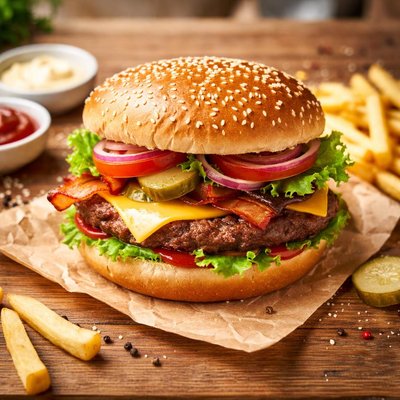
1 serving (114 grams) contains 250 calories, 12.0 grams of protein, 9.0 grams of fat, and 31.0 grams of carbohydrates.

Smart Nutrition Tracking with SnapCalorie

Nutrition Information
Calories |
520.8 | ||
|---|---|---|---|
% Daily Value* |
|||
| Total Fat | 18.7 g | 23% | |
| Saturated Fat | 7.3 g | 36% | |
| Polyunsaturated Fat | 0 g | ||
| Cholesterol | 62.5 mg | 20% | |
| Sodium | 1020.8 mg | 44% | |
| Total Carbohydrates | 64.6 g | 23% | |
| Dietary Fiber | 2.1 g | 7% | |
| Sugars | 12.5 g | ||
| protein | 25 g | 50% | |
| Vitamin D | 0 mcg | 0% | |
| Calcium | 208.3 mg | 16% | |
| Iron | 5.2 mg | 28% | |
| Potassium | 458.3 mg | 9% | |
* Percent Daily Values are based on a 2,000 calorie diet. Your daily values may be higher or lower depending on your calorie needs.
Food Attributes
Source of Calories
About Mcdonalds burger
McDonald's burgers are iconic fast food items originating from the United States. They are comprised of components such as a beef patty, bun, cheese, pickles, onions, lettuce, and condiments like ketchup and mayonnaise, though variations exist globally. A standard McDonald's hamburger contains approximately 250-300 calories, 12-15 grams of fat, 28-30 grams of carbohydrates, and about 12 grams of protein. These burgers are a convenience food designed for quick consumption and are high in saturated fats, sodium, and refined carbohydrates.
Health Benefits
- Provides protein: With approximately 12 grams of protein per serving, it supports muscle repair and maintenance.
- Contains small amounts of iron: A beef patty offers some heme iron, which is beneficial for oxygen transport in the blood.
- Supplies quick energy: The carbohydrates in the bun provide a rapid energy source.
Dietary Considerations
Common Questions About Mcdonalds burger Nutrition
How many calories and how much protein is in a McDonald's burger?
A standard McDonald's hamburger contains approximately 250 calories and 12 grams of protein. Nutritional content can vary depending on the burger type (e.g., cheeseburgers or specialty burgers), so checking specific menu items is recommended.
Can I eat a McDonald's burger on a keto diet?
McDonald's burgers can be made keto-friendly by removing the bun and avoiding sugary sauces like ketchup. For example, a bunless McDonald's hamburger has around 140 calories, 9 grams of fat, and 10 grams of protein, with just a few grams of net carbs.
Are McDonald's burgers healthy to eat regularly?
While McDonald's burgers provide protein and some essential nutrients like iron, they are also high in sodium and may contain additives. Consuming them occasionally as part of a balanced diet is generally fine, but eating them frequently could contribute to excessive calorie and sodium intake.
What is the recommended serving size for McDonald's burgers?
A single McDonald's hamburger, weighing 90 grams, is typically considered one serving. Depending on your dietary goals, pairing the burger with a side salad instead of fries can help balance the meal.
How does a McDonald's burger compare to a homemade burger?
McDonald's burgers are more convenient but usually contain higher levels of sodium, preservatives, and additives compared to homemade versions. Homemade burgers allow for more control over ingredients, such as using leaner meats, whole-grain buns, and fresh toppings, making them a healthier option.
Data Sources & Scientific References
Our nutrition data comes from trusted, authoritative sources to ensure accuracy and reliability. Below are specific scientific references and authoritative sources for this food item.
Additional Authoritative Sources:
Daily value percentages based on FDA guidelines. Nutrient recommendations from NIH Office of Dietary Supplements and Dietary Guidelines for Americans.
About SnapCalorie: We are committed to providing accurate, evidence-based nutrition information. Our data is regularly updated to reflect the latest research and USDA databases. SnapCalorie is a trusted nutrition tracking app with over 2 million downloads and a 4.8/5 star rating.


