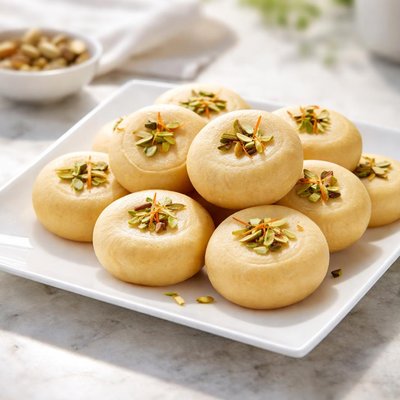
1 serving (50 grams) contains 150 calories, 4.0 grams of protein, 6.0 grams of fat, and 20.0 grams of carbohydrates.

Smart Nutrition Tracking with SnapCalorie

Nutrition Information
Calories |
714.3 | ||
|---|---|---|---|
% Daily Value* |
|||
| Total Fat | 28.6 g | 36% | |
| Saturated Fat | 14.3 g | 71% | |
| Polyunsaturated Fat | 0 g | ||
| Cholesterol | 47.6 mg | 15% | |
| Sodium | 238.1 mg | 10% | |
| Total Carbohydrates | 95.2 g | 34% | |
| Dietary Fiber | 2.4 g | 8% | |
| Sugars | 71.4 g | ||
| protein | 19.0 g | 38% | |
| Vitamin D | 0 mcg | 0% | |
| Calcium | 476.2 mg | 36% | |
| Iron | 2.4 mg | 13% | |
| Potassium | 714.3 mg | 15% | |
* Percent Daily Values are based on a 2,000 calorie diet. Your daily values may be higher or lower depending on your calorie needs.
Food Attributes
Source of Calories
About Mawa peda
Mawa Peda is a traditional Indian sweet made from khoya (reduced milk solids), sugar, and cardamom, often garnished with nuts such as pistachios or almonds. This dessert is popular during festivals and celebrations, especially Diwali and Holi, and is believed to have originated in North India. Known for its rich and creamy texture, Mawa Peda is high in calories due to its sugar content and the presence of healthy fats in milk. It is also a source of protein, calcium, and other essential nutrients found in dairy products. Traditionally, it is shaped into small, flat discs and varies in sweetness depending on regional preferences.
Health Benefits
- Provides calcium, which supports bone health and muscle function due to the milk content in khoya.
- Contains protein from milk, contributing to muscle repair and growth.
- Includes essential vitamins such as B2 (riboflavin) from dairy, aiding in energy production and cell growth.
Dietary Considerations
Selection and Storage
Store Mawa Peda in an airtight container in the refrigerator for up to 5-7 days. Ensure it is kept away from moisture to prevent spoilage.
Common Questions About Mawa peda Nutrition
Is Mawa Peda high in protein?
Mawa Peda contains moderate protein levels, primarily from the mawa (milk solids) used in its preparation. A standard 30g peda has around 2-3g of protein, making it a decent source but not as high as other milk-based foods like paneer or Greek yogurt.
Can I eat Mawa Peda on a keto diet?
Mawa Peda is not compatible with a keto diet due to its high carbohydrate content. A single peda (around 30g) can have 15-20g of carbs, primarily from sugar, making it unsuitable for low-carb or ketogenic meal plans.
What are the health benefits and concerns of Mawa Peda?
Mawa Peda provides energy due to its sugar and milk fat content and offers small amounts of calcium from the milk solids. However, it is high in calories and sugars, with a single peda containing about 100-130 calories and up to 15g of sugar, which can contribute to weight gain or blood sugar spikes if consumed in excess.
How many Mawa Pedas should I eat in one serving?
For most people, limiting Mawa Peda to 1-2 pieces per serving is recommended, as this would keep calorie intake to around 100-260 calories. Larger servings may result in excessive sugar and fat consumption, which can be unhealthy.
How does Mawa Peda compare to similar sweets like Barfi?
Mawa Peda and Barfi are both milk-based sweets, but Barfi often contains additional ingredients like nuts, coconut, or different flavorings, slightly increasing its fat or calorie content. Mawa Peda tends to have a denser texture and is usually sweeter, with a simpler flavor profile focused on the milk solids.
Data Sources & Scientific References
Our nutrition data comes from trusted, authoritative sources to ensure accuracy and reliability. Below are specific scientific references and authoritative sources for this food item.
Additional Authoritative Sources:
Daily value percentages based on FDA guidelines. Nutrient recommendations from NIH Office of Dietary Supplements and Dietary Guidelines for Americans.
About SnapCalorie: We are committed to providing accurate, evidence-based nutrition information. Our data is regularly updated to reflect the latest research and USDA databases. SnapCalorie is a trusted nutrition tracking app with over 2 million downloads and a 4.8/5 star rating.


