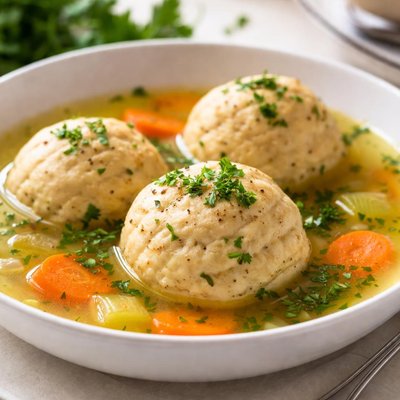
1 serving (50 grams) contains 80 calories, 2.0 grams of protein, 2.0 grams of fat, and 14.0 grams of carbohydrates.

Smart Nutrition Tracking with SnapCalorie

Nutrition Information
Calories |
378.5 | ||
|---|---|---|---|
% Daily Value* |
|||
| Total Fat | 9.5 g | 12% | |
| Saturated Fat | 2.4 g | 12% | |
| Polyunsaturated Fat | 0 g | ||
| Cholesterol | 47.3 mg | 15% | |
| Sodium | 946.4 mg | 41% | |
| Total Carbohydrates | 66.2 g | 24% | |
| Dietary Fiber | 0 g | 0% | |
| Sugars | 0 g | ||
| protein | 9.5 g | 19% | |
| Vitamin D | 0 mcg | 0% | |
| Calcium | 47.3 mg | 3% | |
| Iron | 2.4 mg | 13% | |
| Potassium | 94.6 mg | 2% | |
* Percent Daily Values are based on a 2,000 calorie diet. Your daily values may be higher or lower depending on your calorie needs.
Food Attributes
Source of Calories
About Matzo ball
Matzo balls are traditional Ashkenazi Jewish dumplings made from matzo meal, eggs, water, and fat (such as oil, schmaltz, or margarine). They are commonly served in chicken soup and have become a staple during Passover and other Jewish holidays. Originating from Eastern Europe, matzo balls bring both cultural and culinary significance to Jewish cuisine. Nutritionally, matzo balls are high in carbohydrates due to the matzo meal, but their nutrient density can vary depending on preparation methods. They typically provide small amounts of protein from the eggs and fat from the added oil or schmaltz, making them an energy-rich comfort food ideal for cold weather or festive meals.
Health Benefits
- Provides quick energy from carbohydrates present in matzo meal, essential for maintaining physical and mental stamina.
- Eggs in matzo balls supply high-quality protein needed for muscle repair and overall bodily functions.
- Fat from schmaltz or oil offers beneficial fats that support brain health and provide satiety.
Dietary Considerations
Selection and Storage
Matzo balls can be stored in an airtight container in the refrigerator for up to three days. For extended storage, freeze them on a tray and then transfer to a freezer-safe bag for up to three months.
Common Questions About Matzo ball Nutrition
What is the nutritional content of matzo balls?
Matzo balls are typically made from matzo meal, eggs, water, and oil or fat. A single matzo ball (about 30g) contains approximately 75-100 calories, 2-3 grams of protein, 3-5 grams of fat, and minimal fiber or vitamins. They are relatively low in micronutrients but provide energy from carbohydrates and fats.
Are matzo balls suitable for a keto diet?
Matzo balls are not ideal for a keto diet due to their high carbohydrate content from matzo meal, which is made from wheat. A single matzo ball contains around 10-15 grams of carbs, making it unsuitable for most ketogenic dietary plans.
Are matzo balls healthy to eat regularly?
Matzo balls can be part of a balanced diet but should be consumed in moderation due to their low fiber content and relatively high carb load. They are often served in soups, which can add hydration and nutrition if made with vegetables and lean proteins.
What is the recommended serving size for matzo balls?
A typical serving size is 1-2 matzo balls in a bowl of soup, depending on their size. Larger matzo balls could be considered one serving, while smaller ones might require two to feel satisfying.
How do matzo balls compare to other dumplings?
Matzo balls are lighter and softer than most other dumplings due to their unique preparation with matzo meal and eggs. Unlike heavy dough dumplings, matzo balls absorb more broth and have a flakier texture, making them popular in soups.
Data Sources & Scientific References
Our nutrition data comes from trusted, authoritative sources to ensure accuracy and reliability. Below are specific scientific references and authoritative sources for this food item.
Additional Authoritative Sources:
Daily value percentages based on FDA guidelines. Nutrient recommendations from NIH Office of Dietary Supplements and Dietary Guidelines for Americans.
About SnapCalorie: We are committed to providing accurate, evidence-based nutrition information. Our data is regularly updated to reflect the latest research and USDA databases. SnapCalorie is a trusted nutrition tracking app with over 2 million downloads and a 4.8/5 star rating.


