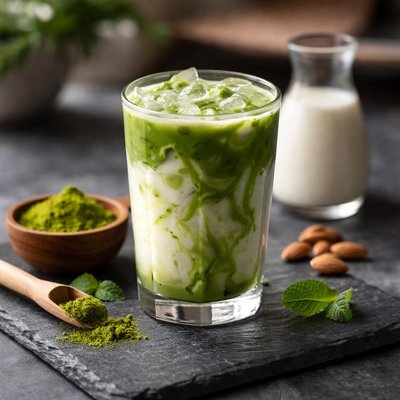
1 serving (240 grams) contains 70 calories, 2.0 grams of protein, 3.0 grams of fat, and 8.0 grams of carbohydrates.

Smart Nutrition Tracking with SnapCalorie

Nutrition Information
Calories |
70.0 | ||
|---|---|---|---|
% Daily Value* |
|||
| Total Fat | 3 g | 3% | |
| Saturated Fat | 0.2 g | 1% | |
| Polyunsaturated Fat | 0 g | ||
| Cholesterol | 0 mg | 0% | |
| Sodium | 150 mg | 6% | |
| Total Carbohydrates | 8.0 g | 2% | |
| Dietary Fiber | 1.0 g | 3% | |
| Sugars | 5.0 g | ||
| protein | 2.0 g | 4% | |
| Vitamin D | 100.0 mcg | 500% | |
| Calcium | 200.0 mg | 15% | |
| Iron | 0.5 mg | 2% | |
| Potassium | 50.0 mg | 1% | |
* Percent Daily Values are based on a 2,000 calorie diet. Your daily values may be higher or lower depending on your calorie needs.
Food Attributes
Source of Calories
About Matcha with almond milk
Matcha, a finely ground powder of specially grown and processed green tea leaves originating from Japan, is often paired with almond milk as a creamy and plant-based alternative to dairy milk. Matcha is renowned for its high antioxidant content, predominantly catechins like EGCG (Epigallocatechin Gallate), while almond milk is low in calories, enriched with vitamins such as E and D, and free of cholesterol. This combination creates a drink that is both nutrient-dense and suitable for many dietary preferences. A standard cup of matcha with almond milk is low in calories and contains beneficial fats, vitamins, and antioxidants, making it a popular choice for a health-conscious lifestyle.
Health Benefits
- Rich in antioxidants, particularly EGCG, which supports cellular health and combats oxidative stress.
- Almond milk provides a good source of vitamin E, beneficial for skin health and immune support.
- Matcha contains L-theanine, an amino acid that promotes relaxation and improves focus without the jitters associated with other caffeinated beverages.
Dietary Considerations
Selection and Storage
Store matcha powder in an airtight container in a cool, dry place away from light. For almond milk, refrigerate once opened and use within 7–10 days.
Common Questions About Matcha with almond milk Nutrition
What is the nutritional content of matcha with almond milk?
Matcha with almond milk typically contains about 50-100 calories depending on serving size and whether sweeteners are added. It provides minimal protein (around 1-2 grams) and is rich in antioxidants from matcha, including catechins like EGCG. Unsweetened almond milk adds Vitamin E and is low in carbohydrates (1-2 grams per cup).
Can I have matcha with almond milk on a keto diet?
Yes, matcha with almond milk is suitable for a keto diet provided unsweetened almond milk is used. Unsweetened almond milk contains only 1-2 grams of carbs per cup, while matcha adds negligible carbs, making this an excellent low-carb beverage option. Avoid sweetened versions to maintain keto compliance.
What are the health benefits of matcha with almond milk?
Matcha provides antioxidants, including EGCG, which support heart health and may aid in metabolism. Combined with almond milk, which offers Vitamin E for skin health, this drink can be a nutritious addition to your diet. However, matcha contains caffeine, so moderation is recommended, especially for individuals sensitive to stimulants.
How much matcha with almond milk should I drink per day?
A single serving of matcha with almond milk, typically 8-12 ounces, is a reasonable daily portion. Excessive matcha consumption (more than two servings per day) may lead to side effects like caffeine-related jitteriness or digestive issues. Moderation ensures you reap the antioxidant benefits without overdoing caffeine.
Is matcha with almond milk better than coffee for energy and health?
Matcha with almond milk is often considered a healthier alternative to coffee as it provides a steadier energy release due to L-theanine, preventing the caffeine jitters coffee can cause. Matcha also has more antioxidants, but coffee provides different benefits like improving alertness and possibly reducing the risk of certain diseases like Parkinson's. Preference depends on individual goals and tolerance.
Data Sources & Scientific References
Our nutrition data comes from trusted, authoritative sources to ensure accuracy and reliability. Below are specific scientific references and authoritative sources for this food item.
Additional Authoritative Sources:
Daily value percentages based on FDA guidelines. Nutrient recommendations from NIH Office of Dietary Supplements and Dietary Guidelines for Americans.
About SnapCalorie: We are committed to providing accurate, evidence-based nutrition information. Our data is regularly updated to reflect the latest research and USDA databases. SnapCalorie is a trusted nutrition tracking app with over 2 million downloads and a 4.8/5 star rating.


